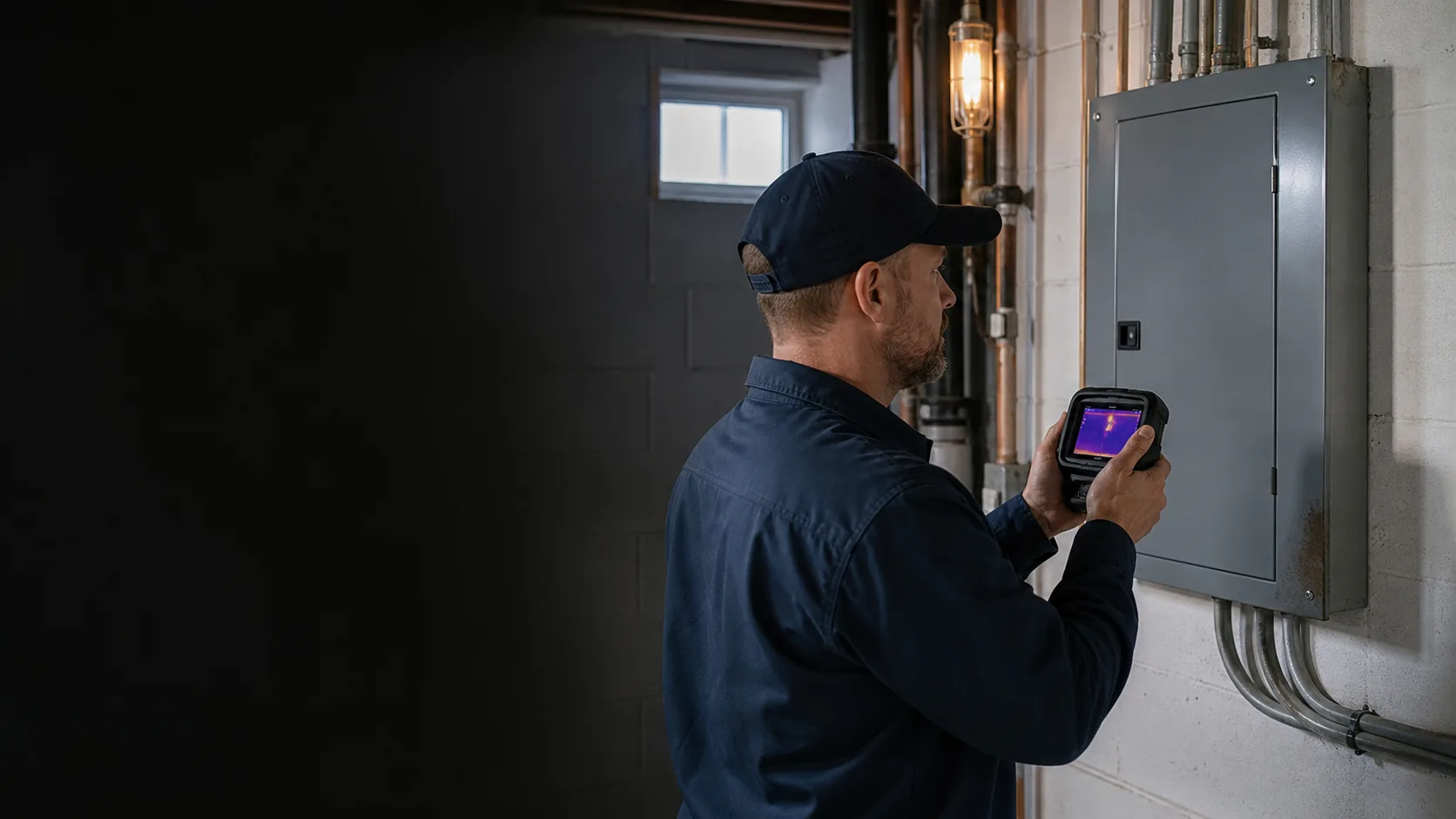
What are the most serious electrical panel warning signs?+
Smoke, flame, active arcing, shock, severe heat, rapidly worsening burning odour, loud crackling, dangerous water exposure, exposed damaged equipment or damaged service conductors can indicate an urgent hazard. Keep people clear, use emergency services when there is immediate danger, and contact the serving utility or a qualified electrical contractor as appropriate.
Can a burning smell mean the electrical panel needs replacement?+
It can, but odour alone does not identify the source or remedy. A loose connection, damaged breaker or bus, overloaded circuit, meter or service problem, nearby transformer, receptacle or appliance can create heat and odour. Severe heat, smoke, arcing or rapidly worsening smell requires urgent escalation; otherwise obtain prompt qualified source diagnosis.
Does a tripping breaker mean the electrical panel is bad?+
No. A breaker can operate because of overload, short circuit, ground fault, arc-fault response, appliance failure, moisture, wiring damage, a loose connection, the breaker itself or panel damage. Diagnose the affected circuit, protection and bus condition before choosing replacement scope.
Should I keep resetting a breaker that trips?+
Do not repeatedly reset it. Record what was operating and leave it off when it trips again immediately, will not set normally, feels loose, shows damage, or is associated with heat, odour, sound or moisture. A qualified person should determine the cause before further use.
Is buzzing from an electrical panel normal?+
Sound alone cannot establish normal operation. A new, changing or loud buzz needs source assessment, and crackling, sizzling, sparks, flicker, heat or burning odour raises urgency. The source may be a breaker, connection, transformer, meter, service or nearby equipment, so do not open the panel to locate it.
Is rust or water in an electrical panel dangerous?+
It can be. Water and corrosion can affect enclosures, connections, breakers, buswork, insulation and electronic protective devices. Do not touch or open wet or rusty equipment, do not approach to shut power off when water makes access unsafe, and have the exposure path and every affected component assessed before re-energization.
Does flickering light mean the panel needs replacement?+
Not by itself. One lamp can involve the lamp, control or branch circuit; simultaneous brightening and dimming across multiple circuits can point toward a service or neutral problem. Record the pattern and obtain prompt assessment, especially when flicker occurs with odour, sound, heat, damage or weather-related service symptoms.
Should every electrical panel over 25 or 30 years old be replaced?+
No fixed national age proves replacement is required. Age can justify closer review, but exact equipment, approval, condition, loading, environment, modifications, recalls, parts support, insurer requirements and planned work determine whether repair, replacement or continued service is reasonable.
How do I check whether my panel or breakers are recalled?+
Record manufacturer, model, catalogue, date, serial and breaker-family identifiers from accessible closed-cover labels without opening the enclosure. Search the Government of Canada recalls database, confirm an exact identifier match, and follow the remedy in the matching notice. Ask a qualified professional or manufacturer to resolve uncertain identification.
Does a full electrical panel need a service upgrade?+
Not automatically. A full panel concerns approved breaker positions; service capacity concerns accepted electrical demand. Consolidation, a subpanel or panel replacement may solve space, while a locally accepted load assessment determines whether capacity, load management or a utility service increase is required.
Can one damaged breaker be replaced without replacing the panel?+
Often, when the root cause is known, the bus and enclosure are sound, adjacent parts are unaffected, and the exact approved breaker exists. Bus damage, widespread overheating, corrosion, contamination, incompatible devices, unsafe alterations or unavailable approved parts can support broader replacement.
Is a fuse box automatically illegal in an existing Canadian home?+
Do not rely on a blanket national statement. Existing-installation, alteration, rental, insurer and local authority requirements differ. Have the exact equipment, fuse sizing, wiring, modifications, barriers, condition and proposed work assessed in the property jurisdiction.
Will an insurer require electrical panel replacement?+
Underwriting varies by insurer, policy, property, equipment and evidence. Ask for the exact requirement in writing and confirm whether the insurer needs identification, a condition report, a specific correction, permit closeout or replacement. A contractor cannot guarantee the insurer's final decision.
What should an electrical panel condition report contain?+
It should identify the property, purpose, assessor and credentials; equipment and ratings; symptoms and accessible observations; tests and limitations; exact defects; capacity evidence where relevant; circuit, panel, service and utility boundaries; urgency; options; permit implications; photographs; and closeout requirements.
What evidence should justify electrical panel replacement?+
Ask for the observation or test result, affected equipment, root-cause reasoning, exact approval or parts limitation, accessible and inaccessible areas, urgency, alternatives considered, and a written connection between that evidence and the proposed panel-only or service scope. Age, brand, one trip or a generic sales checklist is not enough.