Electrification and major loads
EV charging, heat pumps with auxiliary heat, electric water heating, cooking, suites, hot tubs, workshops, pools, solar, batteries, and generators should be assessed together.
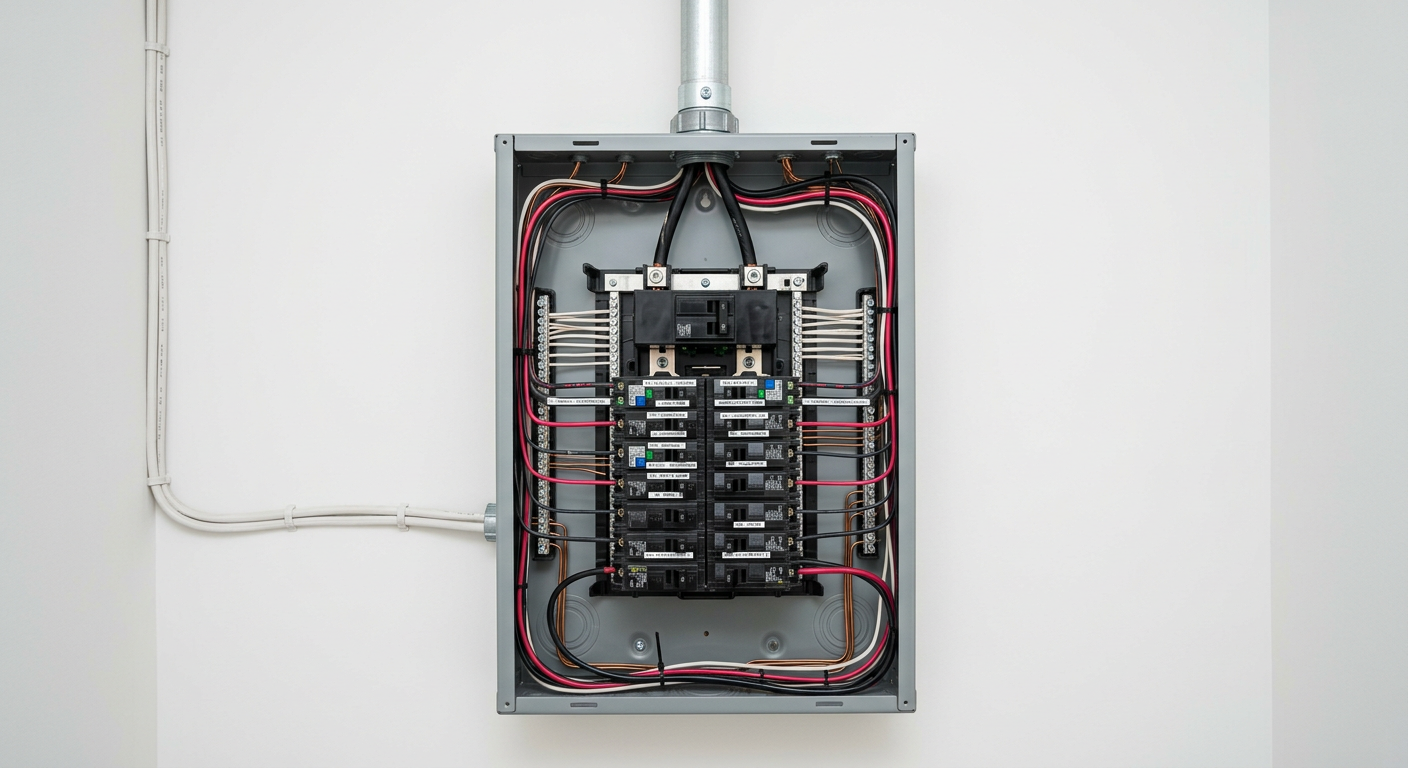
Canada homeowner planning guide
An electrical panel upgrade in Canada is not one standard project. More breaker spaces, replacement distribution equipment, managed electrical demand, and a higher utility service rating solve different constraints. Start with the locally accepted capacity evidence and planned loads. A true service increase may involve the panel, main protection, meter equipment, service conductors, utility design, permits, inspection, an outage, and site restoration.
Do not remove a panel cover, handle service conductors, or rely on breaker-handle totals to judge capacity. Service equipment can remain energized even when a main disconnect is off. A qualified contractor and the applicable authority and utility must establish the property-specific design.
Short answer
Canadian electrical requirements are adopted and administered locally. This guide explains the durable planning questions; your province or territory, local authority, serving utility, equipment instructions, and responsible contractor determine the property-specific answer.
Find your jurisdiction guideMore breaker spaces do not increase service capacity.
A larger panel enclosure or meter label does not prove a larger approved service.
A service increase should follow accepted demand evidence and realistic future-load assumptions.
A subpanel adds distribution downstream of its feeder; it does not create utility capacity.
Approved load management can sometimes defer a service increase for controllable loads.
Utility review, electrical permitting, inspection, and contractor work are distinct responsibilities.
Project triggers
EV charging, heat pumps with auxiliary heat, electric water heating, cooking, suites, hot tubs, workshops, pools, solar, batteries, and generators should be assessed together.
A 60A, 100A, or 125A label is only a starting point. Existing conductors, meter equipment, panel condition, heating fuel, actual demand, and utility supply determine the available paths.
Suites, duplexes, condominiums, farms, shops, and multi-meter buildings can add ownership, metering, demand, fire-separation, utility, and authority decisions beyond a single panel.
A lack of approved breaker positions is a distribution-space problem. Circuit consolidation where specifically approved, a subpanel, or a larger replacement panel may solve it without changing the service rating.
Heat damage, corrosion, unsuitable alterations, missing approved breaker options, or equipment-support concerns can justify replacement even when the existing service capacity remains adequate.
Additions, panel relocation, overhead-to-underground conversion, damaged meter equipment, or a new service location can trigger utility design and building restoration even when the requested ampere rating is unchanged.
Decision guide
A defensible quote connects the existing condition and calculated demand to the proposed correction. It also separates contractor work, authority approval, and utility-owned scope.
A same-capacity panel change replaces distribution equipment. A service increase changes approved supply capacity and can affect conductors, meter equipment, utility work, and energization.
Compare present demand, planned equipment, diversity, charging windows, heating peaks, and future scenarios. Avoid sizing by panel appearance or a generic real-estate expectation.
Approved controls can reduce, sequence, or pause suitable loads. The design must identify monitored conductors, controlled equipment, fail-safe behaviour, settings, and local approval.
The serving utility may review capacity, transformer or conductor limits, service route, meter location, overhead or underground work, fees, and outage timing independently of the permit authority.
Confirm the main protective device, panel or switchboard, customer-owned service conductors, meter base, disconnects, feeders, and utility connection. The lowest applicable rating or approved limit can govern the system.
Use a defined horizon and scenarios for EVs, heating, water heating, cooking, a suite, workshop, solar, battery, or generator. Reserve useful spaces and routes without treating every possible load as simultaneous or inevitable.
A Canada-wide installed price is not a substitute for a site-specific scope. Compare the same equipment, responsibilities, exclusions, and closeout standard.
A distribution-panel change can be materially smaller than work involving the meter, mast, underground service, conductors, transformer, trench, or service relocation.
Panel, breakers, surge protection, meter equipment, transfer gear, load management, feeder work, grounding, and product availability shape the material scope.
Utility engineering, charges, overhead or underground route, trenching, exterior work, access, temporary power, and restoration can dominate a complex upgrade.
Prior alterations, damaged conductors, grounding corrections, permit review, inspection deficiencies, hazardous materials, travel, and multiple visits can change the final cost.
A lower equipment setting, circuit sharing, targeted load control, smart panel, phased electrification, subpanel, or full service increase has a different equipment, commissioning, support, and lifecycle cost.
Disconnect and reconnect windows, temporary arrangements, food or medical continuity, wall repair, siding, roofing, landscaping, trench settlement, painting, and weather protection should be assigned in the quote.
Do not schedule around an assumed installation day until equipment, permits, utility work, inspection, outage, and restoration dependencies are known.
Record service and panel information, heating and hot-water systems, major appliances, EVs, suites, shops, solar, batteries, generators, and reasonably planned additions.
Evaluate a panel-only change, full service increase, subpanel, circuit redesign, lower equipment setting, phased project, and approved load management against the actual objective.
Have the responsible professional use the demand or load method accepted for the address. Where historical meter data is an accepted option, document the period, peak basis, adjustments, and planned loads rather than treating an energy bill as a load calculation.
Identify the panel, main protection, meter socket, mast or underground route, service and feeder conductors, grounding, surge protection, load controls, and the split between customer, contractor, authority, and utility work.
Confirm permit holder, required submissions, inspection path, utility application, design lead time, fees, site readiness, outage, reconnection, restoration, and every dependency that can hold the schedule.
Complete the approved work, labels, circuit directory, settings, tests, torque or commissioning records where required, load-management demonstration, inspections, utility release, and energization sequence.
Keep the design basis, load evidence, utility correspondence, permit and inspection outcome, equipment ratings, settings, warranty, photos, deficiencies, final invoice, and a list of any future-load assumptions that remain unused.
Another qualified professional should be able to understand what existed, why the scope changed, who approved it, what was installed, and how the project closed.
Service rating, closed-cover equipment identification, observed condition, symptoms, accessible configuration, and the planned loads or project trigger.
Legal contractor, equipment, circuit and service work, permit holder, inspection, utility responsibilities, restoration, exclusions, and change-order rules.
Permit number where required, approved equipment, labelled circuits, documented changes, inspection milestones, and utility instructions where applicable.
Final acceptance or inspection status, equipment information, settings, warranty, utility records, paid invoice, and the responsible contractor's contact details.
Continue researching
Separate condition and distribution replacement from a utility capacity increase.
Open guideReview the full decision path for the most searched residential capacity change.
Open guideCompare service capacity with approved control of large flexible loads.
Open guideUnderstand what a defensible capacity recommendation should document.
Open guideCompare ratings against actual loads, electrification plans, and management options.
Open guideAvoid automatic oversizing when a project extends beyond a typical 200A design.
Open guideUse a subpanel for distribution or location needs without confusing it with capacity.
Open guideCompare monitoring, circuit control, cloud dependence, and lifecycle support.
Open guideMap meter, mast, conductors, demarcation, and utility responsibilities.
Open guidePlan the permit, utility, inspection, outage, reconnection, and closeout clocks.
Open guideFind the province, territory, authority, and utility path for the property.
Open guidePrimary references
Forms, code editions, inspection procedures, utility standards, equipment, and incentive programs can change. Verify the current local rule before relying on a project detail.
Canadian questions
The phrase is often used loosely. It can mean replacing a small distribution panel, adding spaces, increasing the service rating, or installing load management. A written scope should state whether approved utility supply capacity changes and which service components are affected.
There is no reliable Canada-wide figure without separating panel-only work from a full service increase. Service route, conductors, meter equipment, utility work, trenching or mast work, grounding, circuits, permits, inspection, restoration, travel, equipment, and concealed deficiencies all affect a property-specific quote.
Only when the project objective, calculated demand, planned loads, utility feasibility, and local requirements support it. Some homes need more capacity; others can meet EV or electrification goals with load management, a lower circuit setting, sequencing, or efficiency changes.
No. The panel enclosure is only one part of the service. Main protection, service conductors, meter equipment, utility connection, approved design, and utility records must support the service rating.
Sometimes. Approved load-management equipment can control suitable loads when demand approaches a set limit. The design must be compatible with the loads, panel, service, equipment instructions, and authority requirements, and it should be commissioned and documented.
A capacity increase commonly requires the serving utility to review or coordinate its connection, metering, conductors, transformer capacity, and outage. The exact utility role varies by property and jurisdiction and is separate from the electrical permit.
The physical installation is only one milestone. Assessment, design, equipment, permit review, utility engineering, disconnect and reconnect, inspection, weather, travel, and restoration determine the complete schedule. Ask for dated dependencies rather than assuming same-day completion.
Keep the load calculation or design basis, contractor and permit details, inspection acceptance, utility approval or service records, equipment ratings, circuit directory, load-management settings if applicable, warranty, and paid invoice.
No. A subpanel provides additional distribution positions or serves a remote area, but its feeder and the existing service still limit available supply. A capacity review must include both the dwelling service and the proposed feeder load.
Not necessarily. A meter marking can describe the meter's capability rather than the approved service rating. Confirm the main protection, service conductors, meter equipment, panel rating, utility records, and any other limiting component.
A smart panel may monitor and control selected loads as part of an accepted demand-management design, but the enclosure itself does not raise the utility service rating. Verify the exact control function, limits, product approval, communications, fail-safe behaviour, and local acceptance.
The responsible electrical contractor commonly coordinates the technical application, while the owner may need to authorize utility work, accounts, costs, easements, access, or restoration. The eligible applicant and permit holder vary, so confirm both the utility and authority process for the address.
Property-specific next step
Send the property location, panel details, project trigger, planned loads, and timing. Provider availability, licensing, scope, price, permit responsibility, and utility scheduling are confirmed before work is booked.