Skip to content
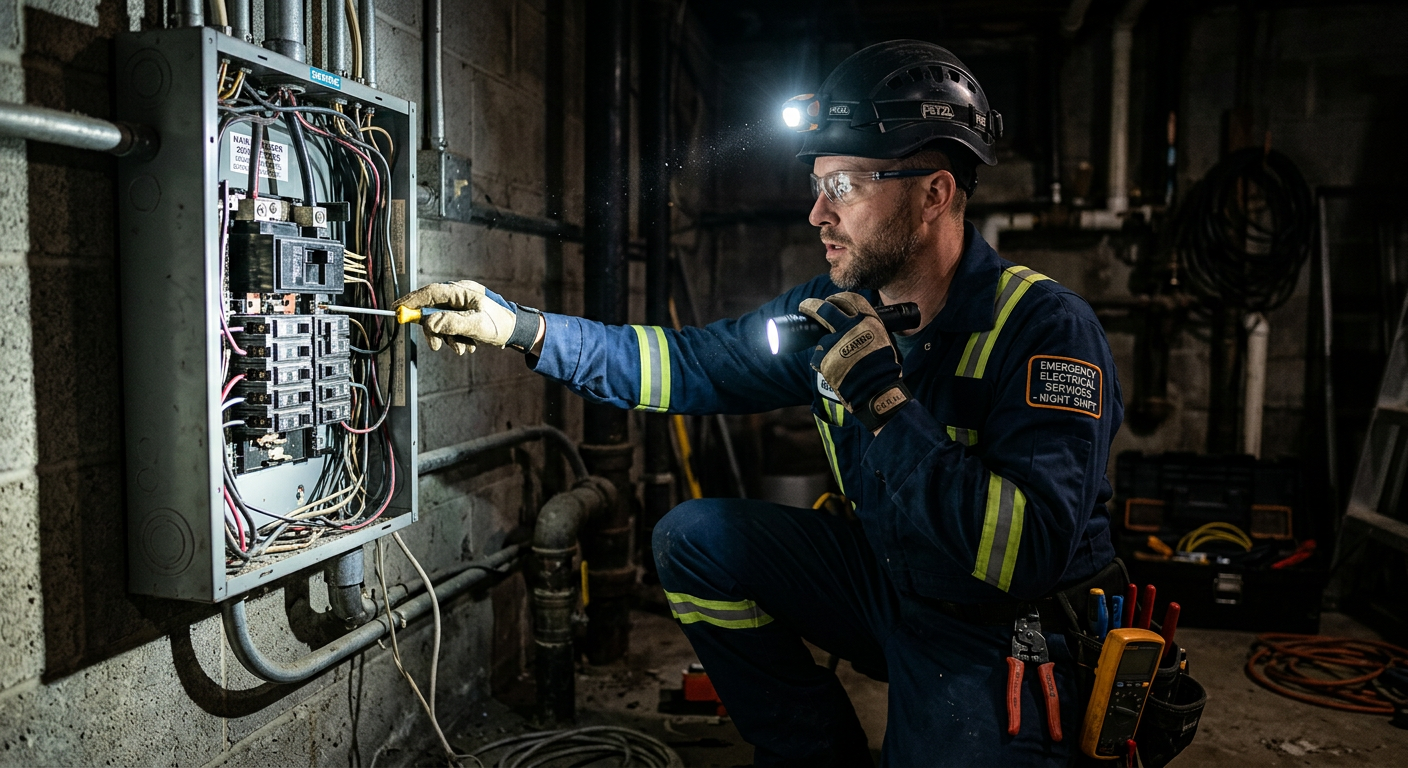
    Residential electrical panel warning scene for buzzing, heat, arcing or burning odour guidance

    Canada homeowner planning guide

    Electrical Panel Buzzing, Crackling or Burning Smell

    A new, persistent or changing buzz, hum, crackle, sizzle or burning smell at an electrical panel should be treated as a warning that needs qualified assessment, not diagnosed by sound alone. Crackling, popping, visible arcing, smoke, flame, severe heat, melting, shock or a strong burning odour can indicate an immediate electrical or fire hazard: keep people away, leave if conditions are unsafe, and contact 911 or the serving utility as appropriate. Do not remove the panel cover or repeatedly reset breakers. Even with the main breaker off, utility-side service components can remain energized.

    Safety boundary

    If there is smoke, flame, visible arcing, an explosive sound, severe heat, shock, a strong or increasing burning smell, water on service equipment, or damaged utility conductors, do not approach the panel. Move people to safety and call 911 or the serving utility as conditions require. Do not use water on energized electrical equipment and do not reopen the area simply to take photos.

    Short answer

    What this project must establish

    Canadian electrical requirements are adopted and administered locally. This guide explains the durable planning questions; your province or territory, local authority, serving utility, equipment instructions, and responsible contractor determine the property-specific answer.

    Find your jurisdiction guide

    Sound alone cannot identify whether the source is a breaker, connection, contactor, transformer, service equipment or another nearby device.

    Crackling, sizzling or popping can be consistent with arcing or a failing connection and should not be watched to see whether it stops.

    Flickering, dimming or surging lights can indicate a loose circuit or electrical-service connection and can present shock or fire risk.

    A tripped breaker is a protective response, not proof that the underlying fault or overheating has been corrected.

    The absence of a trip does not prove the system is safe; some loose or arcing connections can overheat without producing the current needed for conventional protection to open quickly.

    Turning off a main breaker does not de-energize all utility-side conductors, meter equipment or every alternate power source.

    Project triggers

    Situations that change the scope

    New buzz or hum without other signs

    A steady sound can come from several electrical or nearby mechanical components, and some equipment is designed to operate audibly. A sound that is new, louder, intermittent, vibrating, localized to a breaker or panel, or associated with a load still deserves qualified assessment.

    Buzzing with flickering or dimming

    Changes across several lights or circuits can point beyond one lamp or fixture and may involve a loose connection, service neutral, panel connection or utility supply. Record the pattern from a safe location and contact the contractor or utility based on the symptoms.

    Crackling, sizzling or popping

    Sharp or irregular electrical sounds can accompany arcing, loose contact, insulation failure or damaged equipment. Keep clear and escalate promptly, especially when the sound continues after a load is switched off normally.

    Burning smell, heat or discolouration

    Hot-plastic or rubber odour, melting, scorch marks, discolouration or unusual heat indicates an active or recent failure until qualified assessment shows otherwise. Do not touch the enclosure to compare temperature.

    Smoke, sparks, flame or shock

    Treat these as emergency conditions. Leave the area, call 911, and follow emergency or utility instructions. Do not open the panel, operate equipment beside it or attempt to extinguish an energized source with water.

    After new equipment, renovation or storm damage

    A new EV charger, heat pump, range, suite, panel alteration, roof work, water entry, lightning or service impact changes the evidence. Give the contractor and utility the timing, affected loads and project records.

    Decision guide

    Resolve the design choices before pricing

    A defensible quote connects the existing condition and calculated demand to the proposed correction. It also separates contractor work, authority approval, and utility-owned scope.

    01

    Emergency or assessment

    Use the most severe sign, not the most reassuring one. Smoke, flame, arcing, strong odour, severe heat, shock or damaged service equipment warrants immediate emergency or utility escalation rather than a routine appointment.

    02

    Panel, circuit or service origin

    The sound may transmit through metal or walls. A qualified investigation should separate branch-circuit equipment, panel bus and breakers, service conductors and metering, utility supply, and nearby HVAC or control equipment.

    03

    Load-related or connection-related

    Record which appliances were operating and whether symptoms change, but do not recreate the condition. Overload, failing equipment, loose connections, damaged conductors and incompatible components require different corrections.

    04

    Contractor or utility path

    Symptoms at the meter, mast, service drop, underground supply, multiple circuits or whole home may involve utility-controlled equipment. Confirm the ownership boundary and let the serving utility determine its response.

    05

    Focused repair or panel-level work

    Diagnosis may support a breaker, conductor, connection or appliance repair, while damaged bus, unavailable approved parts, extensive heat damage, obsolete equipment or service defects can justify broader replacement.

    06

    Evidence and restoration

    Define testing, photographs, damaged parts, permit or inspection needs, utility documents, fire or insurance reports, smoke cleanup and building repairs before evidence is discarded or finishes are closed.

    What changes the project cost

    A Canada-wide installed price is not a substitute for a site-specific scope. Compare the same equipment, responsibilities, exclusions, and closeout standard.

    Response urgency

    Emergency dispatch, after-hours attendance, fire or utility coordination, temporary isolation and return visits can differ from a scheduled diagnostic appointment.

    Fault location

    Appliance, branch circuit, breaker, panel bus, service conductors, meter base, mast, underground supply and utility equipment carry very different access and responsibility.

    Damage extent

    One repairable termination differs from damaged insulation, breakers, bus, enclosure, service equipment, smoke impact or building charring that requires broader replacement and restoration.

    Equipment support

    Identification, approved replacement parts, manufacturer compatibility, obsolete panels, warranty, breaker functions and lead times affect the available remedy.

    Authority and utility work

    Permit, inspection, disconnect, reconnect, utility investigation, service design and evidence requirements can add scheduling and project cost.

    Connected corrections

    Overload, damaged circuits, water entry, grounding, prior alterations, new equipment, hazardous materials and wall or exterior repairs may sit outside the initial symptom.

    A jurisdiction-ready project sequence

    Do not schedule around an assumed installation day until equipment, permits, utility work, inspection, outage, and restoration dependencies are known.

    1. STEP 1

      Protect people first

      Keep people away from the panel and affected area. If there is active fire, smoke, visible arcing, shock, severe heat or another immediate danger, leave and call 911.

    2. STEP 2

      Avoid unsafe operation

      Do not remove covers, touch the enclosure to test heat, repeatedly reset breakers, operate nearby switches, or recreate a noise. Follow emergency or utility instructions about isolation.

    3. STEP 3

      Record only from a safe location

      When there is no active danger, note the sound, odour, time, duration, affected lights or circuits, operating loads, recent work, weather and utility events without approaching or opening equipment.

    4. STEP 4

      Arrange the correct response

      Contact a qualified electrical contractor for prompt assessment and the serving utility when service or utility equipment may be involved. Share emergency, fire department, insurer and project information.

    5. STEP 5

      Diagnose before selecting the remedy

      The responsible professional should document the source, equipment identification, condition, measurements where safe, load context, protection, service boundary and any permit, inspection or utility requirements.

    6. STEP 6

      Close out and monitor the repair

      Keep the diagnosis, photographs, repair scope, permits and inspections, utility record, replaced-parts information, testing, warranty and invoice. Escalate immediately if any heat, odour, noise or flicker returns.

    Questions every written quote should answer

    • What evidence identifies the source of the sound, heat, odour or flickering?
    • Is any utility-controlled or still-energized service equipment involved?
    • What immediate isolation or operating restrictions apply before repair?
    • Which breaker, panel, conductor, meter, service or connected-equipment work is included?
    • Are approved parts available for the exact panel and breaker system?
    • What conditions would change a focused repair into panel or service replacement?
    • Who obtains permits, inspection, utility disconnect and reconnection where required?
    • Which testing, photographs, reports, labels, warranty and invoice will remain in the property file?
    • What should trigger immediate re-escalation after the repair?

    Build an auditable project file

    Another qualified professional should be able to understand what existed, why the scope changed, who approved it, what was installed, and how the project closed.

    Existing condition

    Service rating, closed-cover equipment identification, observed condition, symptoms, accessible configuration, and the planned loads or project trigger.

    Approved scope

    Legal contractor, equipment, circuit and service work, permit holder, inspection, utility responsibilities, restoration, exclusions, and change-order rules.

    Installation record

    Permit number where required, approved equipment, labelled circuits, documented changes, inspection milestones, and utility instructions where applicable.

    Closeout file

    Final acceptance or inspection status, equipment information, settings, warranty, utility records, paid invoice, and the responsible contractor's contact details.

    Canadian questions

    Panel noise, heat and odour FAQ

    Why is my electrical panel buzzing or humming?+

    Possible sources include a breaker, loose or damaged connection, contactor, transformer, service equipment or another nearby device. Sound alone cannot establish the cause. A new, changing or localized noise needs qualified assessment.

    Is a slight hum from an electrical panel normal?+

    Some electrical equipment can operate audibly, but a homeowner should not assume a panel sound is normal without knowing the source. New, louder, intermittent or vibrating sound, or noise with heat, odour, flicker or trips, should be assessed.

    What does crackling or sizzling in a breaker box mean?+

    It can be consistent with arcing, a loose connection, damaged insulation or failing equipment. Keep clear, do not open the panel or wait beside it, and arrange prompt emergency or qualified response based on the other signs.

    Can a circuit breaker buzz when an appliance is running?+

    The timing can help diagnosis but does not prove a harmless load. Do not repeatedly operate the appliance to reproduce the sound. Record what was running and have the circuit, breaker, connection and appliance assessed.

    What should I do if the electrical panel smells like burning plastic?+

    Treat a hot-plastic or rubber odour as a possible active electrical hazard. Keep away, leave if conditions are unsafe, and call 911 or the utility when there is smoke, arcing, severe heat or escalating odour. Otherwise arrange urgent qualified assessment.

    Should I turn off the main breaker if the panel is buzzing?+

    Do not approach or operate a panel that is hot, smoking, arcing, damaged or unsafe to reach. Follow emergency or utility instructions. Where isolation is appropriate, remember the main breaker does not de-energize utility-side conductors or every alternate source.

    Will a breaker always trip before an electrical fire?+

    No. Breakers address defined overcurrent conditions, but some loose or arcing connections can overheat without operating conventional protection quickly. No trip is not proof that a buzzing, hot or odorous panel is safe.

    Are flickering lights and panel buzzing connected?+

    They can be. Flickering across several circuits may involve a panel, service or utility connection, while one light can have a local cause. Do not diagnose from the pattern alone; record it without recreating it and contact the appropriate professional.

    Why did the panel start humming after an EV charger or heat pump was installed?+

    The timing can indicate a load, connection, equipment, control or service issue related to the project, but it does not identify which one. Stop using affected equipment if instructed and contact the installer for documented assessment.

    What if the buzzing comes from the electric meter outside?+

    Keep away from the meter and service equipment, especially with flickering, arcing, odour, heat, damage or weather exposure. Contact the serving utility and explain the exact signs; do not touch the enclosure or break seals.

    How much does electrical panel buzzing diagnosis cost?+

    Cost depends on urgency, location, testing, equipment, utility involvement, damage, permits and the resulting repair. Ask for diagnosis and repair scope to be identified separately so a service call is not confused with a complete replacement quote.

    What records should I keep after an overheated or arcing panel repair?+

    Keep the diagnosis, photographs, equipment identification, repair scope, permits and inspections, utility or fire report, test results, replaced-part information, warranty and paid invoice for future service, insurance and property records.
    Property-specific next step

    Planning electrical panel work?

    Send the property location, panel details, project trigger, planned loads, and timing. Provider availability, licensing, scope, price, permit responsibility, and utility scheduling are confirmed before work is booked.

    Scope-first project reviewNo DIY panel instructions