The same fuse keeps opening
Record the circuit, equipment operating and timing. Overload, an appliance fault, wiring damage, moisture, a poor connection or incorrect fusing require different corrections.
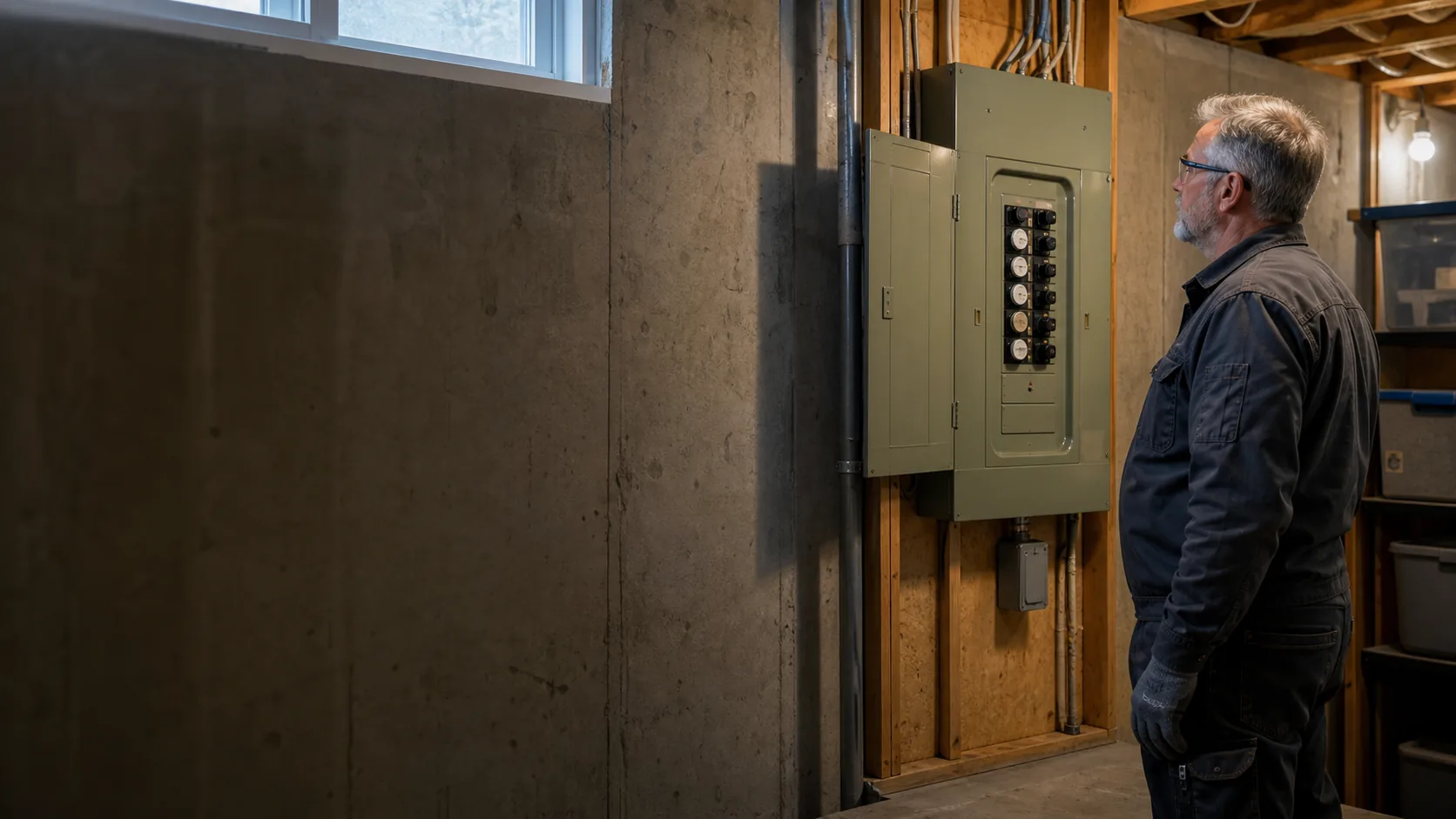
Canada homeowner planning guide
A fuse panel is not automatically unsafe because it uses fuses. Build the decision from exact equipment, correct fusing, condition, connected wiring, service capacity, local approvals and the insurer's written property-specific requirement.
Do not install a higher-rated fuse, bypass a fuse, insert a conductive object, touch exposed parts or remove a panel cover. Keep an older open-type panel closed until qualified assessment. Smoke, flame, arcing, burning odour, severe heat, melting, shock or water entry can require immediate emergency, utility and qualified-contractor action.
Fuse-box decision file
This planner does not diagnose equipment, select a fuse or calculate service size. It identifies the records and scope boundary your contractor, authority, utility or insurer may need for a property-specific decision.
Current evidence gate
Evidence the file still needs
Not decided boundary
Compare continued use after assessment, focused correction, same-capacity conversion and service-upgrade options against the same evidence.
Next evidence action
Record only safely accessible labels, directory information, reported symptoms, planned loads and written third-party requests. Do not remove a cover or touch fuses for this planner.
Short answer
Canadian electrical requirements are adopted and administered locally. This guide explains the durable planning questions; your province or territory, local authority, serving utility, equipment instructions, and responsible contractor determine the property-specific answer.
Find your jurisdiction guideESA's May 2025 notice says properly maintained older fuse panels with the correct fuse size and type can still protect circuits and equipment; age or the word fuse is not a complete diagnosis.
The same ESA notice warns that opening some older panelboard covers can expose bare energized terminals, so enclosure design and shock protection must be assessed separately from fuse operation.
ESA identifies frequently operating fuses as a reason to have the electrical system evaluated; the response is diagnosis, not installing a higher-rated fuse.
Fuse equipment, branch wiring, panel replacement and service capacity are four related but distinct scopes. A conclusion about one does not settle the others.
A fuse-box replacement does not automatically increase the electrical service rating or utility capacity.
A new breaker panel can improve circuit distribution, but it does not by itself correct every connected wiring defect or legacy alteration.
Canadian permit, inspection and utility processes vary by jurisdiction. The responsible authority and serving utility for the address determine the local path.
Insurer and lender requirements vary by company, policy and property. Obtain the exact condition and accepted closeout evidence in writing before selecting scope.
Project triggers
Record the circuit, equipment operating and timing. Overload, an appliance fault, wiring damage, moisture, a poor connection or incorrect fusing require different corrections.
Some older designs may expose energized parts when a door or cover is opened. Keep the cover closed and have shock protection and safe access assessed.
Discolouration, odour, melting, corrosion, contamination, brittle parts, modified holders, bypasses or poor connections can justify urgent assessment and broader replacement scope.
Kitchen work, a suite, EV charging, electric heat or other additions can expose limited circuits or capacity. Assess distribution and total service demand separately.
Ask the actual insurer, broker or lender for the equipment, report, correction, deadline and closeout evidence it requires for this property.
Obtain exact equipment and condition findings, available permit history, insurer input and a complete option price before treating the fuse box as a transaction conclusion.
Decision guide
A defensible quote connects the existing condition and calculated demand to the proposed correction. It also separates contractor work, authority approval, and utility-owned scope.
Record safely accessible manufacturer, model or catalogue information, ratings, fuse forms, main arrangement and visible alterations. Installation era or a generic fuse-box label is not enough, and cover removal belongs to qualified assessment.
Name the exposed-part concern, damage, deterioration, incorrect fusing, unavailable approved part, recurring symptom, circuit need or written third-party requirement that supports focused correction or replacement.
List circuits to reconnect, extend, repair, replace or exclude. Knob-and-tube, aluminum conductors, grounding, shared conductors, short leads and unrecorded alterations remain separate evidence questions.
State whether service rating, meter, customer conductors, mast or underground route, main disconnect, grounding and utility connection remain or change. Use accepted load evidence for a proposed increase.
Name panel and bus ratings, approved breakers, required or selected protective functions, surge protection, main arrangement, labels, circuit count, future spaces and equipment warranty.
Confirm permit holder, inspection stages, utility isolation and reconnect, energization conditions, deficiency handling, restoration, insurer submission and final records before scheduling.
Option matrix
The correct path is the narrowest approved scope that resolves the documented finding and project need. A panel label, a public fee or an insurance conversation does not define the whole job.
| Path | What it can resolve | What it does not prove | Evidence gate |
|---|---|---|---|
| Documented continued use | Supports a current decision where exact equipment, condition, correct fusing and connected circuits are assessed as suitable for the intended use. | It is not a lifetime guarantee and does not override a property-specific insurer, authority or future-load requirement. | Qualified findings, limitations, correct-fuse record and any written third-party acceptance. |
| Focused equipment correction | Addresses a defined holder, fuse, cover, label, connection or approved-part issue where retained equipment can be supported. | It does not correct unrelated branch wiring or create more service capacity. | Exact equipment identity, approved compatibility, documented condition and local acceptance. |
| Same-capacity fuse-to-breaker conversion | Replaces distribution equipment, provides a defined breaker package and may improve circuit organization and future spaces. | It does not automatically increase the service rating, utility capacity or repair every connected circuit. | Existing service suitability, circuit reconnection scope, permit path, outage and inspection plan. |
| Full service upgrade | Combines new distribution with an approved capacity increase and required meter, conductor, service-route or utility work. | It is not justified by panel age alone, and public permit or utility charges are not the complete installed price. | Accepted load case, utility design, permit scope, outage sequence, restoration and energization conditions. |
| Branch-wiring remediation | Corrects defined conductor, device, grounding, connection, deterioration or legacy-wiring findings by circuit or area. | A new panel does not automatically complete this work; some circuits may remain and others may require correction. | Circuit-level findings, access plan, locally triggered requirements, testing and documented exclusions. |
Across Canada
Canada does not have one electrical approval path, permit office, utility boundary, inspection sequence, or fee. Use the provincial or territorial guide as the first routing layer, then confirm the municipality, project scope and serving utility.
Permits are administered through accredited municipalities or safety codes agencies. Calgary and Edmonton have their own processes; many other communities use an accredited agency.
Service changes may require coordination with ENMAX, EPCOR, FortisAlberta, ATCO, or another local wire service provider. Confirm ownership and lead times before scheduling an outage.
Technical Safety BC requires permits for regulated electrical installations and alterations in its jurisdiction. Burnaby, Maple Ridge, North Vancouver, Surrey, Victoria, Vancouver, and West Vancouver are among the jurisdictions that issue their own permits.
A service-capacity change can involve BC Hydro or a municipal utility, meter-base requirements, service design, and scheduled disconnection. Utility approval is separate from the electrical permit.
Electrical permits cover new wiring and alterations to electrical installations. The permit holder is responsible for the declared work and required inspection process.
Capacity increases, meter relocations, overhead-to-underground changes, and service redesigns should be submitted to SaskPower or the serving utility early in planning.
The permit authority depends on location. Service equipment work is outside the scope of ordinary homeowner self-wiring and should be completed by a licensed electrician.
Panel projects that alter the consumer service, meter, or connection require Manitoba Hydro or Winnipeg coordination in addition to the electrical permit.
An ESA notification should be filed before work starts. A municipal building permit is not the same as an ESA electrical notification, and some projects may require both.
A service-size change may also require approval and scheduling from the local distribution company. Requirements vary among Hydro One and municipal utilities.
The contractor should confirm the declarations, municipal requirements, and distributor process that apply to the property and scope. Requirements differ from the ESA-style system used in Ontario.
Service capacity, meter, mast, and connection changes should be coordinated with Hydro-Quebec or the serving municipal distributor before an outage is scheduled.
Wiring permits are required before work starts for regulated installations. Inspection and plan-review requirements depend on project scope and risk.
NB Power or a local municipal utility may need to review service capacity, metering, connection, or outage arrangements.
A wiring permit covers new electrical work and modifications to existing installations. Permit issuance and inspection are handled by the applicable utility inspection department.
The serving utility should be involved when a panel project changes the service, meter, connection, or energization schedule.
A separate permit is required for each work site. The licensed electrical contractor applies and provides the required project and service information.
Service and meter changes should be coordinated with Maritime Electric or the serving municipal utility before installation dates are finalized.
The Government Service Centre administers permits and inspections. Panel, switchboard, generator, and large battery work falls within the regulated process.
Newfoundland Power, Newfoundland and Labrador Hydro, or a local system may need to coordinate service changes, metering, and reconnection.
Building Safety administers electrical permits. Inspection stages include rough-in, service wiring, and final finish, with advance notice required.
Service design and connection may involve ATCO Electric Yukon, Yukon Energy, or a local provider. Remote access and seasonal work windows can affect scheduling.
Permits cover new installations, rewiring, and additions. Authorization is also required before power connection or concealment of rough wiring.
Service coordination may involve Northland Utilities, the Northwest Territories Power Corporation, or a local operator. Remote-community logistics can materially affect timing.
Permit applications identify the contractor, registered electrical worker, work location, occupancy, service ampacity, voltage, and project value. Confirm the current form and fee with the territorial office.
Qulliq Energy Corporation and the territorial authority may both be involved where service capacity, metering, generation, or energization changes.
A Canada-wide installed price is not a substitute for a site-specific scope. Compare the same equipment, responsibilities, exclusions, and closeout standard.
Enclosure, bus rating, breaker package, specialty protection, surge, disconnect, spaces, labels and approved accessories.
Short leads, damaged insulation, grounding, shared conductors, incompatible alterations, splices, extensions and corrections needed for reconnection.
Meter, conductors, route, grounding, utility disconnect and reconnect, capacity change and utility-owned work.
Required or selected ground-fault, arc-fault, surge or other protection, compatible breakers, controls, testing and nuisance-operation diagnosis.
Finished walls, asbestos or other hazardous materials, siding, roofing, fire separation, working space, patching and finish repair.
Application, inspection, utility visits, correction, power-off window, repeat attendance, travel and owner or tenant access responsibilities.
Do not schedule around an assumed installation day until equipment, permits, utility work, inspection, outage, and restoration dependencies are known.
Record closed-cover labels, ratings, accessible fuse markings, directory, symptoms, planned loads, photographs and insurer questions without removing covers.
Assess equipment identity, accessible condition, shock protection, correct fusing, conductor protection, modifications, service equipment, grounding and circuit needs.
Use accepted load evidence and the planned circuits to determine whether the need is replacement, added distribution, load management, service increase or a combination.
Separate panel, breakers, branch circuits, service, utility, permits, outage, restoration and any hazardous-material responsibility in writing.
Obtain required permit or notification, utility work order and isolation or reconnect sequence before equipment is disconnected.
Keep required work visible for inspection, document circuit disposition and resolve deficiencies before final acceptance and normal operation.
Retain inspection outcome, panel and service ratings, equipment schedule, circuit directory, test notes, photographs, warranty, insurer submission and paid invoice.
Another qualified professional should be able to understand what existed, why the scope changed, who approved it, what was installed, and how the project closed.
Service rating, closed-cover equipment identification, observed condition, symptoms, accessible configuration, and the planned loads or project trigger.
Legal contractor, equipment, circuit and service work, permit holder, inspection, utility responsibilities, restoration, exclusions, and change-order rules.
Permit number where required, approved equipment, labelled circuits, documented changes, inspection milestones, and utility instructions where applicable.
Final acceptance or inspection status, equipment information, settings, warranty, utility records, paid invoice, and the responsible contractor's contact details.
Continue researching
Compare fuse panels with other legacy equipment using one evidence framework.
Open guideDefine panel, service and branch-circuit boundaries.
Open guideConnect a replacement recommendation to documented evidence.
Open guideSeparate breaker spaces, condition, load management and service capacity.
Open guideAssess existing and planned demand using accepted evidence.
Open guideCompare service size without assuming replacement changes capacity.
Open guideMap meter, conductors, utility, outage and reconnect scope.
Open guideDefine condition-assessment scope, limitations and records.
Open guideStart with the insurer's written property-specific request.
Open guideCompare complete property-specific scopes and exclusions.
Open guideSubmit equipment, symptoms, project plans and insurer wording.
Open guidePrimary references
Forms, code editions, inspection procedures, utility standards, equipment, and incentive programs can change. Verify the current local rule before relying on a project detail.
Canadian questions
No. Assess the exact equipment, condition, correct fusing, alterations, approved parts, capacity, planned work and insurer or authority requirements before deciding.
A correctly selected and installed fuse is a protective device. Risk can arise from incorrect ratings, bypassing, damaged equipment, poor connections, alterations or unresolved circuit faults.
Possible causes include overload, appliance or wiring faults, moisture, loose connections or an incorrect device. Do not install a larger fuse; have the circuit diagnosed.
Do not increase a fuse rating as a shortcut. The fuse rating must protect the connected conductors and equipment. Diagnose the repeated operation and verify the complete circuit before any rating changes.
They are different fuse forms used in different holders and parts of a distribution system. Type, class, voltage, current rating and equipment compatibility must match the approved installation.
Not automatically. The service rating depends on service equipment and conductors, utility connection and approved design. A panel replacement can retain the existing rating.
Requirements vary. Ask the actual insurer in writing what equipment identification, inspection, correction and final documents it requires for the property.
Some circuits may be reconnectable if assessed and suitable; defects and locally triggered requirements may need correction. The written scope should identify each circuit boundary.
No. Panel replacement changes distribution equipment. Each connected wiring system, termination, device, conductor protection and required correction needs its own assessment and scope.
The outage depends on pre-work, circuit condition, service scope, utility isolation, inspection, deficiencies and reconnect timing. Ask for the sequence and delayed-restoration contingency in writing.
The total depends on equipment, circuits, service scope, condition, permits, utility work, access and restoration. Compare itemized property-specific proposals.
Keep permit and inspection status, panel and service ratings, breaker schedule, circuit directory, corrections, test notes, photos, warranty and paid invoice.
Potentially. A same-capacity conversion is distinct from a service increase. The retained service equipment and conductors, circuit reconnection, local requirements, approved design and condition still need property-specific confirmation.
A home inspection report may identify the equipment and recommend electrical assessment, but pass-or-fail language depends on the inspection, transaction, lender and insurer. An electrical decision should use exact equipment and qualified property findings.
Requirements vary by province, territory and municipality. Confirm the eligible permit holder, electrical permit or notification, inspection stages and final acceptance with the authority having jurisdiction, plus any utility isolation or reconnect steps.
Property-specific next step
Send the property location, panel details, project trigger, planned loads, and timing. Provider availability, licensing, scope, price, permit responsibility, and utility scheduling are confirmed before work is booked.