Skip to content
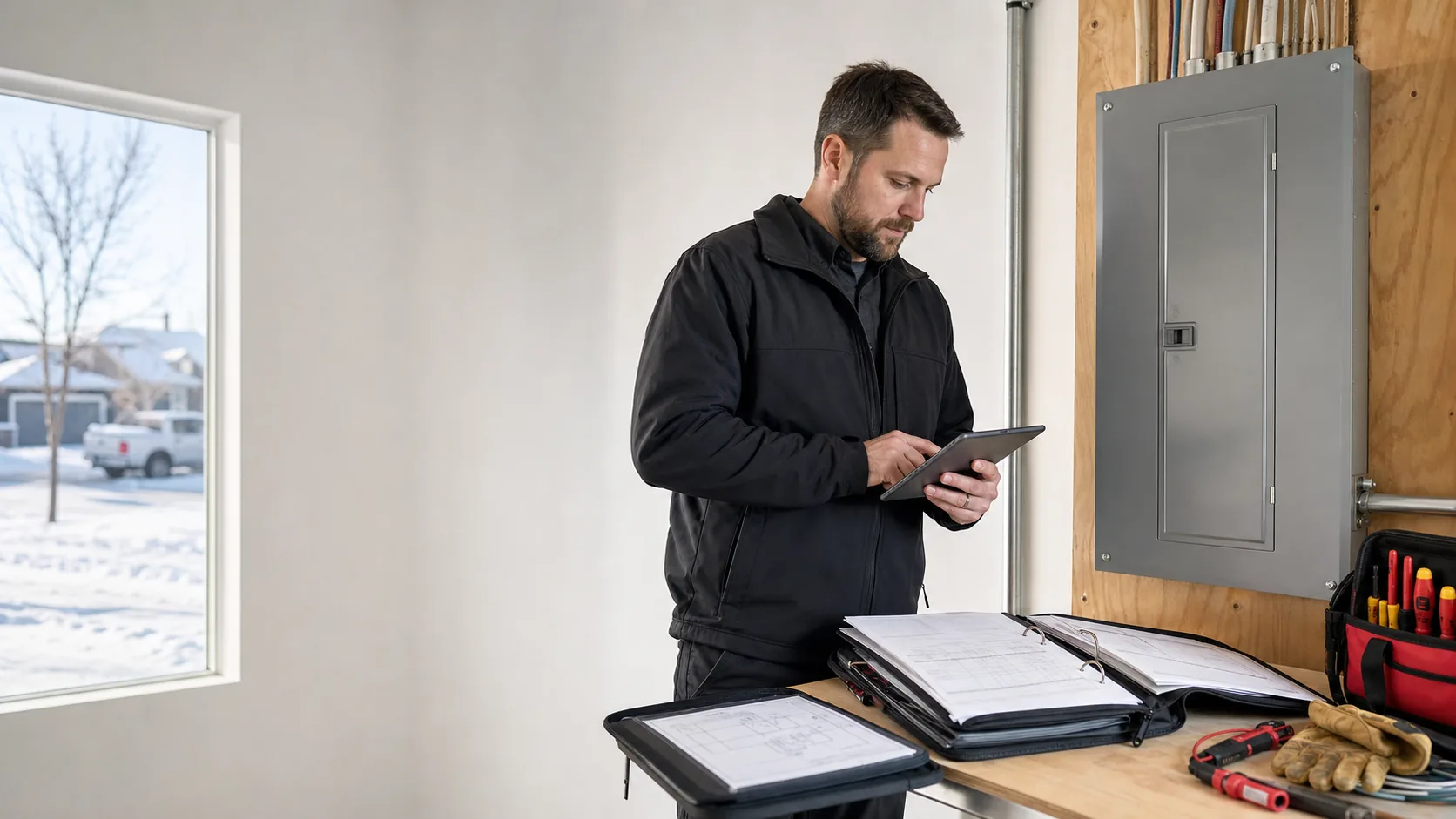
    Electrical professional reviewing Alberta panel permit and inspection records beside closed service equipment

    Alberta homeowner planning guide

    Electrical Panel Permits in Alberta

    An Alberta electrical panel project begins with the authority having jurisdiction for the property address, not a single province-wide permit desk. Accredited municipalities and regional bodies administer permits in their areas; Alberta Safety Codes Authority agencies serve unaccredited areas. For contracted work, confirm the responsible Master Electrician and permit holder. Calgary and Edmonton homeowner guidance does not allow a homeowner permit to be used for installing, altering or relocating the main service panel or service equipment. Treat the electrical permit, any building or development approval, and the serving wire owner's service, meter, disconnect and reconnect process as separate project gates, then retain the final inspection and utility records.

    Safety boundary

    Do not open panel or service equipment, remove a meter, break a utility seal, start regulated work before the required permit, conceal wiring ahead of an inspection stage or energize incomplete work. Service components can remain energized when the main breaker is off. Follow the permit issuer, serving wire owner and qualified contractor's accepted isolation and reconnection sequence.

    Short answer

    What this project must establish

    Canadian electrical requirements are adopted and administered locally. This guide explains the durable planning questions; your province or territory, local authority, serving utility, equipment instructions, and responsible contractor determine the property-specific answer.

    Find your jurisdiction guide

    Alberta's permit system is delivered by accredited municipalities, regional bodies and agencies serving non-accredited areas.

    The Government of Alberta says primary responsibility for safety-code compliance rests with the owner.

    Alberta currently lists the 2024 Canadian Electrical Code, 26th Edition, as in force for permits issued from April 1, 2025, subject to Alberta regulations and authority interpretation.

    For contracted electrical work, Alberta Master Electricians carry the permit responsibility; homeowner permit eligibility is a separate and restricted path.

    Calgary and Edmonton homeowner guidance excludes installing, altering or relocating the main electrical service panel or service equipment from homeowner-permit work.

    A wire-owner disconnect, meter or service request is separate from the electrical permit and can require the permit number, inspection or reconnection authorization before energization.

    Project triggers

    Situations that change the scope

    Same-capacity panel replacement

    Confirm whether the authority treats the scope as a permitted alteration, who holds the permit, how circuits and protective devices are documented, which inspection applies and what the wire owner needs for isolation and reconnection.

    100A-to-200A service change

    A capacity increase can add an accepted load calculation, panel and main protection, meter socket, service conductors, overhead or underground route, grounding, wire-owner design, permit inspection and reconnect prerequisites.

    Panel or meter relocation

    Moving distribution or service equipment adds location, conductor-route, building-restoration and utility-ownership decisions. Obtain authority and wire-owner acceptance before framing, trenching or exterior finishes commit the route.

    Suite, EV, heat pump or major circuit

    A secondary suite, charger, heat pump, hot tub, solar, battery, generator or outbuilding feeder can require load evidence, electrical and building approvals, utility review, staged inspections and commissioning records.

    Homeowner-permit screening

    Owner-occupied dwelling eligibility does not make main panel or service work homeowner-permit work. Check the exact municipality or ASCA agency rules and use the required qualified permit holder for excluded scope.

    Existing unpermitted or damaged work

    Ask the authority how records gaps, concealed work, prior alterations or damage must be investigated and corrected. A new permit should not be represented as retroactively approving unrelated existing work.

    Decision guide

    Resolve the design choices before pricing

    A defensible quote connects the existing condition and calculated demand to the proposed correction. It also separates contractor work, authority approval, and utility-owned scope.

    01

    Find the address-specific issuer

    Use the Safety Codes Council permit finder to determine whether an accredited municipality, regional commission or ASCA-contracted agency serves the electrical discipline at the property.

    02

    Name the eligible permit holder

    For contracted work, identify the responsible Alberta Master Electrician and legal contractor. For a claimed homeowner path, verify ownership, occupancy, dwelling type, scope and municipal or agency restrictions in writing.

    03

    Define permit and code scope

    Describe the panel, service, feeders, circuits, equipment ratings, project value, load calculation, one-line or plans, and permit date so the issuer can identify the current submission and inspection requirements.

    04

    Separate related approvals

    An electrical permit is not a development permit, building permit or utility service approval. Suites, additions, exterior routes and generation can require several coordinated files with different closing records.

    05

    Identify the serving wire owner

    Determine whether ENMAX, EPCOR, FortisAlberta, ATCO or another wire owner controls the meter and connection. Confirm service availability, ownership, application, disconnect, reconnect and owner-direct charges.

    06

    Set inspection and closure gates

    List rough-in, service, underground, final or other inspections and declarations, what must remain accessible, who corrects deficiencies, and the exact record required before reconnection and permit closure.

    What changes the project cost

    A Alberta-wide installed price is not a substitute for a site-specific scope. Compare the same equipment, responsibilities, exclusions, and closeout standard.

    Issuer and permit category

    Municipal or ASCA agency fee schedules, Safety Codes Council levy, project value, scope, plan review, amendments, expiry, extension and additional permit disciplines can change the application total.

    Technical submission

    Load calculations, one-lines, service or site plans, equipment data, short-circuit or engineering review where required, utility information and owner authorization add design effort before installation.

    Inspection stages and travel

    Number, location and timing of inspections, rural travel, access, remote documentation, concealed-work exposure, deficiencies and reinspection requirements affect fees and labour.

    Wire-owner process

    Design review, service availability, meter or route work, disconnect, reconnect, contribution, appointments, civil readiness and owner-direct charges are separate from the electrical permit fee.

    Existing conditions and corrections

    Grounding, bonding, damaged conductors, incompatible equipment, prior alterations, water entry and inaccessible work need a written investigation boundary and change-order method.

    Outage and restoration

    Temporary needs, tenants, heating, refrigeration, security, framing, fire-stopping, drywall, siding, roofing, trenching, concrete and landscaping can exceed the permit administration cost.

    A jurisdiction-ready project sequence

    Do not schedule around an assumed installation day until equipment, permits, utility work, inspection, outage, and restoration dependencies are known.

    1. STEP 1

      Classify the complete project

      Separate maintenance, panel-only replacement, service-capacity change, relocation, new feeders or circuits, connected renovation and generation so each approval body sees the same defined scope.

    2. STEP 2

      Confirm the authority and permit holder

      Use the address-specific official source, then verify the applicant, Master Electrician or homeowner eligibility, legal contractor, insurance, permit category and any building or development approvals.

    3. STEP 3

      Open the wire-owner request

      Where metering, service capacity, utility equipment, isolation or reconnection is affected, submit the wire-owner request early and obtain design, site-readiness, appointment, permit and energization instructions.

    4. STEP 4

      Submit complete permit evidence

      Provide the issuer's current project description, equipment and service ratings, value, load calculation, plans or one-line, utility information, owner authorization and fee before regulated work begins.

    5. STEP 5

      Hold each inspection stage

      Keep wiring, service work, trenches, raceways and required equipment details accessible. Coordinate rough-in, underground, service and final inspections before insulation, drywall, landscaping or energization.

    6. STEP 6

      Correct and authorize reconnect

      Record deficiencies, responsible corrections and reinspection. Complete every authority and wire-owner prerequisite before reconnection, with a plan for missed appointments, weather or unresolved conditions.

    7. STEP 7

      Close and retain the file

      Keep the signed scope, permit identifier, inspection or closure status, wire-owner correspondence, approved equipment schedule, load or design evidence, updated circuit directory, tests, photographs, invoice, warranty and contractor identity.

    Questions every written quote should answer

    • Which accredited municipality, regional body or ASCA agency issues the electrical permit for this address?
    • Who is the responsible Master Electrician or otherwise eligible permit holder for this exact property and scope?
    • Which permit category, current code edition, project value and declared work will appear on the application?
    • Which load calculation, one-line, service plan, equipment data, owner authorization or other documents are included?
    • Which building, development, suite, generation or other approvals must be coordinated separately?
    • Which wire owner serves the address, and what design, meter, disconnect, reconnect and owner-direct charges apply?
    • Which rough-in, underground, service and final inspection stages apply, and what must remain visible?
    • What permit or inspection evidence must be complete before the wire owner reconnects or energizes service?
    • Who corrects deficiencies and pays for reinspection, repeat utility visits, expired permits or delayed reconnection?
    • Which permit, closure, utility, load, equipment, test, circuit-directory, photograph, invoice and warranty records will I receive?

    Build an auditable project file

    Another qualified professional should be able to understand what existed, why the scope changed, who approved it, what was installed, and how the project closed.

    Existing condition

    Service rating, closed-cover equipment identification, observed condition, symptoms, accessible configuration, and the planned loads or project trigger.

    Approved scope

    Legal contractor, equipment, circuit and service work, permit holder, inspection, utility responsibilities, restoration, exclusions, and change-order rules.

    Installation record

    Permit number where required, approved equipment, labelled circuits, documented changes, inspection milestones, and utility instructions where applicable.

    Closeout file

    Final acceptance or inspection status, equipment information, settings, warranty, utility records, paid invoice, and the responsible contractor's contact details.

    Canadian questions

    Alberta panel permits FAQ

    Who issues an electrical panel permit in Alberta?+

    The address may be served by an accredited municipality or regional body, or by an ASCA-contracted agency in an unaccredited area. Use the Safety Codes Council permit finder for the property instead of assuming a nearby city's process applies.

    Does an Alberta electrical panel replacement require a permit?+

    Panel replacement alters regulated distribution equipment. Confirm the current permit category, eligible holder and inspection sequence with the authority for the address before work. A same-capacity project should not be assumed exempt without that verification.

    Can an Alberta homeowner replace the main electrical panel under a homeowner permit?+

    Do not assume so. Calgary and Edmonton expressly exclude installing, altering or relocating the main service panel or service equipment from homeowner-permit work. Other authorities can have their own eligibility rules; verify the address and use the required qualified permit holder.

    Who can pull an electrical contractor permit in Alberta?+

    The Safety Codes Council identifies Master Electricians as the contractors who can obtain electrical permits in Alberta. Confirm the responsible Master Electrician, legal contractor and permit identifier before contracted work begins.

    Are Calgary and Edmonton electrical permit rules the same?+

    No. Each city publishes its own forms, applicant rules, permit packaging, fees, inspection booking and project requirements. Rural and other municipal properties can use a different accredited organization or ASCA agency.

    What is ASCA in Alberta's permit system?+

    The Alberta Safety Codes Authority oversees permit and inspection services delivered through contracted agencies in municipalities that are not accredited to administer the applicable safety-code discipline.

    How much is an Alberta electrical panel permit?+

    There is no single province-wide fee. Issuers use current municipal or ASCA schedules, the Safety Codes Council levy and factors such as scope, value, reviews and inspections. Check the official issuer after the project is classified.

    Does an electrical permit include ENMAX, EPCOR or FortisAlberta disconnect and reconnect?+

    No. The wire owner controls its service, meter, application, appointments and reconnection conditions. A project may need both the electrical permit process and a separate wire-owner request, authorization and charges.

    What electrical inspection stages apply in Alberta?+

    The authority sets the stages for the permit and scope. Rough-in, underground, service and final inspections can apply, and required work must remain accessible. Confirm the stages before insulation, drywall, trench closure or utility scheduling.

    Can panel work be energized before final inspection?+

    Follow the permit conditions, inspector and wire-owner authorization sequence. A physical installation being complete does not by itself authorize reconnection or energization, and prerequisites vary by authority and wire owner.

    What happens after an Alberta electrical inspection deficiency?+

    Obtain the documented item, correct it through the responsible permit holder, request any required reinspection and coordinate a new utility window if reconnection was affected. The contract should assign correction and repeat-visit costs.

    What proves an Alberta electrical permit is complete?+

    Ask the issuer which inspection report, closure status or acceptance record proves completion. Keep it with the permit number, accepted plans, wire-owner correspondence, equipment ratings, load evidence, circuit directory, tests, photographs, warranty and invoice.
    Property-specific next step

    Planning electrical panel work?

    Send the property location, panel details, project trigger, planned loads, and timing. Provider availability, licensing, scope, price, permit responsibility, and utility scheduling are confirmed before work is booked.

    Scope-first project reviewNo DIY panel instructions