Skip to content
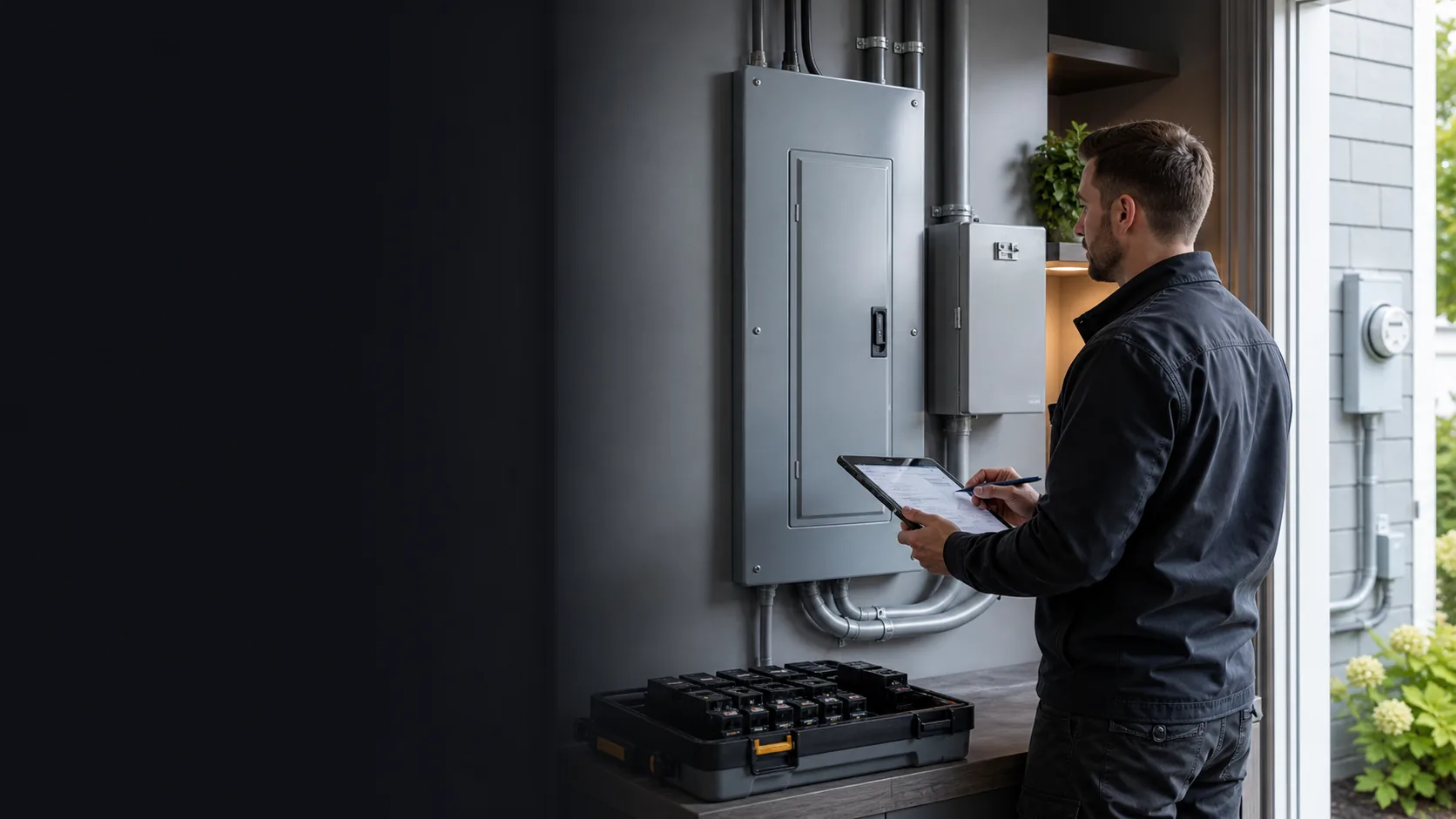
    Electrical professional preparing an itemized Canadian replacement estimate beside a closed modern electrical panel

    Evidence-led Canadian guide

    Electrical Panel Replacement Cost in Canada: 2026 Guide

    For early 2026 budgeting, ElectricalPanels.ca uses an editorial planning band of about $1,500-$4,000 CAD for a straightforward like-for-like panel replacement and about $3,000-$6,500 for a straightforward 100A-to-200A service upgrade; major utility, underground, relocation, restoration or correction work can move a complete service project to $5,000-$12,000 or more. These are disclosed planning intervals, not quotes or government averages. A panel-only replacement is not comparable to a capacity upgrade involving the meter, service conductors, utility or civil work, so classify the scope and compare every line item before using the total.

    Citation-ready answer

    What the evidence supports

    Canada does not have one permit process, one utility standard, one service configuration, or one installed price. Durable answers distinguish the national planning principle from the local decision.

    The planning bands are a July 2026 editorial synthesis of cited Canadian market observations and current authority fee schedules, not a statistical national average.

    A panel-only replacement can retain the existing service rating; a 100A-to-200A upgrade can extend through the meter, conductors, service route and utility connection.

    Ontario ESA and Technical Safety BC publish different 2026 fee structures, demonstrating why permit or notification cost cannot be one national allowance.

    Utilities can apply standard connection charges, site-specific estimates, customer contributions or capital contributions according to their own service rules.

    Equipment, circuit count, protective functions, existing defects, access and restoration can matter more than the amperage printed in a quote heading.

    A lower total is not comparable when assessment, approved equipment, permits, utility work, tax, restoration, correction rules or closeout records are excluded.

    Immediate safety note

    Price pressure does not make electrical panel or service work suitable for DIY shortcuts. Do not remove covers, break utility seals, reuse unverified breakers, work on service conductors or accept energization outside the authorized permit and utility process. Smoke, arcing, severe heat, shock or a burning odour requires emergency or utility response rather than a routine estimate.

    01

    Classify the project before using a price

    Start by naming whether the job is diagnosis, repair, panel-only replacement, added distribution, managed demand or a complete service-capacity change.

    A breaker repair, same-rating panel replacement, larger panel enclosure, subpanel, EV energy-management system and 200A service upgrade solve different constraints. A quote labelled panel upgrade can describe any of them, so the heading alone cannot support a cost comparison.

    Write the trigger and intended result first: damaged or obsolete equipment, unavailable parts, insurer requirement, breaker spaces, accepted capacity shortage, new EV or heat-pump load, renovation, relocation or service defect. The budget should follow the verified problem rather than an assumed amperage.

    • Repair or circuit correction
    • Same-rating panel replacement
    • More distribution spaces or a subpanel
    • Managed load or true service-capacity increase
    02

    Separate panel cost from service cost

    A distribution-panel change and an electrical service-capacity increase have different equipment, ownership, outage and utility boundaries.

    Panel-only work can replace distribution equipment and transfer circuits while retaining the existing utility service rating, meter arrangement and service conductors. A complete service upgrade can change the main protection, meter socket, disconnect, customer conductors, mast or underground raceway, grounding, utility connection and transformer capacity.

    Require a written responsibility map for every component from the utility connection through the branch circuits. Meter ownership does not establish who owns the socket, mast, underground conduit or conductors, and that boundary varies by utility design.

    03

    Price the complete equipment package

    Panel brand and amp rating are only two inputs; breaker count, protective functions and connected-condition work can change the package materially.

    The equipment schedule should identify the panel or load centre, rating and spaces, main protection, approved breaker family and quantities, AFCI or GFCI functions where required, surge protection, disconnects, conductors, grounding and bonding, labels, fillers, accessories and any energy-management controls.

    Existing circuits can add diagnostic and correction work: short conductors, shared neutrals, damaged insulation, incompatible breakers, corrosion, contamination, doubled conductors, older wiring, poor directories and concealed alterations. State which visible conditions are included and how findings after de-energization become approved change orders.

    04

    Verify permit and inspection fees

    Use the current authority fee guide for the exact address, project class, permit holder, declared value or service rating and inspection path.

    Ontario's ESA uses a notification and inspection fee structure, Technical Safety BC publishes electrical fee schedules, Alberta work may be administered by a municipality or accredited agency, and other provinces and territories use their own models. Fee names and inclusions are not interchangeable.

    Ask whether the quoted amount is a current fixed fee, an allowance, a valuation-based estimate or an owner-direct charge. Identify included inspections, service or connection inspection, after-hours attendance, amendment, expiry, deficiency correction and reinspection exposure instead of hiding all authority work under permits included.

    05

    Obtain the utility cost boundary

    A contractor allowance cannot replace the serving utility's address-specific design, ownership decision, connection charge or contribution rules.

    Utility scope can include application and design, disconnect and reconnect, metering, service drop or lateral, pole, transformer, underground extension, trench specification, easement, civil readiness, site inspection and energization. Some utilities publish standard charges; expansion or unusual work can still require a project estimate or customer contribution.

    Request the utility work number, written response or explicit allowance basis. Separate charges billed to the electrical contractor from those billed directly to the owner, and state who carries cost changes caused by utility design, capacity, scheduling or failed site readiness.

    06

    Include labour, access and restoration

    Installation cost reflects the route, outage sequence, occupants, geography and building work as well as hours spent transferring circuits.

    Finished rooms, short existing conductors, tight working space, occupied suites, essential loads, winter exposure, after-hours requests, remote travel, difficult parking and repeat authority or utility visits can alter labour and scheduling. A larger crew may shorten the outage without reducing total labour.

    Assign drywall, paint, siding, roofing, fire stopping, concrete, trenching, backfill, landscaping, hazardous materials, mould and cleanup to a named party and finish standard. Electrical complete does not necessarily mean the building surface is restored.

    07

    Treat tax, allowances and change orders explicitly

    The quoted subtotal, applicable sales tax, owner-direct charges, allowances and maximum authorized changes should never be collapsed into an ambiguous total.

    GST and HST depend on the applicable Canadian place-of-supply rules, while provincial sales taxes require their own treatment where relevant. State whether tax is included and whether utility, permit, equipment or other-trade invoices are inside or outside the quoted total.

    An allowance is an unresolved budget, not a fixed price. For each allowance, identify the assumed quantity or scope, supporting source, markup, reconciliation method and approval threshold. Require photographs and a priced change order before non-emergency work expands beyond the contract.

    08

    Normalize quotes and preserve closeout evidence

    Compare bids only after equipment, responsibilities, exclusions, commercial terms and completion records are placed in the same table.

    Record the legal contractor, applicable licence, insurance, assessment basis, exact equipment, affected circuits, service and utility scope, permit holder, inspections, outage, restoration, schedule, deposit, payment milestones, cancellation, warranty and change-order rules for each proposal.

    The final payment package should include the accepted scope and changes, paid invoice, permit or notification identifier, inspection or acceptance status, utility records, equipment schedule, service and panel ratings, circuit directory, settings, tests, photographs, warranty and documented outstanding work.

    Comparison

    Electrical panel quote normalization matrix

    Place each proposal into the same categories before comparing totals. A blank cell is an unresolved scope item, not evidence that the work is unnecessary.

    Quote layerWhat must be statedCost evidenceCommon hidden exposure
    Scope and capacityRepair, panel-only, distribution change, managed load or service upgradeAssessment and accepted load evidencePricing a capacity increase that has not been justified
    Electrical equipmentExact panel, breakers, protection, conductors, disconnects, grounding and labelsItemized schedule or fixed packageGeneric panel allowance and specialty breakers
    AuthorityPermit holder, fee class, inspections, amendments and reinspectionCurrent issuer fee guideOutdated fee or owner-direct charge
    UtilityApplication, design, disconnect, meter, connection, expansion and energizationUtility response or stated allowanceTransformer, trench, contribution and repeat visit
    Labour and outageCrew, access, circuit transfer, testing, coordination, cleanup and contingencyDefined included scopeAfter-hours work, short conductors and return trips
    Building and civilOpenings, fire stopping, trench, roof, siding, drywall, paint and landscapeNamed trade and finish standardElectrical complete but property unfinished
    Commercial and closeoutTax, deposit, milestones, exclusions, changes, warranty and recordsContract terms and deliverable listUncapped allowance or payment before acceptance

    Evidence to collect

    A useful project file lets another qualified professional understand the existing condition and the proposed decision.

    • Project trigger, required outcome and any insurer, renovation or equipment deadline
    • Closed-cover panel, service rating, meter, overhead or underground route and circuit record
    • Accepted load evidence and exact existing, committed and plausible future major loads
    • Scope class: repair, panel-only, subpanel, managed load or complete service upgrade
    • Exact panel, breaker quantities, protective functions, conductors, disconnects and controls
    • Known circuit, service, grounding, corrosion, water, older-wiring and prior-alteration findings
    • Permit issuer, eligible holder, fee class, inspections, amendments and final acceptance
    • Serving utility request, ownership map, design, charges, contributions and energization gates
    • Outage window, essential-load plan, access, crew, travel and delayed-reconnect contingency
    • Drywall, siding, roof, fire stopping, trench, concrete, landscape and cleanup responsibilities
    • Subtotal, tax, owner-direct charges, allowances, deposit, milestones and change-order limits
    • Inspection, utility, equipment, test, circuit-directory, warranty and paid-invoice closeout file

    Questions for the written scope

    1. 01What verified condition, capacity or project requirement supports this scope?
    2. 02Is this repair, same-rating panel replacement, added distribution, managed demand or a true service increase?
    3. 03Which exact panel, breaker quantities, protection, conductors, disconnects, grounding, labels and controls are included?
    4. 04Which visible circuit or service deficiencies are included, and which remain diagnostic allowances?
    5. 05Who holds the permit, what current fee class applies and how are amendments or reinspections handled?
    6. 06What utility request, design, disconnect, metering, connection, contribution and energization work applies?
    7. 07Which utility and authority amounts are fixed, allowances or billed directly to the owner?
    8. 08What outage, access, essential-load, weather, travel and delayed-reconnect assumptions are priced?
    9. 09Who restores each wall, roof, siding, fire separation, trench, concrete and landscaped surface?
    10. 10Is tax included, and how are allowances, markups, deposits, milestones and cancellations reconciled?
    11. 11What evidence and authorization are required before a change order proceeds?
    12. 12Which permit, acceptance, utility, equipment, setting, test, directory, warranty and invoice records will I receive?

    Canadian questions

    Frequently asked questions

    How much does electrical panel replacement cost in Canada in 2026?+

    For early budgeting, ElectricalPanels.ca currently uses about $1,500-$4,000 CAD for straightforward like-for-like panel replacement. The planning interval is an editorial synthesis, not a quote or government average, and equipment, circuits, permits, condition, access, tax and restoration can move a property outside it.

    How much does a 100 amp to 200 amp service upgrade cost in Canada?+

    A straightforward complete service project may be budgeted around $3,000-$6,500 CAD, while major utility, underground, relocation, civil or correction work can move the total to $5,000-$12,000 or more. Confirm the need with accepted load evidence and replace the band with an address-specific design and quote.

    Why are electrical panel quotes so different?+

    The proposals may cover different projects. Compare condition and capacity evidence, panel versus service scope, equipment and breakers, utility and permit work, corrections, outage, restoration, travel, tax, commercial terms and closeout records before comparing totals.

    Is a 200 amp panel replacement the same as a 200 amp service upgrade?+

    No. A panel replacement can retain existing service capacity and equipment. A service upgrade may change the meter, conductors, mast or underground route, disconnect, utility connection and approvals.

    Are permits and inspections included in panel replacement pricing?+

    Sometimes, but never assume. Identify the permit holder, issuer, fee, inspection responsibility, corrections, reinspection and final record in writing.

    Does the utility charge separately for a panel project?+

    It can. Disconnect, reconnect, meter, design, transformer, service route or contribution work may be quoted or billed by the utility. Responsibility varies by utility and scope.

    Should I choose the lowest electrical panel quote?+

    Choose a complete, evidence-supported scope from a properly qualified contractor. A lower total can exclude diagnosis, approved equipment, permits, utility work, restoration, corrections or records.

    Does every panel replacement require a 200 amp upgrade?+

    No. Panel condition, breaker spaces and service capacity are separate questions. A same-rating replacement, subpanel or accepted load-management design can be suitable when the property evidence and local requirements support it.

    What equipment should a panel replacement quote identify?+

    Request the exact panel or load centre, rating and spaces, main protection, approved breaker family and quantities, required protective functions, surge protection, disconnects, conductors, grounding, labels, accessories and any controls.

    Can old wiring increase panel replacement cost?+

    Yes. Short conductors, damaged insulation, shared neutrals, incompatible devices, aluminum branch wiring, knob-and-tube, poor labels and prior alterations can require assessment or correction beyond transferring circuits. The quote should state what is known and how findings are priced.

    Does an underground electrical service cost more to upgrade?+

    It can when the route requires trenching, conduit, utility design, transformer or vault work, easements, concrete or landscape restoration. Some underground services remain straightforward, so the actual utility and site design matters more than the label alone.

    Is sales tax included in an electrical panel quote?+

    Do not assume. The proposal should state the pre-tax subtotal, applicable GST or HST and any relevant provincial tax treatment, plus owner-direct utility, permit or other-trade invoices outside the contractor total.

    Can load management cost less than a 200 amp upgrade?+

    Sometimes. An approved system can manage flexible loads such as EV charging within an accepted capacity design. Compare equipment, installation, commissioning, operating limits, future loads, maintenance and local acceptance with the complete service-upgrade scope.

    What contingency should a panel quote include?+

    The proposal should name plausible unknowns such as damaged or short conductors, unsuitable breakers, corrosion, hazardous materials, service defects and finish work, then define evidence, authorization, markup and pricing before expanded work proceeds.

    What documents should I receive after paying?+

    Retain the permit and inspection outcome, utility records where applicable, equipment schedule, service and panel ratings, circuit directory, settings, test or commissioning notes, photos, warranty and paid invoice.
    ElectricalPanels.ca is an education and request-routing platform. Before work begins, verify the legal contractor, applicable licence, insurance, permit holder, inspection responsibility, utility role, written exclusions, warranty, and change-order terms.

    Property-specific next step

    Planning electrical panel work?

    Send the property location, panel details, project trigger, planned loads, and timing. Provider availability, licensing, scope, price, permit responsibility, and utility scheduling are confirmed before work is booked.

    Scope-first project reviewNo DIY panel instructions