Brand found during inspection
Use closed-cover labels, catalogue numbers, ratings, approval marks and visible breaker markings as the start of identification, then obtain qualified confirmation before product-specific conclusions.
Canada homeowner planning guide
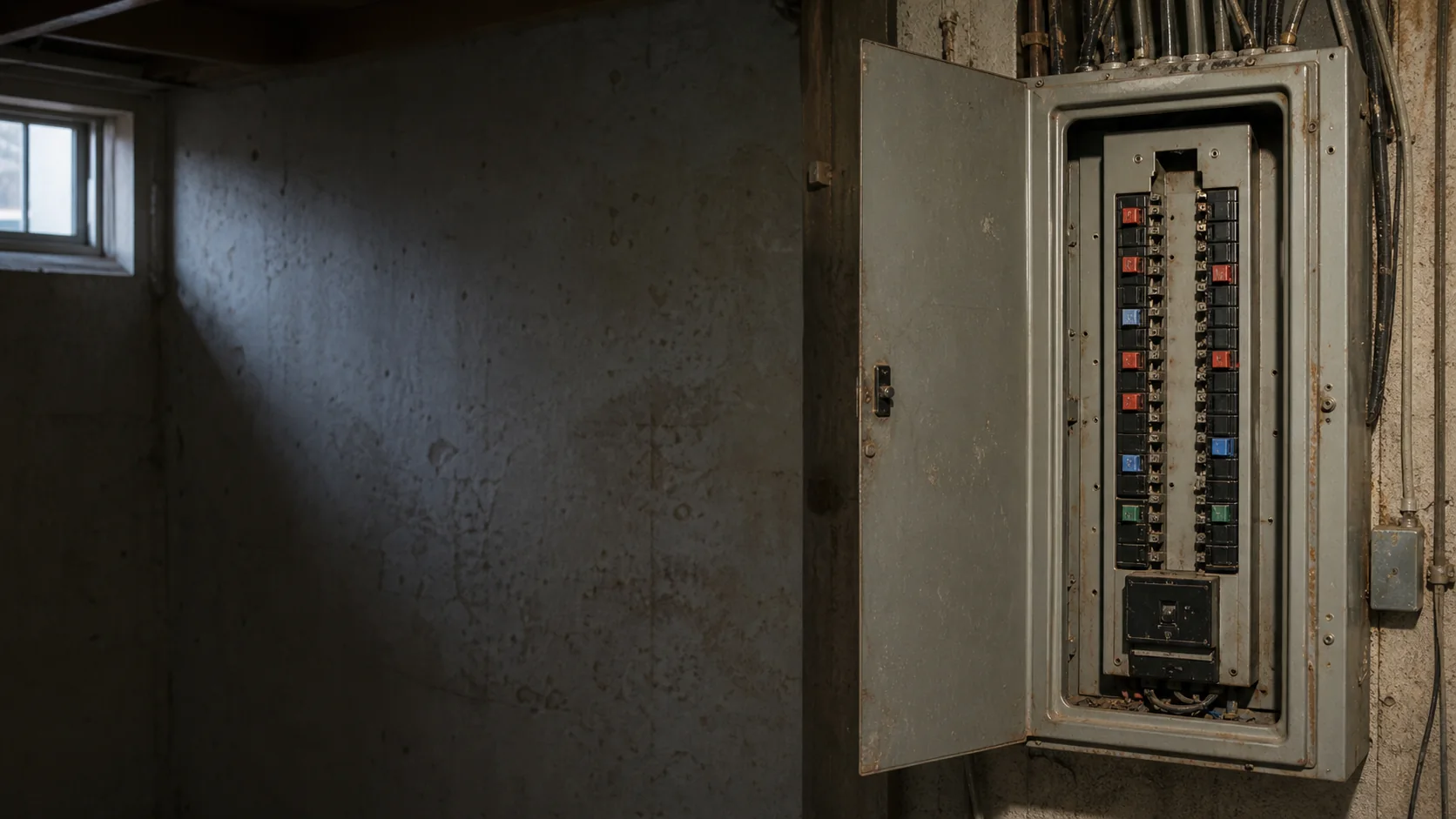
A Zinsco or Sylvania name should trigger exact product identification and a qualified condition and compatibility assessment, not an automatic conclusion based on a universal failure statistic. Record the enclosure, bus and breaker family; catalogue and rating information; Canadian approval marks; heat, corrosion, damage, substitutions and alterations; conductor protection; service rating; planned loads; and any written insurer requirement. Search current Canadian recall and authority records by exact model. If replacement is recommended, require the quote to separate panel-only work from service-capacity, circuit, utility, building and restoration work.
Do not remove the cover, create an overload or substitute a breaker based on physical fit. Smoke, arcing, burning odour, melting, severe heat, loose service equipment or water entry can require emergency and utility action.
Short answer
Canadian electrical requirements are adopted and administered locally. This guide explains the durable planning questions; your province or territory, local authority, serving utility, equipment instructions, and responsible contractor determine the property-specific answer.
Find your jurisdiction guideSylvania is a broad brand history; the name does not make every Sylvania-labelled panel, bus and breaker the same product family.
Handle colour, cabinet appearance, installation era and online photographs are screening clues, not proof of model, bus condition or approved breaker compatibility.
The official Canadian sources cited here do not establish a blanket recall of every panel carrying the Zinsco or Sylvania name; current recall searches should use the exact product information.
Technical Safety BC documented a 2023 incident in which a worker tried to install an incompatible breaker in a Sylvania panel while it was energized, reinforcing the need for correct selection, de-energization, permits and qualified oversight.
A breaker that switches normally or has not visibly tripped does not provide a complete calibration, internal-condition or future-performance record.
A panel replacement can retain the existing service rating; a 100A-to-200A change is a separate capacity and utility project supported by accepted load evidence.
Project triggers
Use closed-cover labels, catalogue numbers, ratings, approval marks and visible breaker markings as the start of identification, then obtain qualified confirmation before product-specific conclusions.
Treat physical fit as insufficient. Record each manufacturer and type, tandem or specialty use, blank spaces, altered filler plates and signs of substitution for an approval and compatibility review.
Discolouration, melting, burning odour, arcing, corrosion, water entry, damaged bus, poor breaker engagement or a hot enclosure can change the urgency and replacement boundary.
Ask for the current property-specific inspection, remediation, provider credential and final-document requirement; insurers do not necessarily treat every Sylvania-labelled product alike.
Capacity and circuit needs from EV charging, heat pumps, electric water heating, suites, solar or batteries should be calculated separately from the equipment-identity and condition decision.
Do not improvise a substitute. Verify whether a suitable approved part exists and compare focused repair with a complete, supported replacement design.
Decision guide
A defensible quote connects the existing condition and calculated demand to the proposed correction. It also separates contractor work, authority approval, and utility-owned scope.
Record enclosure, interior or bus and breaker manufacturer and model; ratings; approval information; label condition; and any later substitutions or modifications.
Connect findings about heat, corrosion, contamination, water, damage, breaker engagement, terminations, conductor protection and enclosure condition to the recommendation.
Physical fit is not approval. Check the exact breaker and panel combination, Canadian approval information, manufacturer documentation and present availability of suitable equipment.
Search Canadian recall and safety-alert databases using exact manufacturer, model, date and catalogue information; record the source and access date rather than relying on a generic brand list.
Compare a suitable approved part or focused correction with complete replacement using condition, supportability, circuit needs, insurer evidence, lifecycle value and local acceptance.
State whether the service rating, meter, conductors, route, disconnect, grounding, bonding and branch circuits remain or change, and which party owns each utility-facing task.
A Canada-wide installed price is not a substitute for a site-specific scope. Compare the same equipment, responsibilities, exclusions, and closeout standard.
Enclosure, bus rating, breakers, specialty protection, surge, disconnect, spaces, approved accessories and labels.
Circuit count, short or damaged conductors, poor substitutions, multi-wire circuits, double taps, grounding, bonding, specialty protection and corrections found during transfer.
Same-capacity panel replacement versus changes to the main rating, meter, conductors, disconnect, overhead mast or underground route, utility connection and grounding.
Load calculation, EV or heat-pump circuits, load management, subpanel work, reserved spaces and future-ready routes can add scope beyond replacing legacy equipment.
Application, inspection, utility isolation, reconnect prerequisites, owner-direct charges, deficiencies, repeat visits and scheduling affect the complete project price.
Working space, finished walls, siding, roof, fire separation, hazardous materials, temporary power and finish repair should be assigned rather than assumed.
Do not schedule around an assumed installation day until equipment, permits, utility work, inspection, outage, and restoration dependencies are known.
Capture closed-cover labels, catalogue numbers, rating, visible breaker markings, approval marks, directory, symptoms, renovation history and insurer request without homeowner disassembly.
State whether the owner needs a safety assessment, compatible repair, insurer report, transaction evidence, panel replacement, capacity increase or several separate outcomes.
Review exact compatibility, bus and enclosure condition, heat, corrosion, contamination, water, modifications, conductors, terminations, grounding, bonding and connected defects.
Search Canadian recalls, safety alerts, authority requirements, approval information and available manufacturer documentation for the exact model, and record access dates.
Inventory existing and planned loads, complete the locally accepted capacity evidence and compare same-capacity replacement, load management or a true service increase.
Normalize panel and breakers, affected circuits, service and utility work, permit, outage, deficiencies, restoration, exclusions, allowances, warranty and change-order rules.
Complete required authority and utility steps, verify circuits and labels, then retain the permit and inspection outcome, ratings, directory, correction record, photos, tests, insurer submission, warranty and invoice.
Another qualified professional should be able to understand what existed, why the scope changed, who approved it, what was installed, and how the project closed.
Service rating, closed-cover equipment identification, observed condition, symptoms, accessible configuration, and the planned loads or project trigger.
Legal contractor, equipment, circuit and service work, permit holder, inspection, utility responsibilities, restoration, exclusions, and change-order rules.
Permit number where required, approved equipment, labelled circuits, documented changes, inspection milestones, and utility instructions where applicable.
Final acceptance or inspection status, equipment information, settings, warranty, utility records, paid invoice, and the responsible contractor's contact details.
Continue researching
Compare legacy panel families, condition, insurance and replacement scope.
Open guideCompare a separate legacy-panel family using product-specific evidence.
Open guideAssess another older distribution format without confusing panel and service capacity.
Open guideSeparate panel terminations from branch-wiring remediation.
Open guidePlan a documented equipment and condition review.
Open guideDefine equipment, service and circuit scope.
Open guideDiagnose trips and verify exact panel compatibility before replacing protection.
Open guideMatch inspection and closeout evidence to the written underwriting request.
Open guideEvaluate present and planned demand separately from equipment condition.
Open guideDistinguish spaces, condition, load management and service capacity.
Open guideMap meter, conductor, utility, outage and reconnection responsibilities.
Open guidePrimary references
Forms, code editions, inspection procedures, utility standards, equipment, and incentive programs can change. Verify the current local rule before relying on a project detail.
Canadian questions
A universal answer is not supported by a brand name alone. Identify the exact equipment and assess condition, breaker compatibility, Canadian approval information, available parts, current recalls, local requirements, planned loads and insurer evidence.
No. Sylvania branding covered different equipment. Exact model, breaker type, labels and approval information are needed before applying product-specific guidance.
It may be a clue, but manufacturer labels, model and breaker markings, qualified confirmation and approval records are stronger evidence.
The official Canadian sources cited on this guide do not establish a blanket recall covering every panel with either name. Search current federal and provincial records using the exact manufacturer, model, catalogue and date information.
Physical fit is not proof of approval or compatibility. Verify the exact breaker and panel combination, Canadian approval information, ratings and manufacturer documentation before selection or installation.
A qualified assessment can document equipment, operation and defects, but normal switching or absence of trips is not a complete calibration, internal-condition or future-performance guarantee.
Smoke, arcing, burning odour, melting, severe heat, shock, active water entry, a loose enclosure or damaged service equipment can require immediate emergency or utility action. Keep clear and do not open the panel.
Requirements vary by insurer, policy, property and exact equipment. Obtain the current inspection, remedy and documentation requirement in writing.
Possibly, when the exact approved part exists and the panel, bus, enclosure, conductors and installation remain suitable. Compare the supported repair with replacement using condition, availability, insurer and lifecycle evidence.
Not automatically. A same-capacity panel replacement can retain the service; accepted load evidence, service condition, planned loads or utility requirements may justify broader work.
Cost depends on equipment, breakers, circuits, service scope, utility work, permits, access, defects and restoration. Compare one itemized design.
Only defects included in the project are corrected. Panel replacement does not automatically remediate aluminum branch wiring, damaged wiring, unapproved alterations, overloaded circuits or problems at devices and junctions elsewhere.
It should define panel and breaker equipment, circuits, capacity evidence, service and utility scope, permit, outage, deficiencies, restoration, exclusions, taxes, warranty, change orders and closeout records.
Retain identification photos, condition findings, dated source checks, load evidence when used, permit and inspection result, new equipment and ratings, circuit directory, correction record, tests, insurer submission, warranty and invoice.
Property-specific next step
Send the property location, panel details, project trigger, planned loads, and timing. Provider availability, licensing, scope, price, permit responsibility, and utility scheduling are confirmed before work is booked.