New policy, renewal or insurer transfer
Ask which equipment, age, rating, wiring, renovation or condition triggered review and which form, provider, correction and closeout record are required by the stated deadline.
Canada homeowner planning guide
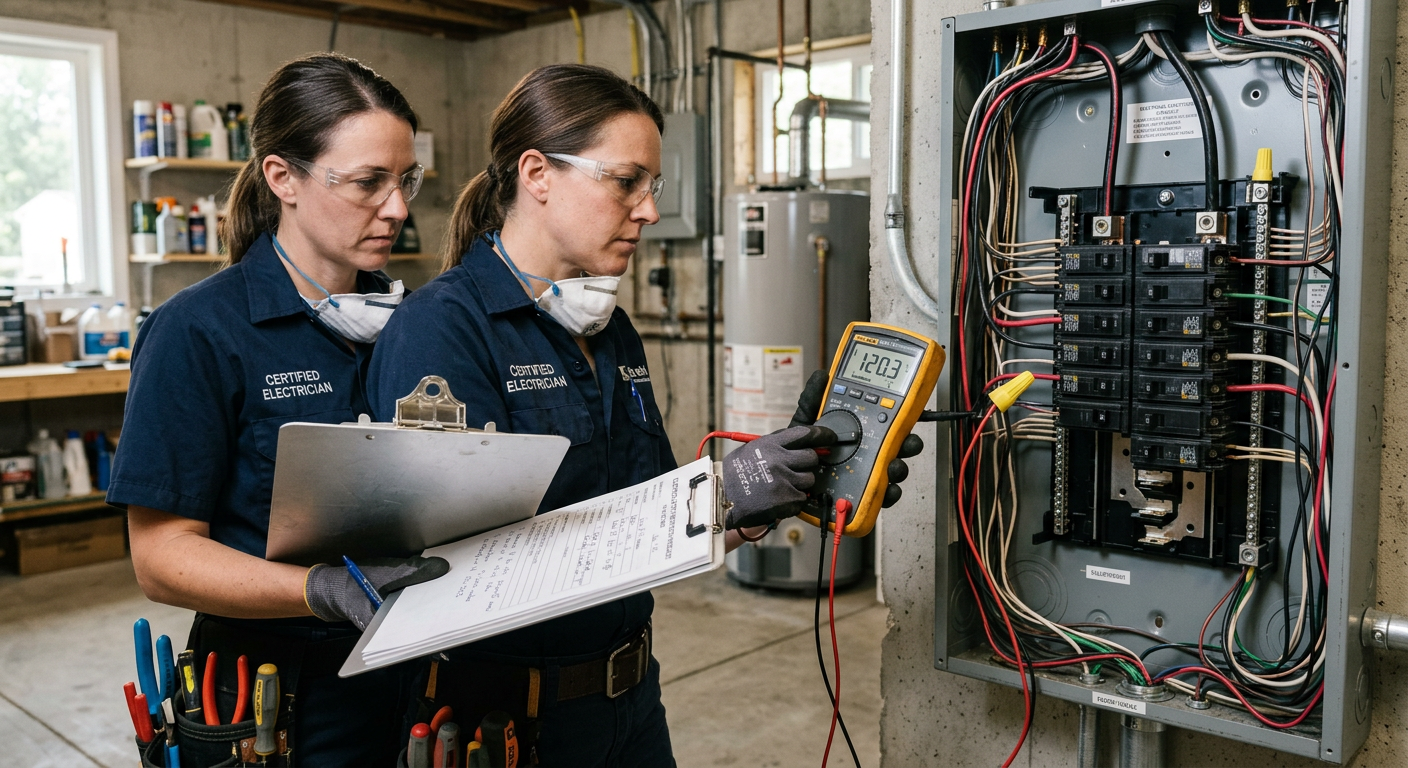
An insurance electrical-panel inspection should answer the actual insurer's written underwriting question about the property; no generic letter, electrician visit or website can guarantee coverage. Before booking, obtain the exact equipment, wiring, condition, capacity, provider-credential, sampling, remediation and final-document criteria plus the deadline. Then select the right deliverable: closed-cover identification, a general home inspection, focused electrical condition assessment, aluminum-wiring assessment, load calculation, permit-record search or completed-work verification. A useful report identifies the panel, breakers or fuses, service rating, visible and qualified-access condition, alterations, grounding and bonding, agreed circuit or device scope, photographs, findings and limitations. Remediation pricing should be a separate, evidence-linked scope. The insurer alone decides whether the submitted evidence satisfies its current underwriting requirements.
Do not remove a panel cover, meter seal, breaker or device to satisfy an insurer photo request. Use safe closed-cover identification until qualified access is arranged. Smoke, flame, active arcing, shock, severe heat, burning odour, melting or water entry requires an emergency or utility path rather than waiting for a routine insurance report.
Short answer
Canadian electrical requirements are adopted and administered locally. This guide explains the durable planning questions; your province or territory, local authority, serving utility, equipment instructions, and responsible contractor determine the property-specific answer.
Find your jurisdiction guideInsurance requirements can differ by insurer, policy, property, equipment, wiring, location and time; a broker's or neighbour's prior result is not the current written requirement for this address.
A general home inspection, licensed electrical contractor assessment, authority permit inspection, load calculation and completed-remediation certificate answer different questions and are not interchangeable.
A closed-cover photograph can support equipment screening, but a brand, handle colour or panel label alone cannot establish internal condition, connected wiring, approved compatibility or breaker performance.
An authority inspection record generally relates to defined notified or permitted work and stages; it should not be represented as a whole-home guarantee or an insurer acceptance decision.
Older equipment questions often overlap with wiring, service capacity, renovations and missing records, but condition assessment, electrical design and underwriting remain separate decisions.
The electrical provider can document a defined scope and correct regulated work; only the insurer controls underwriting acceptance, available coverage, conditions, premium and renewal.
Project triggers
Ask which equipment, age, rating, wiring, renovation or condition triggered review and which form, provider, correction and closeout record are required by the stated deadline.
Coordinate insurer review with seller authorization, inspection access, permit records, specialist assessment, remediation quotes, financing conditions, closing dates and the risk that acceptance takes another review cycle.
Identify the exact enclosure and devices, current approved compatibility, condition, alterations and recall evidence where applicable instead of treating a broad brand or equipment category as the complete finding.
Define affected-circuit mapping, device and connector scope, inaccessible locations, accepted remediation, permit or inspection evidence and the insurer's documentation standard separately from panel-only work.
An insurer question can overlap with permit history, unrecorded alterations or capacity for an EV, heat pump or suite. Keep underwriting evidence separate from the accepted electrical design and permit process.
Heat, arcing, burning odour, water, damage or repeated trips changes the path from routine documentation to immediate safety assessment, isolation or utility response before insurance paperwork continues.
Decision guide
A defensible quote connects the existing condition and calculated demand to the proposed correction. It also separates contractor work, authority approval, and utility-owned scope.
Obtain the insurer's requested fields, named concern, accepted provider credentials, inspection or sampling depth, photographs, form, remediation standard, final records and deadline in writing.
Choose among equipment identification, general home inspection, focused panel condition report, aluminum-wiring assessment, load calculation, permit-record search, repair verification or a combined defined scope.
State every panel, service component, circuit, device and record included plus what was visible, opened by a qualified person, sampled, tested, concealed, inaccessible or excluded.
Separate observed defects and compatibility from future-load design, authority approval of defined work, historical permit evidence and insurer underwriting so one document is not asked to prove all four.
Connect each correction to documented evidence and the stated acceptance requirement. Price inspection and permit-ready remediation separately so replacement is not an unexplained sales conclusion.
Confirm who submits the report, quote, permit or inspection outcome, equipment and circuit schedules, photographs and invoice, then obtain the insurer's written decision rather than assuming silence means acceptance.
A Canada-wide installed price is not a substitute for a site-specific scope. Compare the same equipment, responsibilities, exclusions, and closeout standard.
Closed-cover identification, qualified cover-off review, device sampling, circuit tracing or testing, load calculation, thermal imaging and report detail are distinct scopes.
Multiple panels, suites, outbuildings, generators, solar, batteries, mixed wiring, service equipment, renovations and inaccessible locations increase field and documentation work.
Jurisdictional licensing, insurer-specific forms, specialist testing, travel, professional reporting, translation and revision requests affect the engagement.
Panel, breakers or fuses, service conductors, meter equipment, grounding and bonding, aluminum-wiring remediation, branch circuits, access and restoration can follow the report.
Permit or notification, inspection, reinspection, product schedule, circuit map, photographs, utility coordination, outage and insurer resubmission add separate work.
Closing or renewal deadlines, occupied or tenanted properties, seller authorization, after-hours attendance, inaccessible areas and another insurer review cycle can affect schedule and cost.
Do not schedule around an assumed installation day until equipment, permits, utility work, inspection, outage, and restoration dependencies are known.
Get the form, exact equipment or wiring concern, accepted credentials, inspection boundary, testing or sampling expectation, remedy standard, final documents, submission channel and deadline from the insurer or broker.
Collect closed-cover photographs, panel and service labels, prior permits or notifications, inspection records, renovations, invoices, product schedules, known symptoms and previous electrical or home-inspection reports.
Verify the provider's jurisdictional authorization and insurer acceptance before booking, then put every panel, circuit, device, photograph, test, access limit and deliverable into the engagement.
Document equipment identity and ratings, qualified-access condition, compatibility, heat or moisture, alterations, grounding and bonding, selected wiring concerns, capacity inputs where requested, photographs, findings and limitations.
Separate panel, service, circuit, wiring, permit, utility, outage, restoration and insurer-document work, naming the finding or written requirement supported by each item.
Use the accepted permit or notification holder, keep required work visible, correct deficiencies and collect the authority and utility records that apply to the defined remediation.
Send the insurer its requested report, permit or inspection outcome, equipment and circuit records, invoice and photographs; obtain the written underwriting decision and retain the full package with property records.
Another qualified professional should be able to understand what existed, why the scope changed, who approved it, what was installed, and how the project closed.
Service rating, closed-cover equipment identification, observed condition, symptoms, accessible configuration, and the planned loads or project trigger.
Legal contractor, equipment, circuit and service work, permit holder, inspection, utility responsibilities, restoration, exclusions, and change-order rules.
Permit number where required, approved equipment, labelled circuits, documented changes, inspection milestones, and utility instructions where applicable.
Final acceptance or inspection status, equipment information, settings, warranty, utility records, paid invoice, and the responsible contractor's contact details.
Continue researching
Coordinate insurer evidence with inspection limits, permit records and transaction timing.
Open guideCoordinate disclosure, quotes, records and transaction timing.
Open guideDefine active circuits, condition, insurer evidence, rewiring scope and closeout records.
Open guideCompare assessment types, testing, limitations and closeout records.
Open guideAssess fuse equipment, wiring, service scope and insurer evidence.
Open guideUse exact identity, official evidence, condition and insurer wording.
Open guideDefine circuit mapping, accepted remediation and final evidence.
Open guideBuild an evidence-linked equipment and service scope.
Open guideUse accepted capacity evidence when the insurer asks about service size or new loads.
Open guideFind the address-specific permit authority, inspection stages and utility pathway.
Open guideCompare report, correction, permit, utility and closeout costs.
Open guidePrimary references
Forms, code editions, inspection procedures, utility standards, equipment, and incentive programs can change. Verify the current local rule before relying on a project detail.
Canadian questions
It may be verifying equipment identity, service rating, fuses or breakers, wiring, condition, renovations, permit history or prior remediation. Ask for the exact concern, accepted provider and required evidence in writing.
The jurisdiction determines who may perform regulated electrical work, while the insurer determines which credentials and report it accepts. Confirm both before booking so the deliverable is usable.
Sometimes it supplies screening evidence, but a general home inspection is not automatically a qualified panel condition assessment, load calculation, permit inspection or remediation certificate. Use the insurer's written requirement.
No. An authority inspection addresses defined notified or permitted work and stages. The insurer may request different equipment, condition, wiring or document evidence and makes its own underwriting decision.
No. The provider documents the agreed electrical scope; the insurer controls underwriting acceptance, coverage options, conditions, premium and renewal.
Do not assume a universal rule. Requirements differ by insurer, policy, property and time. Identify the exact equipment and obtain the actual insurer's current written condition.
Not automatically. First obtain the insurer's accepted evidence and have the exact equipment, condition, compatibility, wiring, capacity and records assessed. Replacement should follow documented findings or requirements.
No. A qualified person may need safe access for the agreed scope, but homeowners should not remove it. Begin with closed-cover labels and ensure the report states what was and was not opened or inspected.
Include the address, provider credentials, date, requested question, equipment identity and ratings, defined inspection boundary, observed condition, photographs, tests or sampling, findings, limitations, recommendations and referenced records.
No universal Canada-wide result applies. If capacity is the concern, use the insurer's wording plus the service and panel ratings, condition, existing and planned loads and locally accepted demand evidence.
Cost depends on report depth, panels and circuits, device sampling, testing, load work, provider requirements, travel, urgency, property access and revisions. Remediation, permits and insurer resubmission are separate cost layers.
Follow the insurer's written list, which can include the final report, permit or inspection outcome, contractor invoice, equipment and circuit records and photographs. Obtain and retain the insurer's written decision.
Property-specific next step
Send the property location, panel details, project trigger, planned loads, and timing. Provider availability, licensing, scope, price, permit responsibility, and utility scheduling are confirmed before work is booked.