Wiring extent is unknown
Map which circuits use smaller aluminum branch conductors and distinguish them from larger aluminum service or feeder conductors, copper renovations and mixed-conductor transitions.
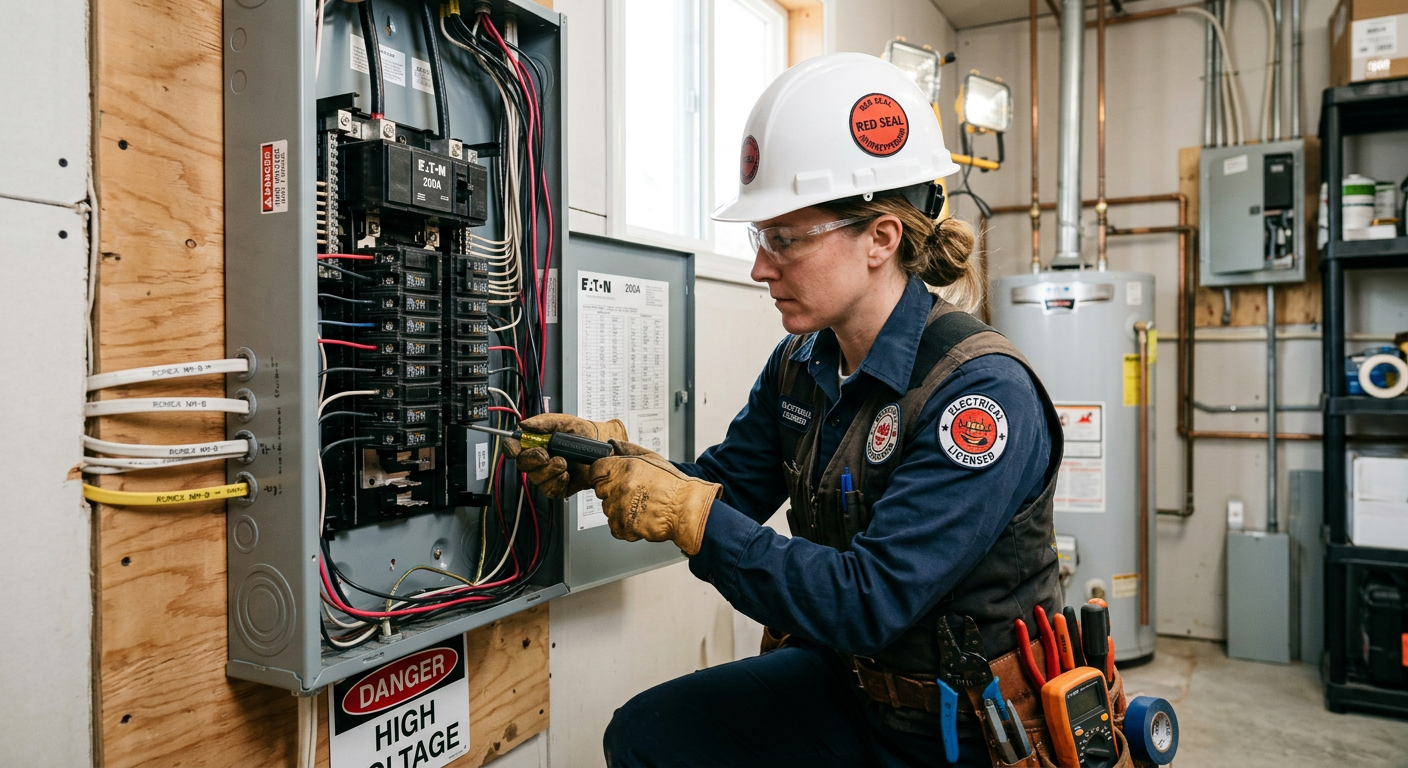
Canada homeowner planning guide
An electrical panel replacement can provide new approved terminations for aluminum branch conductors at the panel, but it does not correct receptacles, switches, luminaires, appliance connections or splices elsewhere in the home. First distinguish larger aluminum service and feeder conductors, which remain widely used, from smaller aluminum branch-circuit wiring. Then document every affected circuit and the assessment boundary, device and connector compatibility, termination condition, heat or damage, mixed copper work, prior repairs, local permit and product requirements and the insurer's current written evidence request. Price panel work, targeted branch-wiring remediation and full rewiring as separate scope layers. U.S. CPSC repair guidance can inform the evidence review, but the exact products and method still require Canadian approval, manufacturer instructions and local authority acceptance.
Do not pull devices from boxes, open panel covers, tighten terminations or disturb splices to identify conductor metal. Stop using equipment with heat, discolouration, arcing, buzzing, flickering, looseness, melting or a hot-plastic odour and arrange qualified assessment; smoke, flame, shock or active arcing can require emergency action.
Short answer
Canadian electrical requirements are adopted and administered locally. This guide explains the durable planning questions; your province or territory, local authority, serving utility, equipment instructions, and responsible contractor determine the property-specific answer.
Find your jurisdiction guideAluminum remains widely used for utility, service and feeder conductors, so its presence at a service or large feeder is not proof of an aluminum branch-wiring problem.
ESA's 2025 guidance says reported residential problems have related to overheating and failure at terminations and that each home must be assessed on its own.
ESA says homes can contain a mixture of aluminum and copper wiring and recommends assessing outlets including receptacles, switches, fixtures, appliance connections and panelboard terminations for affected branch wiring.
A panel change addresses conductors terminated at that panel; it does not automatically remediate devices, junctions, luminaires, appliance connections or concealed transitions elsewhere.
Device, connector, conductor material and size, preparation, installation tool, box volume, manufacturer instructions, Canadian approval and local acceptance all belong to an approved repair method.
The U.S. CPSC names complete copper replacement, COPALUM and AlumiConn in its repair guidance, but Canadian projects must independently confirm current product approval, availability, instructions and authority or insurer acceptance.
Project triggers
Map which circuits use smaller aluminum branch conductors and distinguish them from larger aluminum service or feeder conductors, copper renovations and mixed-conductor transitions.
Treat warm or discoloured devices, flickering, odour, arcing evidence, melted insulation, damaged conductor ends and failed terminations as findings requiring prompt qualified scope, not a cosmetic device swap.
Identify copper-only devices, push-in terminations, unsuitable or unmarked connectors, crowded boxes, damaged conductors, missing installation records and inconsistent prior repairs.
Define new panel terminations separately from every aluminum-wired device, splice, fixture, appliance connection, junction and circuit correction beyond the panel.
Ask the actual insurer or transaction party which assessment boundary, repair method, contractor, permit, inspection certificate, photographs and final schedule it will accept.
Open walls, a kitchen renovation, a suite, damaged circuits or a broader electrical modernization can change the cost comparison between targeted remediation and new copper branch circuits.
Decision guide
A defensible quote connects the existing condition and calculated demand to the proposed correction. It also separates contractor work, authority approval, and utility-owned scope.
Keep utility, service, feeder and branch conductors distinct in the report and map mixed copper and aluminum circuits because their sizes, equipment, terminations and project questions differ.
State which receptacles, switches, fixtures, appliance connections, junctions and panel terminations were opened or observed by the qualified person and which locations remain concealed, inaccessible or unverified.
Verify the device or connector's Canadian approval and markings, conductor combinations and sizes, preparation, installation tools, torque or other instructions, box fill, local authority acceptance and insurer wording.
An approved connection-level method may be suitable when circuit extent is known, retained conductors are undamaged, all required locations are accessible and the completed evidence satisfies local and insurer requirements.
Widespread heat damage, short or damaged conductors, extensive alterations, inaccessible connections, open-wall renovation, owner objectives or written insurer conditions can support replacing affected branch circuits with copper.
Specify which aluminum conductors are reterminated, extended, repaired, replaced or retained at the panel and throughout each circuit, plus breaker protection, labels, testing and final records.
A Canada-wide installed price is not a substitute for a site-specific scope. Compare the same equipment, responsibilities, exclusions, and closeout standard.
Number and accessibility of receptacles, switches, luminaires, appliance connections, junctions, panel terminations and mixed-wiring transitions.
Whole-home versus sampled boundary, circuit tracing, inaccessible locations, directly connected equipment, documentation, insurer forms and return visits.
Devices, connectors, copper extensions, box extensions, conductor repair, panel and breakers, specialized tools and manufacturer-required installation steps.
Heat damage, melted insulation, nicked or short conductors, unsuitable pigtails, crowded boxes, hidden junctions, copper-only devices and mixed-quality prior work.
Furniture, finished walls and ceilings, plaster, cabinetry, fire separation, hazardous materials, new cable routes and the agreed restoration standard.
Authority fees, concealed-work stages, reinspection, testing, circuit map, photographs, inspection certificate, insurer package and closeout responsibility.
Do not schedule around an assumed installation day until equipment, permits, utility work, inspection, outage, and restoration dependencies are known.
Gather renovation history, permits, previous reports, product or repair records, panel information, symptoms and the insurer's current property-specific evidence request before choosing a remedy.
Have the qualified contractor distinguish service, feeder and branch wiring and map affected circuits, mixed-copper work, directly connected equipment, accessible junctions and known concealed transitions.
Document the agreed outlets and panel locations, conductor and device markings, connector types, box conditions, heat, discolouration, insulation damage, short conductors, alterations and inaccessible points.
Choose panel terminations, approved devices, an approved connector method, targeted circuit replacement or rewiring using exact products, instructions, box-fill checks, local requirements and insurer acceptance.
Identify the address-specific permit or notification path, eligible contractor, concealed-work timing, inspection boundary, certificate or final record and any insurer submission sequence.
Normalize circuit and connection counts, inaccessible locations, devices, connectors, box extensions, conductor repair, panel work, wall access, permits, tests, exclusions, warranty and change-order rules.
Retain the circuit map, product and connection schedule, panel terminations, permit and inspection result, photographs, test notes, corrected deficiencies, warranty, invoice and insurer submission.
Another qualified professional should be able to understand what existed, why the scope changed, who approved it, what was installed, and how the project closed.
Service rating, closed-cover equipment identification, observed condition, symptoms, accessible configuration, and the planned loads or project trigger.
Legal contractor, equipment, circuit and service work, permit holder, inspection, utility responsibilities, restoration, exclusions, and change-order rules.
Permit number where required, approved equipment, labelled circuits, documented changes, inspection milestones, and utility instructions where applicable.
Final acceptance or inspection status, equipment information, settings, warranty, utility records, paid invoice, and the responsible contractor's contact details.
Continue researching
Separate branch-wiring evidence from legacy panel brand and service decisions.
Open guideReview termination risks and remediation categories.
Open guidePlan a documented circuit and condition assessment.
Open guideSeparate panel work from branch-circuit correction.
Open guideTranslate underwriting wording into a defined evidence package.
Open guideSeparate distribution, condition and service-capacity decisions.
Open guideCoordinate conductor protection and trip diagnosis with wiring scope.
Open guideDistinguish branch wiring from meter and service work.
Open guideFind the current provincial or territorial permit, inspection and utility pathway.
Open guideTie replacement to documented equipment and project constraints.
Open guideCompare cost drivers, exclusions and closeout evidence.
Open guidePrimary references
Forms, code editions, inspection procedures, utility standards, equipment, and incentive programs can change. Verify the current local rule before relying on a project detail.
Canadian questions
No. It can provide new approved panel terminations, but every affected receptacle, switch, fixture, appliance connection, junction and splice outside the panel remains a separate assessment and remediation question.
No blanket conclusion fits every installation. ESA says aluminum wiring is permitted and remains in use, while reported residential problems have related to terminations. Assess the exact conductor system, connections, devices, damage and alterations.
No. Larger aluminum conductors remain common in utility, service and feeder applications. Keep those systems distinct from smaller branch-circuit wiring and assess each with its connected approved equipment and terminations.
A qualified review can use cable and conductor markings, circuit mapping, device and connector markings, panel terminations and a stated inspection boundary. Construction era or one sampled outlet is not a complete map.
ESA identifies warm or discoloured cover plates or devices, arcing evidence, flickering lights and the smell of hot plastic insulation among possible signs. Stop using affected equipment and arrange qualified assessment.
The required boundary depends on the authority, project and insurer. ESA's guidance describes affected outlet locations broadly, including receptacles, switches, fixtures, appliance connections and the panelboard. State every included and inaccessible location.
No generic pigtail is universally acceptable. The exact approved connector, conductor combination and size, preparation, tool, box volume, manufacturer instructions, local requirements and insurer terms matter.
No. The CPSC record can inform technical review, but a Canadian project must verify the exact product's Canadian approval, current availability and instructions plus local authority and insurer acceptance.
Not solely because it exists. Approved targeted remediation may be supportable; widespread damage, short conductors, extensive alterations, inaccessible connections, open-wall renovation or insurer requirements can support new copper circuits.
Insurers set their own requirements. Obtain the actual insurer's current accepted assessment, repair method, contractor, permit or inspection certificate, photographs and final evidence in writing before selecting scope.
Cost depends on circuit and connection count, assessment depth, accepted method, damage, access, box volume, panel scope, rewiring routes, finishes, permits and evidence. Compare circuit-level property-specific proposals.
Keep the circuit map, product and connection schedule, panel terminations, inaccessible-location record, permit and inspection result, photographs, test notes, corrected deficiencies, warranty, paid invoice and insurer submission.
Property-specific next step
Send the property location, panel details, project trigger, planned loads, and timing. Provider availability, licensing, scope, price, permit responsibility, and utility scheduling are confirmed before work is booked.