Skip to content
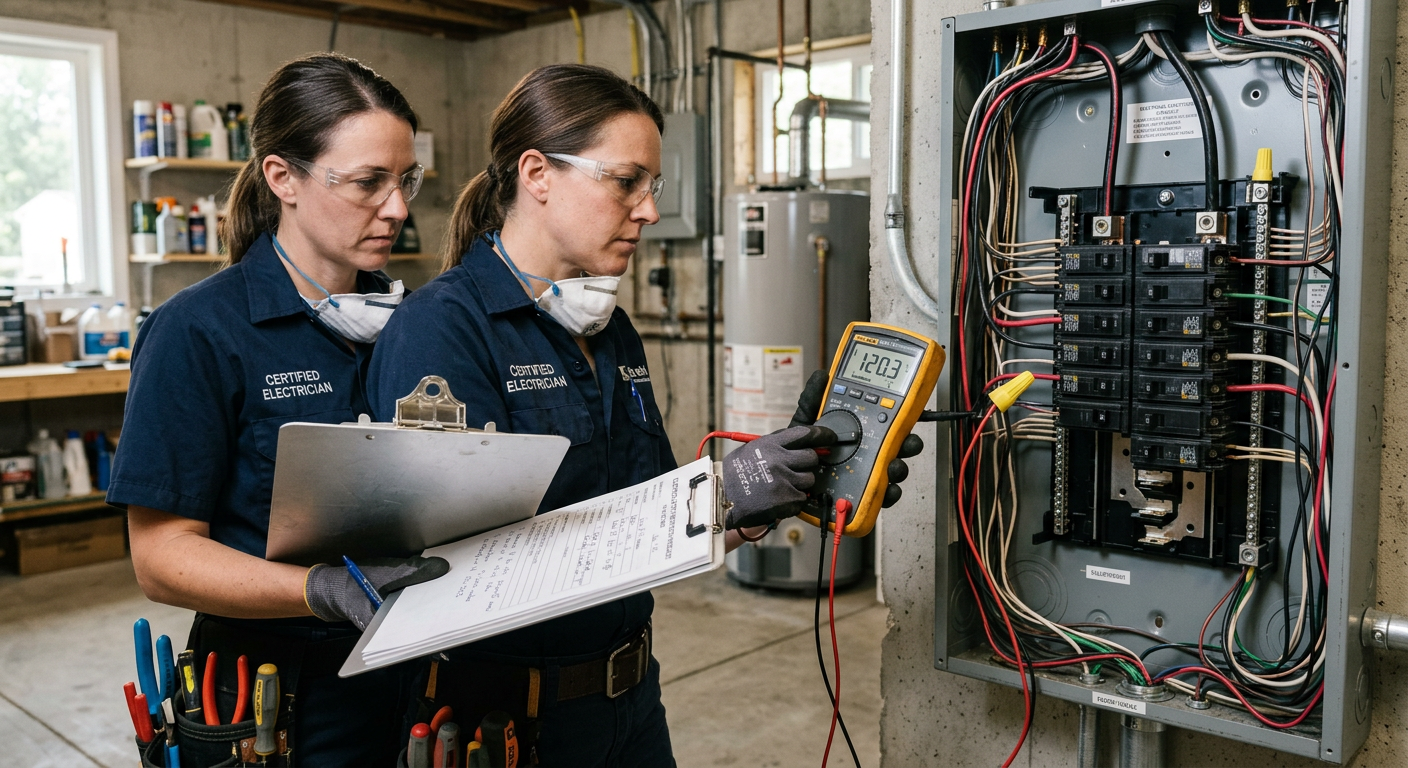
    Canadian home buyer reviewing a documented electrical panel assessment before purchase

    Canada homeowner planning guide

    Buying a Home: Electrical Panel Inspection Guide Canada

    When buying a Canadian home, treat the electrical panel as one part of a larger evidence file: visible condition, service and panel ratings, wiring and renovation history, permit or inspection records, insurer requirements, planned loads and a defined assessment. A general home inspection is commonly non-invasive and visual; it can identify concerns but is not automatically a specialized electrical condition assessment. If older equipment, missing records, symptoms, unpermitted-looking work or capacity questions appear, obtain qualified electrical and insurance input before waiving transaction conditions whenever the contract and timing allow.

    Safety boundary

    Buyers, sellers and home inspectors should not remove electrical panel covers unless the person is qualified, authorized and working within a safe agreed scope. Smoke, arcing, severe heat, shock, burning odour, damaged service conductors or water at electrical equipment requires emergency or utility action rather than transaction negotiation.

    Short answer

    What this project must establish

    Canadian electrical requirements are adopted and administered locally. This guide explains the durable planning questions; your province or territory, local authority, serving utility, equipment instructions, and responsible contractor determine the property-specific answer.

    Find your jurisdiction guide

    A general home inspection can include the distribution panel and visible electrical system, but its exact scope, access and inspector regulation vary across Canada.

    Permit or inspection acceptance for one project does not certify every existing or concealed electrical condition in the home.

    A 60A, 100A or 200A label is one fact; capacity depends on the complete service, panel and calculated demand, while condition is a separate question.

    A fuse box, Federal Pacific, Stab-Lok, Zinsco, Sylvania or aluminum-wiring observation needs exact identification and evidence rather than a brand-only conclusion.

    Insurers and lenders set their own property-specific acceptance, document and completion requirements, which can change over time.

    Permit-history access and terminology vary by province, municipality and delegated authority; an absent online result is not proof that no work was permitted.

    Project triggers

    Situations that change the scope

    Older or unfamiliar panel

    Record closed-cover manufacturer, model, main rating, directory and visible condition. Do not decide from colour, age or a brand list; ask whether approved parts, condition, modifications and insurer requirements support continued use or replacement.

    Renovated home with missing records

    Finished basements, suites, additions, hot tubs, EV charging, solar, generators and service changes can leave visible clues without a complete record. Compare seller documents with the local permit and inspection path.

    100A service and future electrification

    A 100A service is not automatically inadequate. Model heating, hot water, cooking, EV, heat pump, suite and other planned loads before assigning an upgrade cost to the transaction.

    Insurance or lender deadline

    Ask the actual insurer, broker or lender what equipment information, credential, report, correction, permit and completion evidence it requires before the financing or condition deadline.

    Symptoms or damage

    Repeated trips, buzzing, burning odour, heat, flickering, rust, water, scorch marks or damaged service equipment needs focused safety assessment and may not fit an ordinary inspection-condition timeline.

    Condominium, strata or shared service

    Separate unit equipment from common service, meter banks, distribution rooms and corporation responsibility. Review available building records, reserve or depreciation documents and planned electrical projects with qualified advisers.

    Decision guide

    Resolve the design choices before pricing

    A defensible quote connects the existing condition and calculated demand to the proposed correction. It also separates contractor work, authority approval, and utility-owned scope.

    01

    General inspection or electrical specialist

    Use the home inspection to identify visible concerns and limitations. Add a qualified electrical assessment when the decision needs panel-cover access, testing, equipment compatibility, wiring identification, capacity analysis or a permit-ready remedy.

    02

    Which records are authoritative

    Collect seller invoices, permits or notifications, inspection acceptance, utility correspondence, panel schedules and equipment documents, then verify them with the issuing authority where records are available.

    03

    Condition, capacity and documentation

    Keep these as three separate findings. A clean modern panel can lack future capacity, an older panel can have documented acceptable condition, and completed work can still have missing closeout records.

    04

    Insurer and lender acceptance

    Share exact equipment and assessment findings, not a generic property description. Obtain any coverage condition, deadline, repair requirement and accepted final evidence in writing.

    05

    Repair, replacement or price planning

    Require evidence for the proposed remedy and an itemized scope covering panel, service, circuits, utility, permit, outage and restoration. A seller allowance based on a panel-only quote may not cover a service project.

    06

    Transaction and legal treatment

    Use the real-estate professional and lawyer or notary for offer wording, amendments, holdbacks, warranties, credits and closing obligations. An electrical contractor should define technical scope, not provide legal advice.

    What changes the project cost

    A Canada-wide installed price is not a substitute for a site-specific scope. Compare the same equipment, responsibilities, exclusions, and closeout standard.

    Assessment depth

    General visual inspection, focused panel review, whole-home electrical assessment, circuit tracing, testing, permit research and load calculation are different deliverables.

    Property complexity

    Age, size, panels, suites, outbuildings, mixed wiring, renovations, solar, batteries, generators, pools, hot tubs, EV equipment and shared services expand the review.

    Equipment and condition

    Panel and breaker compatibility, fuse equipment, aluminum or knob-and-tube wiring, heat, water, corrosion, damage, alterations and approved-part availability affect remedy options.

    Panel or complete service

    Meter equipment, conductors, mast or underground route, grounding, utility design, disconnect, inspection and restoration can turn a panel concern into a broader service project.

    Transaction timing

    Short condition periods, seller access, occupied properties, repeat visits, insurer review, record-search processing and quote lead times can create rush costs or incomplete evidence.

    Post-possession projects

    Immediate safety corrections, planned electrification, finishes, hazardous materials and temporary living needs should be budgeted separately from the purchase price and closing costs.

    A jurisdiction-ready project sequence

    Do not schedule around an assumed installation day until equipment, permits, utility work, inspection, outage, and restoration dependencies are known.

    1. STEP 1

      State the buyer's plan

      List intended occupancy, insurance, EV, heat pump, suite, renovation, workshop, hot tub, solar or battery goals so the inspection can distinguish present condition from future capacity.

    2. STEP 2

      Complete the general home inspection

      Ask what electrical systems, covers, tests and limitations are included and whether the applicable national standard or provincial requirements are used. Attend when possible and retain the full report.

    3. STEP 3

      Escalate defined electrical questions

      Provide the report, closed-cover photos, listing information, seller disclosures and deadlines to a qualified electrical professional. Request evidence, scope, limitations and priorities rather than a one-line pass or fail.

    4. STEP 4

      Verify records and third-party requirements

      Search the appropriate authority where available, request seller closeout documents, and confirm insurer, lender, condominium or strata requirements before waiving applicable conditions.

    5. STEP 5

      Price the complete remedy

      Compare written quotes on the same condition, capacity and project assumptions, including utilities, permits, inspection, restoration, schedule and uncertainty. Share transaction changes with the lender and legal advisers.

    6. STEP 6

      Transfer the property file

      At possession, retain reports, photographs, permits, inspections, utility records, equipment schedules, load calculations, warranties, invoices and any agreed outstanding-work obligations.

    Questions every written quote should answer

    • What exact buyer, insurer, lender or renovation decision does this assessment support?
    • Which panels, service equipment, circuits, wiring types, devices, outbuildings, covers and tests are included?
    • Which visible, concealed, energized, inaccessible or seller-restricted conditions remain unknown?
    • What exact panel, breaker, service and wiring identification was verified?
    • Which observations require immediate correction, specialist testing, monitoring or future planning, and why?
    • What load calculation or equipment assumptions support any 200A recommendation?
    • Which permits, inspections, utility and seller records were reviewed or remain missing?
    • Does the repair quote include panel, service, circuits, authority, utility, outage, restoration, tax and change-order scope?
    • What report, photographs, permit and final acceptance evidence will the buyer, insurer or lender receive?
    • Is a second opinion appropriate before committing to major replacement or service work?

    Build an auditable project file

    Another qualified professional should be able to understand what existed, why the scope changed, who approved it, what was installed, and how the project closed.

    Existing condition

    Service rating, closed-cover equipment identification, observed condition, symptoms, accessible configuration, and the planned loads or project trigger.

    Approved scope

    Legal contractor, equipment, circuit and service work, permit holder, inspection, utility responsibilities, restoration, exclusions, and change-order rules.

    Installation record

    Permit number where required, approved equipment, labelled circuits, documented changes, inspection milestones, and utility instructions where applicable.

    Closeout file

    Final acceptance or inspection status, equipment information, settings, warranty, utility records, paid invoice, and the responsible contractor's contact details.

    Canadian questions

    Home-buyer electrical due diligence FAQ

    Should I get an electrical inspection before buying a house?+

    A general home inspection should review visible electrical systems within its scope. Add a qualified electrical assessment before condition removal when older equipment, symptoms, missing permits, renovations, wiring concerns, insurer questions or future-capacity decisions need specialist evidence.

    Does a home inspection include the electrical panel?+

    It commonly includes a non-invasive visual review of the distribution panel and visible electrical system, but access, cover removal, testing and inspector regulation vary. Confirm the exact scope and limitations before hiring.

    Can a home inspector say an electrical panel is safe?+

    A credible report describes observed condition and limitations rather than guaranteeing concealed or future performance. Panel-cover access, electrical testing, compatibility and repair design may require a qualified electrical professional.

    Is it safe to buy a house with a 100 amp service?+

    A 100A service is not automatically unsafe or inadequate. Verify complete service condition and rating, current loads and planned EV, heat pump, suite or other equipment using the locally accepted capacity method.

    Should I buy a house with a fuse box or Federal Pacific panel?+

    Do not decide from the label alone. Obtain exact equipment identification, condition and compatibility findings, insurer requirements, approved-part information and a complete replacement quote if broader work is recommended.

    How do I check electrical permits before buying a home?+

    Contact the electrical permit or safety authority serving the address. Search tools, record types, privacy rules, fees and processing times vary, and some municipalities issue their own permits. An absent online result is not proof that no permit exists.

    What if renovations were done without electrical permits?+

    Ask what work occurred and obtain specialist assessment and authority guidance before closing decisions. The remedy can involve investigation, permits, corrections, inspection and restoration; requirements vary and should be addressed with the transaction's legal advisers.

    Can an insurer refuse a home because of the electrical panel?+

    Insurers set their own underwriting rules. Ask the actual insurer or broker for the property-specific equipment, inspection, repair, deadline and final-document requirements before assuming coverage or a universal refusal.

    Can I negotiate the purchase price for an electrical panel replacement?+

    Inspection findings and complete quotes can inform negotiations, but credits, repairs, holdbacks and contract amendments require real-estate and legal advice. Ensure the quote distinguishes a panel replacement from a full service upgrade.

    Should the seller replace the panel before closing?+

    That is a transaction decision. Compare seller-completed work, buyer-controlled work, timing, permits, inspection, equipment specification, change orders and final evidence with the realtor, lawyer or notary, insurer and lender.

    What electrical records should transfer with the house?+

    Request permits or notifications, inspection acceptance, contractor invoices, panel and circuit schedules, load calculations, utility correspondence, equipment and warranty documents, EV or solar records and reports for known repairs or damage.

    What should I budget after buying an older home?+

    Use evidence-based scopes for immediate hazards, condition repairs, panel or service work and planned electrification. Include permits, utility, restoration and uncertainty separately rather than relying on one generic upgrade allowance.
    Property-specific next step

    Planning electrical panel work?

    Send the property location, panel details, project trigger, planned loads, and timing. Provider availability, licensing, scope, price, permit responsibility, and utility scheduling are confirmed before work is booked.

    Scope-first project reviewNo DIY panel instructions