Skip to content
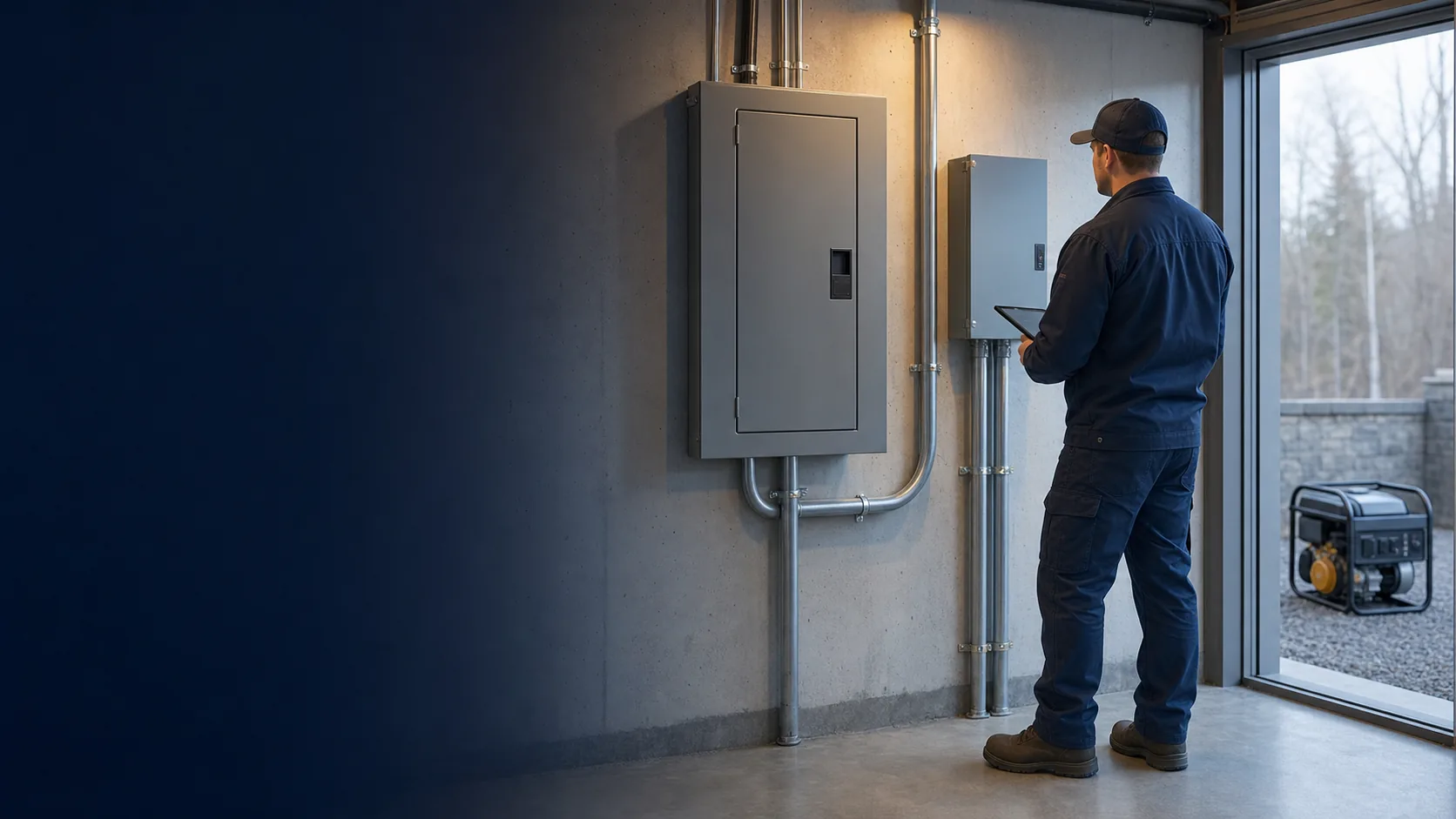
    Electrician reviewing closed generator transfer equipment beside a Canadian residential electrical panel

    Canada homeowner planning guide

    Generator Transfer Switch Guide for Canadian Homes

    Compare portable, meter-mounted and fixed standby systems, size essential loads, prevent backfeed, and coordinate the panel, transfer equipment, permits, utility, commissioning and safe operation.

    Safety boundary

    Never run a fuel-burning generator in a home, attached or detached garage, shed, crawlspace or other enclosed area. Keep it outdoors at least 6 metres from buildings, direct exhaust away from doors, windows and air intakes, and follow the manufacturer and local fire requirements. Never backfeed a receptacle, defeat a transfer mechanism, open panel or transfer-switch covers, handle wet equipment, or refuel a hot generator. Leave immediately and call emergency services if a carbon-monoxide alarm sounds, or if there is smoke, arcing, severe heat, shock or fire.

    Short answer

    What this project must establish

    Canadian electrical requirements are adopted and administered locally. This guide explains the durable planning questions; your province or territory, local authority, serving utility, equipment instructions, and responsible contractor determine the property-specific answer.

    Find your jurisdiction guide

    Transfer equipment must prevent the normal utility source and standby source from being inadvertently interconnected; opening only the main breaker is not a transfer design.

    Never connect a generator to home wiring through a receptacle, improvised cord or other backfeed arrangement. That can energize utility lines and defeat required protection.

    Generator watts or amperes do not establish which home loads can operate together. Running load, motor starting demand, voltage, fuel, duty, power quality and load priority all matter.

    Transfer-switch ampere rating, number of switched poles, neutral treatment, service rating, enclosure, fault-current rating and Canadian approval are separate design facts.

    Meter-mounted transfer products are utility-facing equipment. Acceptance, models, ownership, installation and reconnection requirements vary by utility and can change.

    Health Canada says a fuel-burning generator should operate outdoors at least 6 metres from a building with exhaust directed away from openings; it must never operate in a home, garage or shed.

    Electrical, gas or fuel, building, noise, setback and utility requirements can be administered by different organizations even when sold as one generator project.

    Commissioning should prove normal-source operation, transfer, selected-load performance, protective response, return to utility, labels and the documented failure or manual-override sequence.

    Project triggers

    Situations that change the scope

    Portable generator for essential loads

    The owner wants refrigeration, communications, selected lighting, a sump pump, well pump or heating controls during an outage. Decide whether loads remain directly cord-connected or move through an approved manual transfer arrangement.

    Fixed standby generator

    Automatic start and transfer can support longer outages or occupants who cannot deploy portable equipment. Fuel supply, outdoor location, service equipment, automatic transfer, exercising, alarms and maintenance become part of one operating system.

    Whole-home expectation

    A generator marketed for whole-home use may still require load shedding or owner discipline when heating, water heating, cooking, pumps, EV charging and other large loads overlap. Define the actual operating envelope.

    Rural property or well system

    Well pumps, septic equipment, heat trace, livestock systems and long outages can make motor starting, voltage drop, fuel endurance, weather protection and utility-specific rural service equipment decisive.

    Medical, accessibility or remote-operation need

    A critical load requires more than a generator nameplate. Document acceptable interruption, runtime, transfer delay, refuelling, monitoring, maintenance, failure response and a separate emergency plan if the system does not start.

    Existing transfer equipment

    Age, corrosion, misalignment, loose connections, damaged enclosures, obsolete parts, altered wiring and missing operating records can justify assessment. Technical Safety BC has documented fires involving failed transfer switches.

    Decision guide

    Resolve the design choices before pricing

    A defensible quote connects the existing condition and calculated demand to the proposed correction. It also separates contractor work, authority approval, and utility-owned scope.

    01

    Define essential loads and outage objective

    List each required load, nameplate input, voltage, running and starting behaviour, operating duration and priority. Separate life-safety or medical planning from convenience, and identify loads that must never be connected to the backup source.

    02

    Choose the backup pathway

    Compare direct generator-rated cords for individual plug-in loads with a manual essential-load panel, a utility-approved meter-mounted device, or fixed standby equipment. Each path has different coverage, human steps, approvals and failure modes.

    03

    Design transfer and neutral treatment

    The responsible designer must match the transfer equipment, switched conductors, generator neutral and bonding configuration, grounding, service arrangement and protective devices. Do not copy a U.S. interlock diagram or assume every product category is accepted locally.

    04

    Match generator output to real load

    Use running and starting evidence, voltage and phase, power quality, generator duty and environmental derating. Establish a load sequence or automatic shedding plan rather than assuming every selected breaker can operate simultaneously.

    05

    Resolve panel and service interfaces

    Document whether the project changes the main panel, adds an essential-load subpanel, connects ahead of or after the service disconnect, affects metering, needs spare breaker space, or exposes existing service, grounding or compatibility deficiencies.

    06

    Verify authority and utility acceptance

    Identify the permit or notification authority, eligible permit holder, inspection stages and final record. Ask the serving utility whether meter handling, a temporary disconnect, an approved device list, service review or utility appointment applies.

    07

    Plan safe siting and operation

    Coordinate manufacturer clearances, carbon-monoxide separation, exhaust direction, air intakes, snow, flooding, weather enclosure, impact, noise, fuel storage, gas work, cable route, lighting and a dry operating position before equipment is purchased.

    Option matrix

    Compare five ways to keep selected loads operating

    The right option follows the required loads, outage duration and accepted connection method. A larger generator does not make an unsafe or unapproved connection acceptable.

    Backup pathwayWhat it can serveTransfer and panel boundaryVerify before purchase
    Direct portable-generator cordsIndividual plug-in loads within generator and cord ratingsNo connection to the building panel or fixed wiringOutdoor location, Canadian approval, cord rating and length, GFCI instructions, fuel and load sequence
    Manual essential-load transfer panelSelected branch circuits moved or connected through listed transfer equipmentManual source selection isolates selected circuits from utility supplyGenerator inlet, pole and neutral design, circuit list, capacity, permit, labels and operating sequence
    Meter-mounted transfer deviceDefined customer load through utility-facing metering equipmentTransfer occurs at or beside the meter under utility-specific conditionsServing-utility acceptance, exact model, meter-base fit, electrical approval, ownership, permit and reconnection
    Fixed generator with automatic transferSelected essential loads or a designed whole-service load setAutomatic equipment senses utility loss and transfers through an accepted service or feeder arrangementLoad and starting study, service rating, transfer type, fuel and siting, gas and electrical permits, exercise and maintenance
    Battery or energy-storage backupSelected circuits or managed loads for the available stored energyApproved inverter, isolation and transfer architecture; no combustion exhaustUsable energy, output, surge capacity, backup boundaries, solar charging, cold temperature, permits and end-of-life plan

    What changes the project cost

    A Canada-wide installed price is not a substitute for a site-specific scope. Compare the same equipment, responsibilities, exclusions, and closeout standard.

    Backup load and generator size

    Essential-load count, motor starting, electric heat, pumps, well and septic equipment, desired whole-home coverage, load shedding and future loads affect generator, transfer and conductor ratings.

    Transfer architecture

    A portable inlet and manual essential-load panel, service-rated manual transfer, utility-approved meter device and automatic transfer system have different equipment, labour, approvals and maintenance.

    Panel and service changes

    Panel space, obsolete equipment, service configuration, meter base, main disconnect, grounding, bonding, feeder work, essential-load subpanel and circuit corrections can expand the project.

    Generator and fuel installation

    Concrete pad, snow and impact protection, gas line or fuel system, trenching, conductor route, exhaust separation, ventilation, drainage, sound treatment and restoration can exceed the transfer-equipment scope.

    Utility and authority work

    Permits, inspections, gas or building approvals, utility design, approved-device requirements, meter handling, temporary disconnect, repeated visits and deficiency corrections should be separated in the quote.

    Controls and commissioning

    Automatic start, load shedding, remote monitoring, cold-weather equipment, battery charging, alarms, network service, transfer tests and owner training add hardware and specialist time.

    Lifecycle and readiness

    Fuel, exercise runs, oil and filters, starter battery, transfer-switch maintenance, software or cellular service, replacement parts, warranty labour and periodic load testing affect ownership cost after installation.

    A jurisdiction-ready project sequence

    Do not schedule around an assumed installation day until equipment, permits, utility work, inspection, outage, and restoration dependencies are known.

    1. STEP 1

      Write the outage plan

      Record the loads that must operate, acceptable interruption, expected outage duration, occupants, medical or accessibility needs, seasonal conditions, fuel access and what the household will do if backup power is unavailable.

    2. STEP 2

      Document loads and existing equipment

      Collect nameplate information for essential loads and closed-cover photos of the service, panel, meter and existing transfer equipment. Note service rating, panel spaces, generator data, symptoms and available permit or maintenance records.

    3. STEP 3

      Select a candidate system architecture

      Map normal source, transfer point, backup source, protected loads, neutral and bonding design, grounding, overcurrent protection, inlet or fixed conductors, metering and any load-shedding controls on a one-line diagram.

    4. STEP 4

      Confirm equipment and capacity

      Verify Canadian approval, voltage, phase, ampere and fault-current ratings, enclosure and temperature limits, generator running and starting capability, transfer poles, service suitability and compatibility of every listed component.

    5. STEP 5

      Clear permits, utility and site requirements

      Identify electrical and any gas, fuel or building approvals, utility device or disconnect requirements, inspection stages, locates, placement and noise restrictions, and responsibility for meter or service work before ordering equipment.

    6. STEP 6

      Install and label the accepted design

      The responsible professionals complete the panel, transfer, inlet or generator, fuel and site work to the approved design. Circuits, sources, operating positions, disconnects and prohibited loads should be unambiguous.

    7. STEP 7

      Commission normal, backup and return modes

      Test source loss, start and stabilization, transfer, selected loads and starting sequence, load shedding, alarms, protective operation, manual controls, return to utility, cooldown and safe shutdown under the documented procedure.

    8. STEP 8

      Transfer records and maintenance plan

      Provide the owner with permits and inspection status, one-line and circuit schedule, equipment data, settings, tests, operating instructions, fuel or gas records, warranty, service contacts, exercise schedule and documented outstanding items.

    Questions every written quote should answer

    • Which loads, starting demands, runtimes and priorities support the proposed generator rating?
    • Is the design direct-cord, manual essential-load transfer, meter-mounted transfer or automatic standby, and why?
    • Where are the normal source, transfer point, backup source, service disconnect and protected loads shown on the one-line?
    • What exact transfer-switch poles, neutral and bonding arrangement are required for this generator and service?
    • What Canadian approval marks, model numbers, ratings and installation conditions apply to every major component?
    • Can the system support all selected loads simultaneously, or what manual sequence or automatic shedding is required?
    • Does the project add or replace a panel, subpanel, meter base, service disconnect, grounding or service conductors?
    • What does the electrical authority require for permit holder, submissions, inspection stages and final acceptance?
    • What does the serving utility require for the proposed transfer point, meter equipment, disconnect and reconnection?
    • How are Health Canada's outdoor separation, exhaust direction and carbon-monoxide precautions addressed on this property?
    • Which gas, fuel, building, setback, noise, trench, pad, snow and restoration work is included or excluded?
    • How will normal loss, transfer, load pickup, protective operation, return to utility and manual override be commissioned?
    • What owner actions are required during an outage, and what must happen if the generator fails to start or a CO alarm sounds?
    • What exercise, fuel, oil, battery, transfer-switch and annual service schedule is required, and who provides it?
    • Which permit, inspection, one-line, circuit, setting, test, utility, fuel, warranty and maintenance records will I receive?

    Build an auditable project file

    Another qualified professional should be able to understand what existed, why the scope changed, who approved it, what was installed, and how the project closed.

    Existing condition

    Service rating, closed-cover equipment identification, observed condition, symptoms, accessible configuration, and the planned loads or project trigger.

    Approved scope

    Legal contractor, equipment, circuit and service work, permit holder, inspection, utility responsibilities, restoration, exclusions, and change-order rules.

    Installation record

    Permit number where required, approved equipment, labelled circuits, documented changes, inspection milestones, and utility instructions where applicable.

    Closeout file

    Final acceptance or inspection status, equipment information, settings, warranty, utility records, paid invoice, and the responsible contractor's contact details.

    Continue researching

    Related Canadian guides

    Electrical panels in Canada

    Understand the service, meter, panel, breakers, ratings and local responsibility boundaries.

    Open guide

    Electrical panel load calculation

    Build the current-load record used alongside generator running and starting evidence.

    Open guide

    New panel and subpanel installation

    Plan an essential-load panel, feeder, equipment, approvals and closeout.

    Open guide

    Electrical panel permits in Canada

    Find the permit or notification authority for every province and territory.

    Open guide

    Meter base and service entrance

    Separate utility-facing metering and service equipment from downstream distribution.

    Open guide

    Electrical service changes

    Map disconnect, metering, service equipment, grounding, utility and outage scope.

    Open guide

    Solar and home battery planning

    Compare generator backup with storage, isolation, inverter and critical-load design.

    Open guide

    Electrical load management

    Understand automatic load control, monitored limits and failure behaviour.

    Open guide

    Smart panels and backup controls

    Review monitoring, load control, offline operation and technology lifecycle questions.

    Open guide

    Electrical safety assessment

    Define an evidence-based assessment for existing panel and transfer equipment.

    Open guide

    Water, corrosion and panel damage

    Triage transfer or panel equipment exposed to flooding, moisture or corrosion.

    Open guide

    Panel project cost planning

    Normalize equipment, utility, permit, building, restoration and closeout scopes.

    Open guide

    Canadian electrical answers

    Find concise answers about transfer switches, capacity, permits and equipment.

    Open guide

    Emergency electrical guidance

    Use the right emergency, utility or contractor path for smoke, fire, shock or damaged equipment.

    Open guide

    Request a backup-power assessment

    Submit the property, panel, generator and essential-load objective for review.

    Open guide

    Canadian questions

    Generator transfer switch and backup power FAQ

    What does a generator transfer switch do?+

    It selects an accepted source path so the protected loads are supplied by utility power or the standby source without inadvertently interconnecting them. The exact switch must match the service, generator, conductors, neutral and bonding configuration, ratings and local approval.

    Do I need a transfer switch for a home generator in Canada?+

    A generator connected to home wiring needs an approved transfer arrangement that prevents backfeed and meets the authority and utility requirements for the address. A portable generator serving only individual plug-in loads through suitable cords is not connected to the building panel.

    Can I plug a generator into a dryer outlet or other wall receptacle?+

    No. Never use a double-ended or improvised cord to energize home wiring through a receptacle. It can backfeed utility lines, energize exposed plug blades, overload wiring and bypass the approved transfer and protection design.

    Is turning off the main breaker enough before connecting a generator?+

    No. A manually opened main breaker is not a substitute for approved transfer equipment and a documented design. Human error, mechanical condition, neutral treatment and the absence of a controlled transfer path remain unresolved.

    Are generator interlock kits legal in Canada?+

    Do not treat the product name as a national yes-or-no answer. The exact equipment, switched poles, neutral and bonding design, panel approval, mechanical operation and local authority acceptance control. ESA publishes technical generator arrangements, while utility and provincial requirements can differ.

    What size generator do I need for my house?+

    Start with essential-load running and starting requirements, voltage, duty, outage duration and load priority. Then account for motor starting, electric heating and pumps, power quality, environmental derating, fuel endurance and any load-shedding plan. A panel or service amp rating alone does not size the generator.

    Can a portable generator power my whole electrical panel?+

    Only through an approved design whose generator, transfer equipment, conductors, protection and load controls support the defined loads. Many homes need selected circuits or active load management because large heating, cooking, water-heating, pump and EV loads can exceed portable-generator output.

    What is the difference between a manual and automatic transfer switch?+

    A manual system requires a person to deploy or start the source and move the transfer equipment through its approved sequence. An automatic system can detect utility loss, start fixed generation and transfer loads. Automation adds controls, fuel, maintenance and failure modes that must be commissioned.

    Can I use a meter-mounted generator transfer device?+

    Only when the serving utility accepts the exact device and installation. Utility policies differ: Hydro One publishes current approval and reconnection requirements, while BC Hydro maintains a restriction for collar-type transfer switches on specified meter-socket services. Verify before purchase.

    How far must a portable generator be from the house in Canada?+

    Health Canada advises operating a fuel-burning generator outdoors at least 6 metres from a building, directing exhaust away from doors and windows, and closing nearby or downwind openings. Manufacturer, fire, fuel, setback and local requirements may add conditions.

    Does a generator transfer switch need an electrical permit?+

    Panel, transfer, inlet, feeder and service work commonly enters a provincial, territorial or municipal permit or notification process. The category, eligible holder, submissions, inspection stages and utility steps vary, so confirm the exact address before work.

    Does a standby generator need gas or building permits too?+

    It can. A fixed generator may involve gas or fuel work, equipment pads, setbacks, exhaust and air-intake separation, noise, trenching or building work in addition to the electrical permit. Identify each authority and responsible professional in writing.

    Can a generator run a furnace, well pump or sump pump?+

    Potentially, when generator output, voltage, transfer arrangement, circuit, motor starting demand, controls and fuel duration support the exact equipment. Record nameplate data and operating priorities instead of relying on a generic appliance-wattage chart.

    How much does a generator transfer switch installation cost in Canada?+

    Installed cost depends on transfer architecture, generator and load size, panel or service changes, conductor route, meter and utility work, fuel system, pad and site work, permits, commissioning and restoration. Compare an itemized scope rather than one national average.

    What maintenance and records does a backup-power system need?+

    Follow the manufacturer and responsible contractor's schedule for generator exercise, fuel, oil, filters, starter battery, transfer equipment, alarms and load testing. Keep the one-line, circuit schedule, settings, permits, inspection and utility status, commissioning results, operating procedure, warranty and service history.
    Property-specific next step

    Planning electrical panel work?

    Send the property location, panel details, project trigger, planned loads, and timing. Provider availability, licensing, scope, price, permit responsibility, and utility scheduling are confirmed before work is booked.

    Scope-first project reviewNo DIY panel instructions