Grid-connected solar
Define array and inverter ratings, expected self-use and export, the connection point, panel and bus limits, meter arrangement, utility application and shutdown labels.
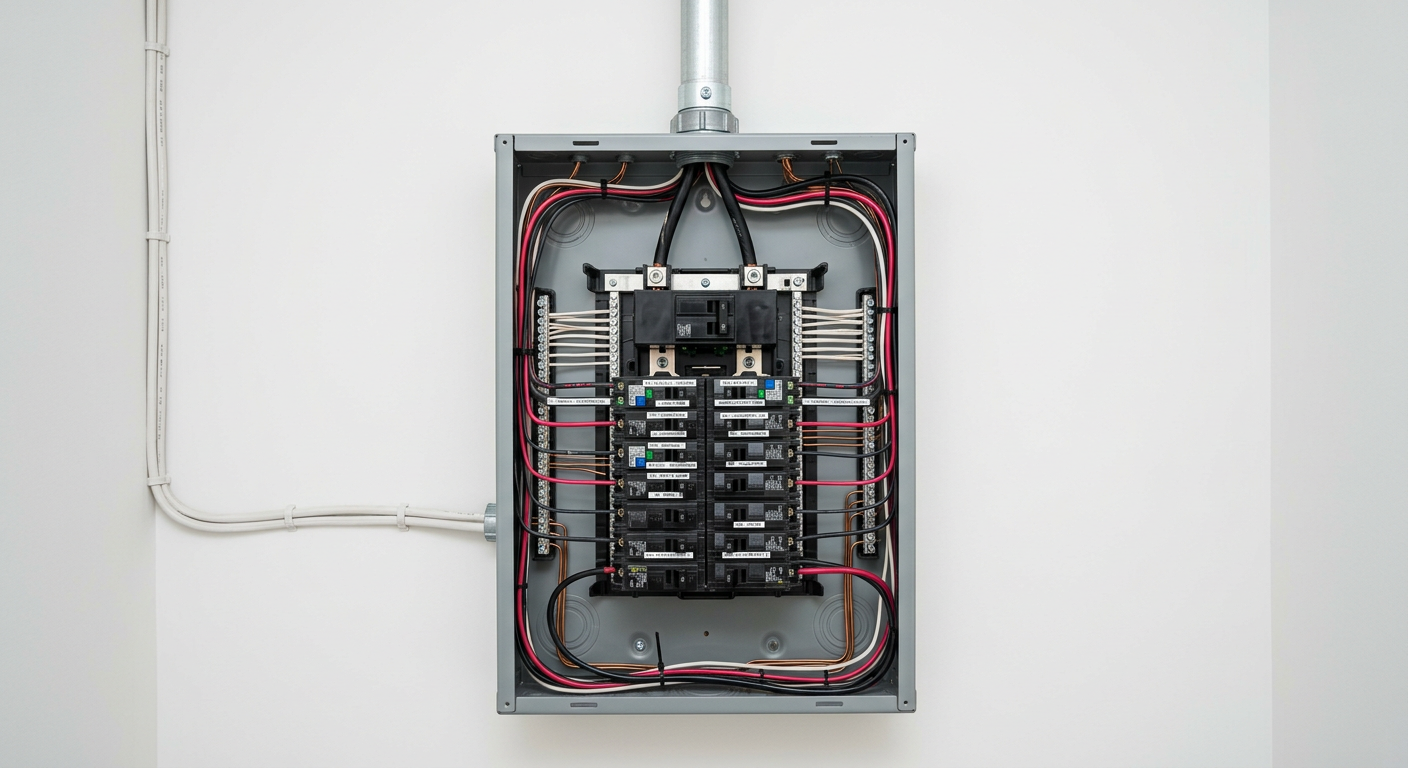
Canada homeowner planning guide
Treat solar and home battery work as a coordinated generation, storage, distribution and utility project. Define the energy objective, inverter topology, generation and battery ratings, export rules, panel and bus limits, service and meter arrangement, disconnects, backup boundaries, transfer or isolation equipment, electrical permit and serving-utility process before equipment is purchased. A standard grid-connected solar system does not automatically power a home during an outage, and a battery does not automatically increase the home's electrical service capacity.
Solar conductors can remain energized in daylight, and batteries can supply fault energy when utility power is absent. Remote app controls are not safe-work isolation. Use approved equipment, qualified installation and documented shutdown procedures.
Short answer
Canadian electrical requirements are adopted and administered locally. This guide explains the durable planning questions; your province or territory, local authority, serving utility, equipment instructions, and responsible contractor determine the property-specific answer.
Find your jurisdiction guideUtility interconnection approval and electrical permit approval are separate project gates.
Panel bus and main-protection relationships can constrain generation connection even when breaker spaces are available.
Battery power, energy capacity, surge capability and desired outage duration answer different backup questions.
Grid-connected solar normally stops operating into an outage unless an approved backup system isolates the home from the utility grid.
A battery can shift energy or support defined loads, but it does not by itself change the service, feeder or panel rating.
Equipment compatibility claims do not replace an accepted one-line diagram, approved components, settings and commissioning evidence.
Project triggers
Define array and inverter ratings, expected self-use and export, the connection point, panel and bus limits, meter arrangement, utility application and shutdown labels.
Model when the battery charges and discharges, usable energy, power limits, export settings, rate assumptions, efficiency, reserve level and control behaviour.
Choose the circuits that must remain available, then size inverter power, surge and battery duration for those loads and their realistic operating sequence.
Check service size, large motor and heating loads, load shedding, transfer equipment, surge demand and low-battery strategy before calling a design whole-home.
Confirm whether the existing system supports the proposed AC- or DC-coupled arrangement, charging during an outage, export control and warranty-approved components.
Reserve suitable space and routes where practical, while recognizing that future inverter, utility, code and product requirements cannot be guaranteed by a solar-ready label.
Decision guide
A defensible quote connects the existing condition and calculated demand to the proposed correction. It also separates contractor work, authority approval, and utility-owned scope.
Use kilowatts for instantaneous output and starting demand, kilowatt-hours for stored energy and duration, and include usable capacity, reserve and conversion losses.
Separate bill offset, self-consumption, time shifting, export limiting, critical-load resilience, whole-home backup and off-grid goals because they produce different systems.
Compare AC-coupled, DC-coupled and integrated approaches using existing equipment, conversion path, outage charging, expandability, controls, serviceability and approved compatibility.
Verify panel bus, main protection, feeder, service, meter, conductors, disconnects and the accepted generation or storage connection arrangement.
List each load, starting surge, operating power, priority and desired duration before selecting a critical-load panel, load controls or whole-home architecture.
Obtain current utility and permit requirements, then document operation during grid loss, internet loss, low battery, inverter fault, manual shutdown and maintenance.
A Canada-wide installed price is not a substitute for a site-specific scope. Compare the same equipment, responsibilities, exclusions, and closeout standard.
Array, inverter, battery power and energy, modules, optimizers, controllers, monitoring, enclosures and approved accessories.
Bus and main-protection constraints, breakers, feeders, service equipment, meter, disconnects, grounding, surge and panel changes.
Critical-load panel, transfer or isolation equipment, load controllers, additional batteries, surge capacity, generator interaction and black-start capability.
Roof structure and waterproofing, wall or exterior routes, equipment clearances, fire separation, physical protection, trenching and restoration.
Utility application, studies or meter work, electrical and building permits, engineering, inspections, witnessed tests and authorization.
Monitoring or communication subscriptions, maintenance access, warranty labour, account transfer, replacement availability, software support and eventual decommissioning.
Do not schedule around an assumed installation day until equipment, permits, utility work, inspection, outage, and restoration dependencies are known.
Write down the bill, self-consumption, resilience, outage-duration and future-electrification goals so every quote solves the same problem.
Use bills or interval data, proposed generation, backup-load power and surge, battery kW and kWh, reserve assumptions and seasonal conditions.
Document panel and bus ratings, main protection, meter and service, feeders, connection options, equipment locations, routes and existing condition.
Select approved, mutually compatible equipment and define the connection point, backup boundary, isolation, controls, export and generator interaction.
Create the serving utility, electrical permit and any structural, building or fire submissions before irreversible purchase or concealed work.
Coordinate electrical, roofing, structural, fire, utility and manufacturer requirements, preserving required access and inspection stages.
Test normal, export-limited and outage modes, charge and discharge, backup loads, low-battery and shutdown behaviour, then transfer accounts, settings and records.
Another qualified professional should be able to understand what existed, why the scope changed, who approved it, what was installed, and how the project closed.
Service rating, closed-cover equipment identification, observed condition, symptoms, accessible configuration, and the planned loads or project trigger.
Legal contractor, equipment, circuit and service work, permit holder, inspection, utility responsibilities, restoration, exclusions, and change-order rules.
Permit number where required, approved equipment, labelled circuits, documented changes, inspection milestones, and utility instructions where applicable.
Final acceptance or inspection status, equipment information, settings, warranty, utility records, paid invoice, and the responsible contractor's contact details.
Continue researching
Model household and future electrification demand.
Open guideCompare service sizes using evidence instead of a battery assumption.
Open guidePlan the utility, meter, service and panel scope of an upgrade.
Open guideUnderstand approved control strategies for large loads.
Open guideMap utility-owned and customer-owned service work.
Open guidePlan approvals, equipment, testing and closeout.
Open guideDistinguish project assessment from permit inspection.
Open guideCompare complete line-item electrical scopes and exclusions.
Open guideFind concise answers to related panel and capacity questions.
Open guideDescribe the service, panel, generation and backup objective.
Open guidePrimary references
Forms, code editions, inspection procedures, utility standards, equipment, and incentive programs can change. Verify the current local rule before relying on a project detail.
Canadian questions
Not always. The connection design depends on panel bus, main protection, service, inverter rating, connection method and local utility and permit requirements.
A standard grid-connected system usually stops exporting during an outage. Backup requires approved isolation, inverter and often battery equipment designed for that mode.
Kilowatts describe how much power the system can deliver at once. Kilowatt-hours describe stored energy. Backup duration also depends on usable capacity, reserve, conversion losses and the loads operating.
Possibly, but whole-home backup depends on inverter output, motor and heating surges, battery energy, service arrangement, load controls and desired duration. Many systems prioritize selected circuits.
Not automatically. Storage can support defined loads or control strategies, but the service, distribution and accepted operating design still determine capacity.
It is a distribution panel serving selected circuits intended to remain available from the backup system. Its circuit list, power, surge, duration and transfer behaviour should be documented before installation.
Only when the approved system architecture supports solar operation while isolated from the grid. Confirm inverter, battery, controls, generation limits and low-battery restart behaviour for outage mode.
Grid-connected generation and some storage configurations commonly require the serving utility's interconnection process in addition to electrical and other permits. Confirm the current process before purchase.
The terms describe where storage connects relative to the solar conversion path. The better fit depends on existing equipment, conversion, outage charging, expansion, controls, serviceability and approved compatibility.
It is a system diagram showing major electrical equipment, ratings, conductors, protection, disconnects, connection points, grounding and utility interface for review and installation.
Cost depends on system objective, ratings, panel and service work, backup loads, routes, utility and permits, building work, commissioning and lifecycle support.
Keep utility approval, permits and inspections, one-line and equipment schedule, settings, commissioning and outage tests, shutdown instructions, accounts, warranty and invoice.
Property-specific next step
Send the property location, panel details, project trigger, planned loads, and timing. Provider availability, licensing, scope, price, permit responsibility, and utility scheduling are confirmed before work is booked.