Skip to content
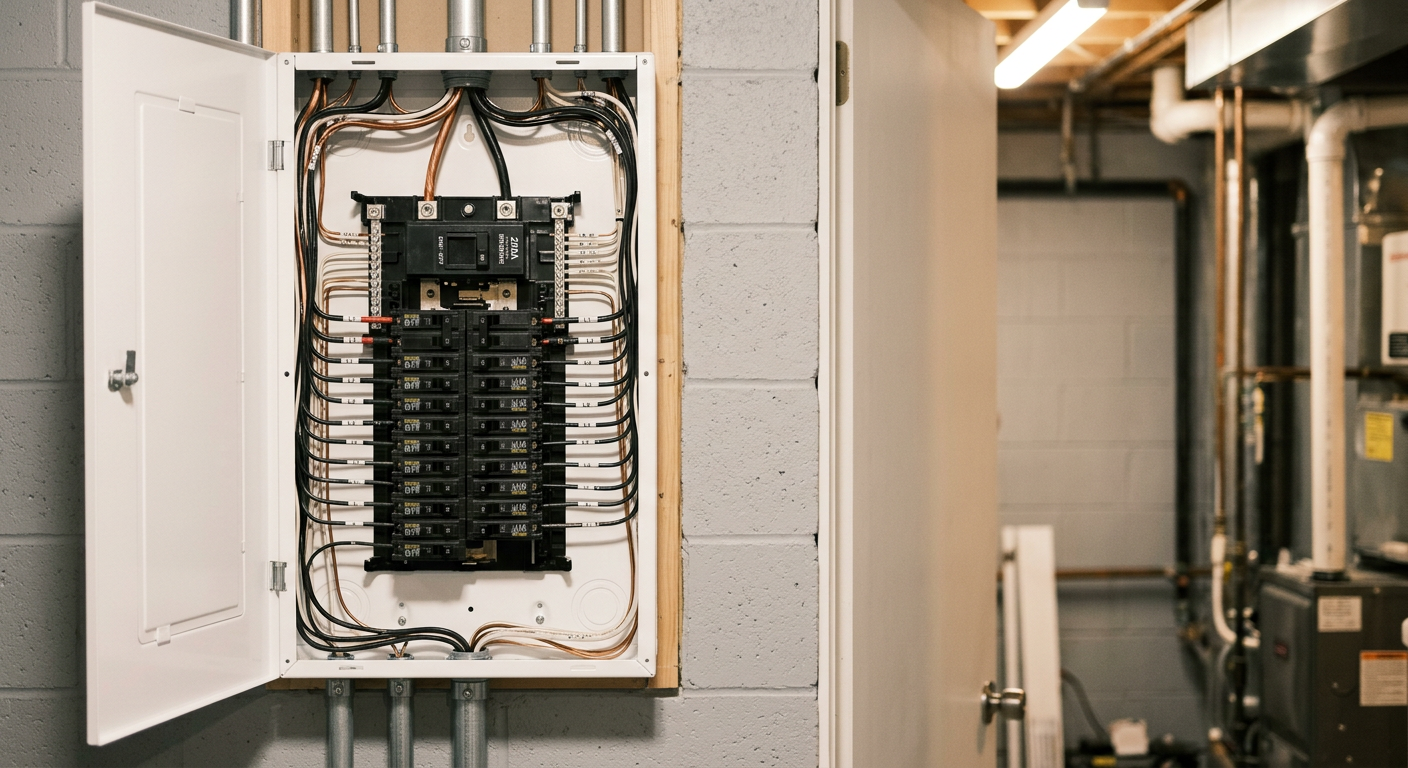
    Modern residential electrical panel prepared for a documented Canadian replacement and outage plan

    Canada homeowner planning guide

    How Long Does Electrical Panel Replacement Take in Canada?

    A straightforward panel replacement may be planned as one working-day installation, but that is not a universal promise and it is not the complete project timeline. Separate four clocks: assessment and approval lead time, on-site installation time, the period the property is without power, and final inspection or utility restoration. A like-for-like panel change can have fewer dependencies than a service upgrade involving the meter, mast, service conductors, underground route or utility design. Obtain the property-specific sequence, outage window, reconnect prerequisites and delay contingency in writing before the work date.

    Safety boundary

    Do not remove a utility meter, break a meter seal, handle service conductors, open energized equipment, improvise temporary connections or backfeed a panel from a portable generator. Utility and contractor roles differ by territory. Smoke, arcing, severe heat, shock, damaged service conductors or a burning odour requires emergency or utility response rather than waiting for a scheduled replacement.

    Short answer

    What this project must establish

    Canadian electrical requirements are adopted and administered locally. This guide explains the durable planning questions; your province or territory, local authority, serving utility, equipment instructions, and responsible contractor determine the property-specific answer.

    Find your jurisdiction guide

    Project lead time, on-site work time, power-off time and final closeout time are different measures and should be quoted separately.

    Panel replacement normally requires de-energization; the serving utility or another specifically authorized party controls utility-owned metering and connection work.

    A panel-only replacement at the existing service rating and a complete service-capacity upgrade can have materially different schedules.

    Permit, notification, inspection and authorization-to-reconnect processes vary by province, municipality, safety authority, utility and project scope.

    Reconnection can depend on site access, electrician attendance, equipment readiness, inspection status and correction of deficiencies.

    A household outage plan should address medical needs, sump pumps, refrigeration, heating or cooling, tenants, remote work, security and communications.

    Project triggers

    Situations that change the scope

    Like-for-like panel replacement

    The service rating and connection remain, while the panel and compatible breakers are replaced and existing circuits are transferred. This can be simpler than a service upgrade, but still requires an approved outage, authority process and correction plan.

    100A-to-200A service upgrade

    A capacity change can add load calculations, utility review, meter or service equipment, conductors, grounding, permits, inspections and a coordinated reconnect. Total lead time can be much longer than the installation day.

    Meter base, mast or service damage

    Defects outside the panel can change ownership, equipment, crew, outage and inspection requirements. Confirm whether the work is panel-only, customer service equipment, utility equipment or a combined project.

    Underground or relocated service

    Trenching, locates, conduit, easements, civil contractors, utility design, inspections and restoration can create separate milestones before the panel is energized.

    Occupied, tenanted or multi-unit property

    Access, notice, shared equipment, fire and security systems, elevators, heating, refrigeration and vulnerable occupants require a written coordination plan beyond a single dwelling outage estimate.

    Deficiency, weather or emergency delay

    Unsafe existing conditions, concealed damage, failed prerequisites, severe weather or utility emergency work can interrupt the planned sequence. The quote should state who responds and what happens if same-day restoration is not available.

    Decision guide

    Resolve the design choices before pricing

    A defensible quote connects the existing condition and calculated demand to the proposed correction. It also separates contractor work, authority approval, and utility-owned scope.

    01

    Define panel versus service scope

    Document whether the rating, meter base, mast, conductors, grounding, disconnect, overhead or underground connection and utility point of delivery change. Schedule claims are meaningless until this boundary is clear.

    02

    Identify every schedule gate

    List assessment, design, load calculation, equipment order, permit, utility request, locates, inspection, other trades, disconnect, reconnect and final closeout in dependency order.

    03

    Separate outage from lead time

    Ask for the expected power-off window on the installation date separately from the days or weeks needed to prepare and close the project. Neither should be represented as guaranteed when outside parties control milestones.

    04

    Choose an outage date from readiness

    Book the outage after accepted scope, required approvals, equipment, site access, contractor and utility arrangements are confirmed. The desired date should not drive premature equipment or design choices.

    05

    Plan essential-load continuity

    Identify medically necessary equipment and property-protection loads early. Use manufacturer, medical, utility and qualified contractor guidance for an appropriate alternative; do not improvise generator or extension-cord connections.

    06

    Require a restoration contingency

    State who contacts the authority and utility, who remains on site, which deficiencies can block energization, how updates are provided and what accommodation or property-protection plan applies if power is not restored.

    What changes the project cost

    A Canada-wide installed price is not a substitute for a site-specific scope. Compare the same equipment, responsibilities, exclusions, and closeout standard.

    Utility and authority involvement

    Applications, design review, disconnect or reconnect, permits, inspection, reinspection, special attendance and after-hours requests can add cost and scheduling dependencies.

    Panel-only or complete service

    Meter base, mast, conductors, disconnect, grounding, overhead or underground route and transformer or network work expand the project beyond transferring circuits.

    Existing circuits and deficiencies

    Circuit count, crowded conductors, damaged equipment, incompatible breakers, grounding, labeling, older wiring and concealed conditions affect labour and correction time.

    Access and property type

    Finished spaces, exterior height, locked rooms, condominiums, multi-unit buildings, tenant notices, traffic control and shared equipment can require additional coordination.

    Civil and building restoration

    Trenching, locates, concrete, siding, roofing, drywall, hazardous materials, weatherproofing and landscaping can occur on different dates and should be assigned explicitly.

    Contingency and schedule constraints

    Rush procurement, narrow outage windows, cold or hot weather, temporary accommodation, essential-load protection, repeat visits and delayed reconnect exposure can change the commercial plan.

    A jurisdiction-ready project sequence

    Do not schedule around an assumed installation day until equipment, permits, utility work, inspection, outage, and restoration dependencies are known.

    1. STEP 1

      Document the existing system and trigger

      Record the service and main ratings, closed-cover panel identification, meter and service route, circuit count, major loads, symptoms, damage, planned additions and why the work is being considered.

    2. STEP 2

      Select the complete technical scope

      Use condition evidence, compatible equipment and a locally accepted load method to distinguish repair, same-rating replacement, larger distribution, load management and service upgrade options.

    3. STEP 3

      Confirm authority and utility sequence

      Identify the permit or notification holder, inspections, reconnect authorization, serving utility, meter and connection ownership, application, lead-time advice, fees and site-readiness requirements.

    4. STEP 4

      Pre-stage the outage day

      Confirm equipment and materials, labels, circuit schedule, access, parking, occupants, utility appointment, electrician attendance, authority contacts, weather exposure, building work and the written contingency.

    5. STEP 5

      Complete, inspect and restore

      De-energize through the authorized process, complete the defined work, test and label it, address required deficiencies, obtain reconnect authorization where applicable and have the authorized party restore service.

    6. STEP 6

      Verify operation and close the file

      Confirm major circuits and equipment operate, reset clocks and controls safely, record unresolved items and retain the final scope, invoice, permit, inspection or acceptance, equipment schedule, warranty and utility correspondence.

    Questions every written quote should answer

    • Is this a panel-only replacement, a same-rating service repair or a complete service-capacity upgrade?
    • What are the expected planning lead time, on-site work time, power-off window and closeout timeline separately?
    • Which dates depend on the authority, utility, equipment supplier, civil contractor or another trade?
    • Who requests and pays for the permit, inspection, disconnect, reconnect and any reinspection?
    • What exact conditions must be met before the utility or authorized party will restore power?
    • Which equipment and materials will be confirmed on site before the outage begins?
    • How will medical needs, sump pumps, refrigeration, heating, cooling, tenants, security and remote work be handled?
    • What existing deficiencies or concealed conditions could extend the outage, and how are change orders approved?
    • What is the failed-inspection, delayed-utility or overnight-outage contingency, including responsibility for updates and costs?
    • Which permit, acceptance, utility, equipment, testing, warranty and circuit-directory records will be delivered?

    Build an auditable project file

    Another qualified professional should be able to understand what existed, why the scope changed, who approved it, what was installed, and how the project closed.

    Existing condition

    Service rating, closed-cover equipment identification, observed condition, symptoms, accessible configuration, and the planned loads or project trigger.

    Approved scope

    Legal contractor, equipment, circuit and service work, permit holder, inspection, utility responsibilities, restoration, exclusions, and change-order rules.

    Installation record

    Permit number where required, approved equipment, labelled circuits, documented changes, inspection milestones, and utility instructions where applicable.

    Closeout file

    Final acceptance or inspection status, equipment information, settings, warranty, utility records, paid invoice, and the responsible contractor's contact details.

    Canadian questions

    Panel replacement timeline and outage planning FAQ

    How long does electrical panel replacement take?+

    A contractor may plan a straightforward panel-only installation within one working day, but site condition, circuit corrections, inspection and reconnect rules can change that. Ask for planning lead time, on-site duration, actual outage and final closeout as four separate estimates.

    How long will the power be off during panel replacement?+

    The outage can be shorter than the full workday when preparation is completed while power remains available, or it can extend when service equipment, inspections, deficiencies or utility work are involved. The serving utility and contractor should provide the property-specific window and restoration prerequisites.

    Is same-day electrical service restoration guaranteed?+

    No. Same-day restoration may be the plan, but utility emergencies, failed site-readiness checks, inspection requirements, unsafe deficiencies, weather and work outside the approved scope can delay reconnection. Require a written contingency before the outage.

    Does a 200 amp upgrade take longer than panel replacement?+

    It can. A 200A project may add a load calculation, utility design, meter and service changes, new conductors, grounding, trenching, permits and coordinated energization. Some sites remain straightforward; others require several pre-construction milestones.

    Does the utility have to disconnect power for a panel change?+

    Often the utility or another specifically authorized party must control the meter or service connection, but the exact model differs by utility and project. A contractor authorization in one territory should not be assumed elsewhere.

    Can I stay home during an electrical panel replacement?+

    Possibly, if the contractor's site-safety plan permits it, but the home will lose electrical services and work areas must remain clear. Discuss children, pets, medical needs, remote work, heating or cooling, water systems and any temporary relocation before the date.

    How should I protect food during the outage?+

    Minimize opening refrigerators and freezers and follow the appliance manufacturer and current public-health guidance for temperature limits. For a longer or uncertain outage, arrange suitable cold storage rather than relying on a promised reconnect time.

    What should I do about a sump pump or medical equipment?+

    Tell the contractor and utility before scheduling. Create a property-specific continuity plan using appropriate manufacturer, medical and qualified electrical guidance; reschedule or relocate when reliable continuity cannot be provided safely.

    Can I use a portable generator during panel replacement?+

    Only through an approved connection and transfer or isolation arrangement designed for the site. Never connect a generator to a receptacle, panel or service in a way that can backfeed utility or contractor work. Discuss any temporary-power need before the outage.

    Can an inspection delay electrical reconnection?+

    Yes. Some authorities require a service or connection inspection, authorization, tag or other acceptance before power can be restored. The permit holder should confirm the local request, inspection and correction sequence in advance.

    What can cause a utility to refuse reconnection?+

    Examples can include missing authorization, inaccessible equipment, absent required electrician, a closed-out or mismatched request, unsafe service condition, incomplete work, main disconnect position or unmet utility standards. Applicable conditions come from the serving utility.

    What records prove the panel project is complete?+

    Keep the final scope and invoice, permit or notification identifier, inspection or acceptance record where issued, utility correspondence, equipment schedule, updated circuit directory, testing or settings records, warranty and documented outstanding items.
    Property-specific next step

    Planning electrical panel work?

    Send the property location, panel details, project trigger, planned loads, and timing. Provider availability, licensing, scope, price, permit responsibility, and utility scheduling are confirmed before work is booked.

    Scope-first project reviewNo DIY panel instructions