Skip to content
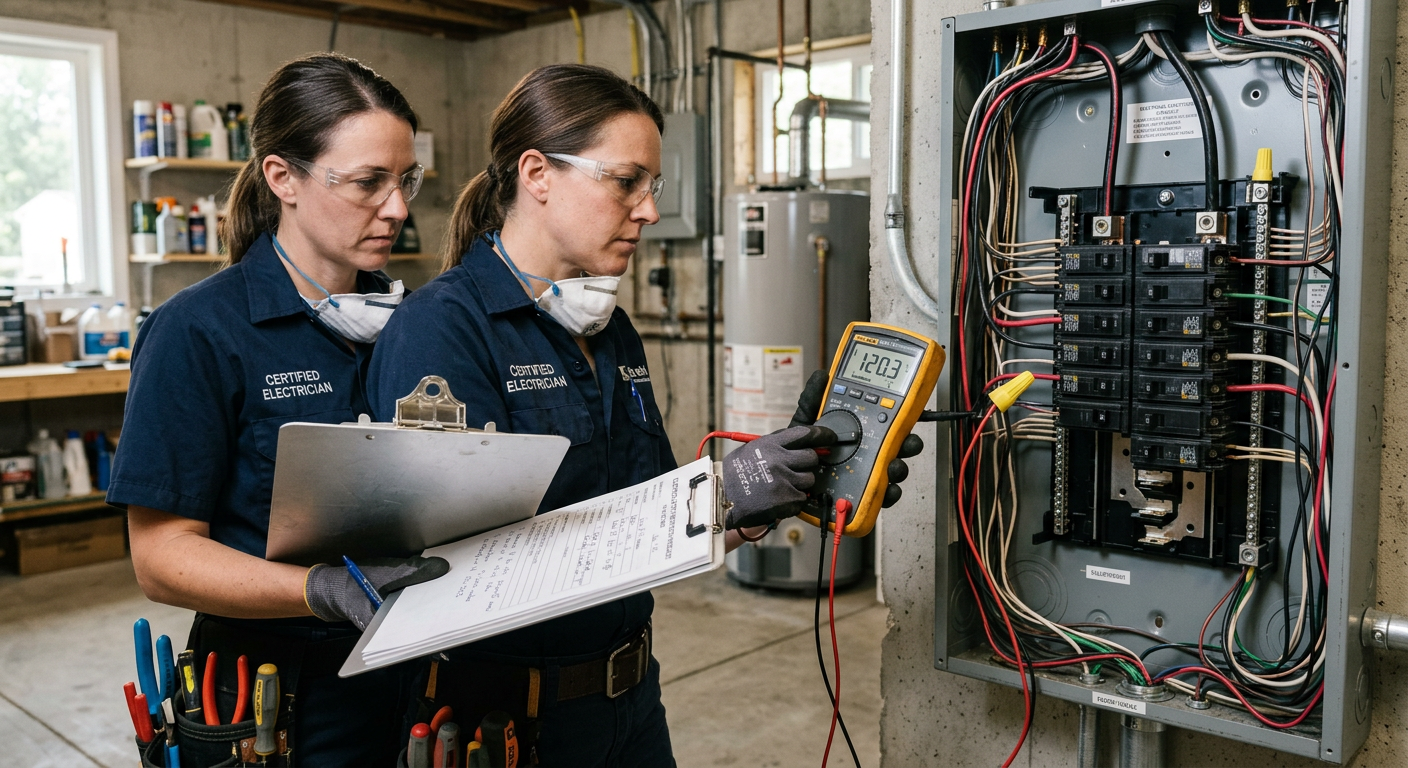
    Electrical inspector reviewing residential service equipment and documentation

    Evidence-led Canadian guide

    Alberta Electrical Permit and Inspection Guide

    Find the Alberta permit authority for the property first, then verify the exact scope, eligible permit holder, inspection stages, utility handoffs and final-status record.

    Citation-ready answer

    What the evidence supports

    Canada does not have one permit process, one utility standard, one service configuration, or one installed price. Durable answers distinguish the national planning principle from the local decision.

    Complete answer

    Alberta electrical permits are administered through accredited municipalities or regional bodies, or through agencies serving non-accredited areas under the provincial safety-code system. Start by identifying the authority for the property and exact scope. Confirm whether a permit is required, who is eligible to hold it, which plans or service information are needed, when inspections occur, and what closes the permit. Fees, forms and timelines are issuer-specific and should be checked on the current authority page.

    The Government of Alberta says permits are available through accredited municipalities and agencies serving non-accredited areas.

    The owner retains primary responsibility for safety-code compliance under Alberta's system.

    The current Alberta electrical code page lists CSA C22.1-24 as in force from April 1, 2025.

    A permit creates an approval and inspection process; it is not itself proof that every part of an installation is defect-free.

    Immediate safety note

    Do not energize incomplete work, cover wiring that requires inspection, or assume an application alone authorizes work. Follow the permit issuer's conditions and the qualified contractor's safe work and energization sequence.

    01

    Find the authority having jurisdiction

    The property location determines whether a municipality, regional body or accredited agency administers the permit.

    Alberta's provincial page explains that accredited municipalities and regional services commissions may provide services directly or contract with inspection agencies. Accredited agencies serve non-accredited areas under the Alberta Safety Codes Authority.

    Use the official permit-finder or municipality page for the property. Do not assume Calgary, Edmonton or another city's forms, fees, homeowner rules and timelines apply elsewhere in Alberta.

    • Property address and municipality
    • Electrical project scope
    • Local permit issuer and contact
    • Other utility, development or building approvals
    02

    Confirm permit and permit-holder rules

    Describe the work precisely and ask the issuer who may apply before any installation starts.

    Panel replacement, service changes, new circuits, EV charging, solar, generators, suites and renovations can have different submission requirements. Maintenance and minor-work exceptions, if any, must come from the applicable rules rather than a generic online list.

    Contractor and homeowner permit eligibility also varies by project and authority. A homeowner permit does not convert regulated work into casual DIY work, and some scopes can be restricted. The permit should identify the party responsible for the declared installation.

    03

    Prepare a complete application

    Submit the scope, valuation and technical information requested by the actual issuer.

    Common inputs can include owner and contractor details, site address, project description, equipment ratings, load information, service or single-line details, floor or site plans, utility information and job value. The exact package depends on scope.

    Pay the current fee shown by the issuer and retain the issued permit number and conditions. A fee quoted in an old article cannot establish today's charge because municipal schedules, levies and valuation methods can change.

    04

    Schedule inspections and resolve deficiencies

    Know which work must remain visible and which milestones precede energization or utility reconnection.

    Ask when rough-in, service, final or special inspections are required and how much notice the issuer requests. Utility work may have a separate application and prerequisites; a contractor cannot guarantee an inspection or reconnection time controlled by others.

    If an inspector identifies deficiencies, obtain the written item, responsible party, correction method, reinspection requirement and status. Do not characterize a correction as optional solely because equipment operated before the inspection.

    05

    Close the permit and retain evidence

    Collect the final authority record and the technical documents needed for ownership, insurance and future work.

    Confirm that all inspections and deficiencies are complete and ask which document proves the permit's final status. Keep the application, permit, inspection reports, accepted drawings, equipment schedule, load calculation, utility correspondence, test or commissioning records, photos, warranty and paid invoice.

    A final permit record does not replace maintenance or a broader property-condition inspection. It documents the declared work and the authority process at that time, which is why an accurate scope and durable closeout package matter.

    06

    Do not mix Calgary and Edmonton rules

    The two largest Alberta cities publish different homeowner, contractor and inspection pathways, and neither page governs the rest of the province.

    Calgary's homeowner trade-permit guidance identifies restrictions around main electrical service work, while its contractor pages describe applications and inspection requests for registered professionals. Edmonton's residential permit page separately defines homeowner eligibility and excludes homeowner work on the main service. These examples show why a provincewide statement such as homeowners can pull electrical permits is incomplete without the property, scope and issuer.

    Use the current page for the actual municipality or accredited agency. Record the authority name, application type, permit-holder eligibility, supporting documents, fee basis, inspection request process and contact. If a project crosses electrical, building, development, gas, fire or utility work, ask which approvals are coordinated and which require separate applications. Do not transfer a fee, form or service standard from one Alberta authority to another.

    07

    Coordinate service work with the utility

    An electrical permit and a utility service request are related records with different owners and decision gates.

    For a panel replacement that requires only safe disconnection, the utility may use a temporary disconnect and reconnect process. A capacity increase, meter relocation, overhead or underground service change can require utility design, customer drawings, estimates, civil work, inspections and construction. ENMAX and EPCOR publish different processes for their service territories, and another Alberta wire owner may use another standard.

    The contractor should map who submits each request, which permit or inspection evidence the utility needs, which service equipment belongs to the customer, which costs are utility-controlled and what authorizes energization. A municipal permit does not guarantee available utility capacity or reserve a construction date. Likewise, utility design acceptance does not replace the electrical permit and inspection required for customer-owned installation.

    08

    Audit permits for purchases and renovations

    A permit search should compare the declared record with the physical installation and the question the owner is trying to answer.

    For a property purchase or planned renovation, collect available permit numbers, descriptions, issue and inspection status, accepted drawings and deficiency records. Compare addresses, suite or building identifiers, service rating, panel and major equipment with what is installed. An absent online result is not proof that no permit exists, and an issued permit is not proof that it reached final status or covered every later alteration.

    If open, expired or unclear work appears, contact the authority for the current resolution process before promising a closing or construction date. The authority may require access, plans, a new permit, concealed-work evidence, corrections or other professional input. Keep legal and contractual conclusions with the appropriate advisers; the electrical file should describe the record, observed installation, limitations and technical work required to reach an accepted status.

    09

    Read deficiencies and final status precisely

    An inspection result should be interpreted from the authority record, not reduced to passed or failed without its scope and conditions.

    A deficiency notice should identify the permit, inspection date, cited item or condition, required correction and next step. Ask whether photographs, documents, remote review or another site inspection are accepted and whether energization or concealment is restricted until clearance. The permit holder should connect each response to the original item and retain evidence of the correction. An unrelated verbal assurance does not close a written deficiency in the authority's record.

    Final status language and documents vary by issuer. Confirm whether the record shows accepted, complete, closed, expired, cancelled, outstanding or another status, and whether any condition remains. Match that status to the exact declared scope; a final inspection for one renovation does not approve undeclared older work elsewhere. Deliver the owner the complete authority record with accepted drawings, utility handoffs, equipment and setting schedules, tests, photographs, warranty and invoice so the permit remains understandable after contractor or property ownership changes.

    Before final payment, compare the authority record with the contractor's completion statement and the utility status where service work occurred. Resolve differences in permit number, address, declared valuation, equipment rating or open deficiencies while the project team is still available. A tidy owner file supports future additions, insurance questions and property transactions, but its first purpose is simpler: proving that the declared installation reached the issuer's current completion state.

    Comparison

    Who does what in Alberta's permit system

    The exact organization and responsibilities depend on location and project scope.

    PartyTypical roleEvidence to keepConfirm locally
    OwnerProvides accurate property information and retains compliance responsibilityContract, permit and closeout fileOwner obligations and access
    Permit holderDeclares and takes responsibility for permitted installationApplication and issued permitEligibility for exact scope
    Municipality or agencyAdministers permit and inspection serviceConditions, reports and final statusForms, fees and timing
    Safety codes officerInspects within authority and permit scopeInspection and deficiency recordRequired stages and access
    UtilityControls utility-owned equipment and connection processesDesign, appointment and connection recordSeparate application and prerequisites

    Verification ledger

    Build an auditable Alberta permit file

    Every permit claim should point to the property authority, declared scope, responsible holder, inspection status and utility boundary. This is the minimum record needed to compare quotes or resolve older work.

    01

    Claim to test

    This is the correct permit authority

    Proof to request

    Property address matched to the current Alberta authority or accredited-agency finder and the official local permit page and contact.

    Decision unlocked

    Which application, fee schedule, holder rules, inspections and closeout process actually govern the work.

    02

    Claim to test

    The homeowner can hold the permit

    Proof to request

    Current issuer eligibility criteria applied to the exact ownership, occupancy, property type and electrical scope, including service-work restrictions.

    Decision unlocked

    Whether the owner or a qualified contractor must declare and take responsibility for the installation.

    03

    Claim to test

    The permit covers the whole project

    Proof to request

    Issued permit description compared with panel, service, circuits, EV, generator, solar, suite, trench, building and utility components in the contract.

    Decision unlocked

    Whether additional or amended approvals are needed before work or concealment.

    04

    Claim to test

    The inspection passed

    Proof to request

    Authority inspection report or current status showing addressed deficiencies and the document the issuer recognizes as final for that permit.

    Decision unlocked

    Whether the authority record is closed or further correction, access or reinspection remains.

    05

    Claim to test

    The service can be energized

    Proof to request

    Municipal or agency acceptance plus the applicable utility's design, inspection prerequisite, connection request and authorization sequence.

    Decision unlocked

    Whether both customer-side approval and utility-side connection gates are complete.

    Evidence to collect

    A useful project file lets another qualified professional understand the existing condition and the proposed decision.

    • Property authority and current official permit page
    • Precise scope and eligible permit holder
    • Plans, ratings, load and service information requested
    • Current fee basis, levy, permit number and conditions
    • Inspection stages, concealment and utility prerequisites
    • Deficiency clearance, final status and complete closeout package

    Questions for the written scope

    1. 01Which authority issues the permit for this address?
    2. 02Who will hold the permit and what work does it declare?
    3. 03Which drawings, load or service documents are included?
    4. 04Which inspections and utility prerequisites control the sequence?
    5. 05Who corrects deficiencies and pays for reinspection?
    6. 06Which final authority and technical records will I receive?

    Canadian questions

    Frequently asked questions

    Who issues electrical permits in Alberta?+

    Accredited municipalities or regional bodies administer permits in their areas, while accredited agencies serve non-accredited areas under Alberta's safety-code system. Confirm the property-specific issuer.

    Does every electrical job in Alberta need a permit?+

    Do not use a blanket rule. Permit requirements depend on the work and applicable authority. Describe the exact scope to the current issuer before work starts. Ask for the official category or exception that supports the answer and keep it with the project file; a contractor's verbal description or an old municipality page does not establish the current rule for another address or altered scope.

    Can an Alberta homeowner obtain an electrical permit?+

    Some authorities allow homeowner permits for defined properties and scopes, with eligibility conditions and restrictions. Confirm the current local rule; service and other complex work may be restricted.

    How much is an Alberta electrical permit?+

    There is no single provincial residential fee. Issuers can use different schedules, levies and valuation methods. Check the current fee page for the authority and scope.

    How long does an Alberta electrical inspection take to schedule?+

    Timing varies by issuer, location, workload, inspection type and completeness. Obtain the current service standard or appointment from the actual authority rather than relying on a provincewide promise.

    Can wiring be covered before inspection?+

    Follow the permit conditions and issuer's inspection stages. Work that must be visible should not be concealed before the required inspection or authorization.

    What happens after an inspection deficiency?+

    Obtain the written deficiency, correct it through the responsible permit holder, request any required reinspection and keep the final clearance. Fees and process are issuer-specific.

    What proves an Alberta electrical permit is complete?+

    Ask the issuer which inspection report, status or final document closes the permit. Retain it with accepted plans, utility records, equipment details, tests, photos, warranty and invoice.

    Where do I apply for an electrical permit in rural Alberta?+

    Start with the Government of Alberta's current safety-code permit information and identify whether the property is in an accredited municipality or an area served by an accredited agency under the Alberta Safety Codes Authority. Use the property location, not the nearest city's forms, to identify the issuer.

    Can a Calgary homeowner replace the main electrical panel under a homeowner permit?+

    Calgary's current homeowner trade-permit guidance restricts homeowner work on the main service, including the main panel, main breaker and meter base. Verify the exact current wording and arrange an eligible contractor and permit path before planning main-service work.

    Can an Edmonton homeowner obtain a permit for main-service work?+

    Edmonton's current residential permit guidance excludes homeowner work on the main electrical service. Other homeowner electrical scopes have their own eligibility conditions. Confirm the current City page for the property and describe the precise work before assuming which permit is available.

    Does an Alberta Master Electrician licence replace an electrical permit?+

    No. Credentials, contractor responsibilities, permits and inspections are related but distinct controls. Verify the contracting entity and responsible qualifications, then confirm the property-specific permit holder, application and inspection process with the authority having jurisdiction.

    Do ENMAX or EPCOR issue the electrical permit?+

    The municipality or accredited permit authority administers the electrical permit, while the utility controls its service connection, meter and other utility-side processes. A service project may require both sets of records. The contractor should map their sequence and identify which approval enables each handoff.

    What if electrical work was covered before inspection?+

    Contact the actual permit authority and responsible permit holder before assuming a remedy. The authority determines what evidence, access, exposure, testing, plans, professional input or correction it will accept. Do not energize questionable work or conceal additional installation while status is unresolved.

    How do I check whether an old Alberta electrical permit was finalized?+

    Search the applicable municipal or agency record where available, then request clarification using the property address and permit number. Compare the declared scope and inspection status with the installed work. An issued permit, inspection booking or contractor invoice alone may not prove final acceptance.
    ElectricalPanels.ca is an education and request-routing platform. Before work begins, verify the legal contractor, applicable licence, insurance, permit holder, inspection responsibility, utility role, written exclusions, warranty, and change-order terms.

    Property-specific next step

    Planning electrical panel work?

    Send the property location, panel details, project trigger, planned loads, and timing. Provider availability, licensing, scope, price, permit responsibility, and utility scheduling are confirmed before work is booked.

    Scope-first project reviewNo DIY panel instructions