Repeated fuse operation
Record the circuit, equipment in use and timing. Overload, appliance faults, damaged wiring, moisture, loose connections and incorrect fuse sizing require different corrections.
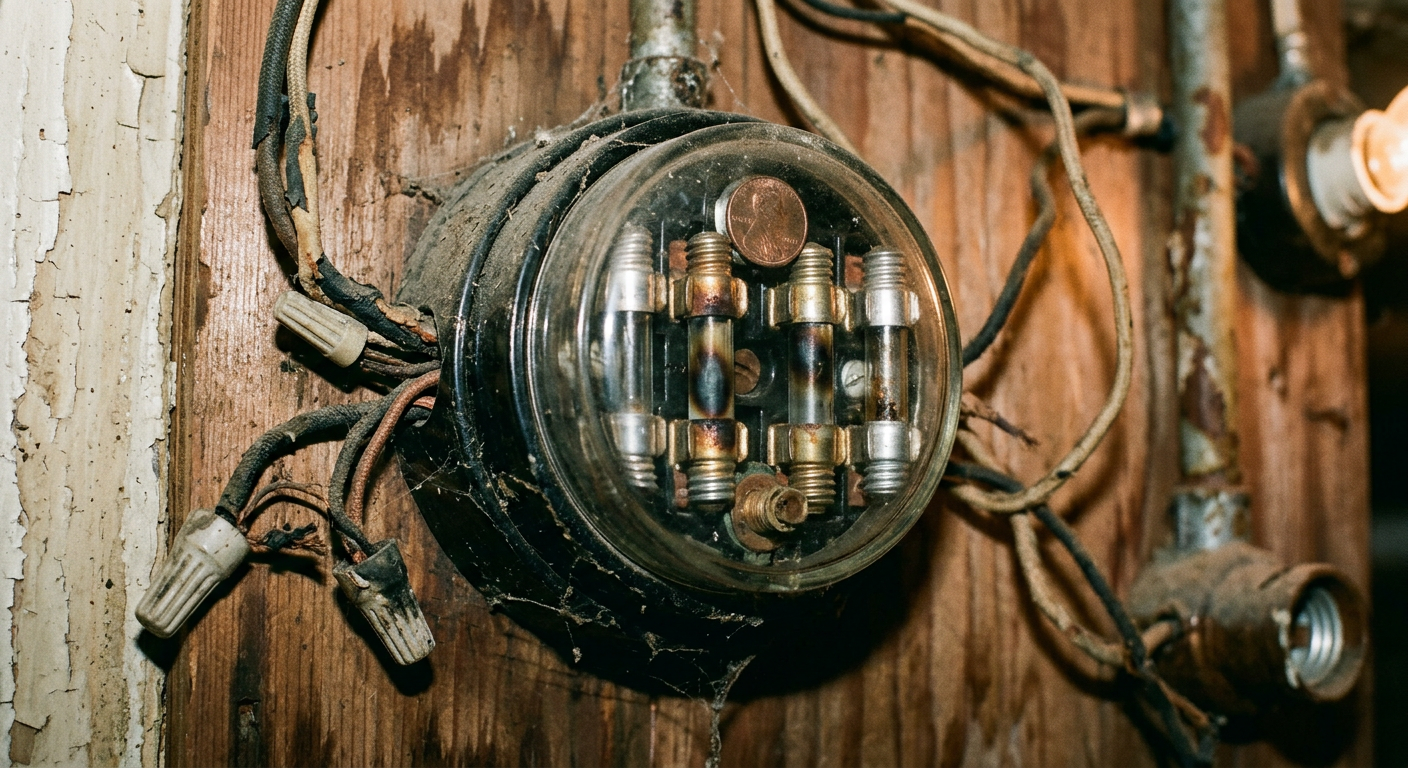
Calgary, Alberta homeowner planning guide
A Calgary fuse-box decision starts with exact equipment, correct fusing, condition, connected wiring and the insurer's written requirement. A breaker conversion and a service upgrade are separate scopes.
Local responsibility map
Confirm the permit category, eligible permit holder, required submissions, inspection stages, deficiency process, and final acceptance record.
Confirm service availability, metering, utility-owned equipment, design, disconnect, reconnect, energization, site readiness, and utility charges.
Do not install a larger fuse, bypass a fuse, insert conductive objects or remove the cover. Smoke, arcing, melting, burning odour, severe heat or water entry requires urgent professional guidance.
Fuse-box decision file
This planner does not diagnose equipment, select a fuse or calculate service size. It identifies the records and scope boundary your contractor, authority, utility or insurer may need for a property-specific decision.
Current evidence gate
Evidence the file still needs
Not decided boundary
Compare continued use after assessment, focused correction, same-capacity conversion and service-upgrade options against the same evidence.
Next evidence action
Record only safely accessible labels, directory information, reported symptoms, planned loads and written third-party requests. Do not remove a cover or touch fuses for this planner.
Short answer
Canadian electrical requirements are adopted and administered locally. This guide explains the durable planning questions; your province or territory, local authority, serving utility, equipment instructions, and responsible contractor determine the property-specific answer.
Find your jurisdiction guideRepeatedly blown fuses require diagnosis; installing a larger fuse can defeat conductor protection and create a serious hazard.
A fuse-to-breaker conversion can retain the existing service rating or become part of a broader service change.
Older Calgary homes can combine fuse equipment with ungrounded circuits, aluminum conductors, additions or undocumented alterations that need separate scope.
Insurance requirements vary, so obtain the exact inspection, replacement and documentation request in writing before authorizing work.
Project triggers
Record the circuit, equipment in use and timing. Overload, appliance faults, damaged wiring, moisture, loose connections and incorrect fuse sizing require different corrections.
Ask the insurer, lender, buyer or inspector to state the concern and required evidence. A generic request can otherwise produce a scope that does not resolve the actual condition.
Kitchen work, suites, garages, EV charging and heat pumps can add circuits or demand. A new breaker panel creates distribution options but not automatic service capacity.
Ungrounded circuits, aluminum wiring, shared neutrals, poor splices, obsolete service equipment and previous DIY work can change the project beyond the fuse enclosure.
Some older designs can expose energized terminals when accessed. Missing barriers, damaged doors, loose holders, heat, corrosion, contamination or improvised alterations change the safety and replacement urgency.
Renovation can expose short conductors, concealed junctions, circuit-sharing, grounding and fire-separation issues. Define which existing circuits are being transferred and which renovation circuits are new.
Decision guide
A defensible quote connects the existing condition and calculated demand to the proposed correction. It also separates contractor work, authority approval, and utility-owned scope.
Connect the recommendation to observed condition, unavailable equipment, unsafe alteration, circuit need, capacity evidence or a documented third-party requirement.
Define whether service rating, meter socket, mast or underground raceway, service conductors, disconnect and ENMAX connection remain or change.
List which circuits are reconnected, repaired, extended or replaced and how legacy wiring, grounding and required protective functions are handled.
Specify panel model, approved breakers, spaces, disconnect, surge protection, labels and any future circuits rather than pricing a generic breaker box.
Confirm whether the insurer needs a condition report, completion letter, permit outcome, invoice, photographs or specific equipment details.
For every circuit moved to the new panel, state whether it is reconnected as found, tested, repaired, extended or replaced and which concealed portions remain outside the assessment.
Specify breaker types and required or selected protection, compatibility with connected wiring and equipment, expected testing, and how nuisance operation or existing faults will be diagnosed.
Define pre-outage investigation, ENMAX isolation, City inspection, reconnect prerequisites and what happens if a circuit or service defect cannot be accepted on installation day.
Option matrix
A fuse label does not identify the remedy. The path should follow exact equipment, condition, connected wiring, capacity evidence and the property-specific insurer or renovation objective.
| Project path | What it addresses | What it does not prove | Evidence before selection |
|---|---|---|---|
| Documented continued use | Suitable equipment with correct fusing and no unresolved finding within the assessed scope | That concealed wiring is defect-free or every insurer will accept it | Equipment identity, condition, fuse schedule, assessment limits and written third-party response |
| Focused correction | A defined holder, fuse, cover, label, connection or approved-part issue | That unrelated circuits or service equipment are corrected | Exact compatible part, retained-equipment condition, local acceptance and correction record |
| Same-capacity breaker conversion | Replaces distribution equipment and transfers defined circuits at the retained service rating | That service capacity increases or every branch circuit is renewed | Service suitability, circuit-transfer schedule, panel package, permit and outage plan |
| Conversion plus circuit remediation | Adds documented repairs, grounding work, conductor extensions or replacement circuits | That unobserved wiring outside the stated boundary is included | Circuit-by-circuit findings, access plan, quantities, restoration and change rules |
| Conversion plus service upgrade | Changes panel and some combination of meter, conductors, route, grounding and utility connection | That a larger rating is supported without accepted load and ENMAX evidence | Load calculation, City design, ENMAX process, complete service boundary and energization plan |
Property verification
Use the recommendation only when equipment identity, the observed finding, circuit boundary, local approval path and closeout requirement are all visible in the file.
Claim to test
Proof to request
Exact enclosure and fuse identification, qualified condition findings, approved-part availability, circuit need or the insurer's current written property-specific requirement.
Decision unlocked
Whether continued use, focused correction or replacement is the supported path.
Claim to test
Proof to request
Circuit schedule naming each reconnect, repair, extension or replacement plus assessment limitations for concealed and inaccessible wiring.
Decision unlocked
Which branch-circuit risks are inside the base price and which remain separate.
Claim to test
Proof to request
Service rating and condition, accepted load evidence, meter and conductor suitability, grounding scope and confirmation that no ENMAX capacity change is proposed.
Decision unlocked
Whether this is a same-capacity conversion or a broader service project.
Claim to test
Proof to request
City permit holder and inspection stages, ENMAX disconnect or meter-handling request where applicable, reconnect prerequisite, payer and correction contingency.
Decision unlocked
Who controls approval and reconnection and which costs can still move.
Claim to test
Proof to request
Insurer wording, accepted contractor or report credentials, equipment and photo requirements, permit or inspection record, invoice language and submission owner.
Decision unlocked
Whether the closeout package answers the actual underwriting condition.
A Calgary, Alberta-wide installed price is not a substitute for a site-specific scope. Compare the same equipment, responsibilities, exclusions, and closeout standard.
Enclosure, main device, approved breakers, circuit count, surge protection, labels and required protective functions.
Ungrounded wiring, aluminum conductors, shared neutrals, damaged insulation, poor splices and corrections required for safe reconnection.
Meter, disconnect, mast or underground raceway, service conductors, grounding and any capacity increase.
Permit, inspection, isolation, meter handling, reconnect, repeat visits and schedule dependencies.
Panel relocation, working space, drywall, asbestos or other hazardous materials, finished surfaces and fire-separation repair.
Equipment identification, qualified-access inspection, circuit mapping, photographs, insurer forms, completion letters and return visits should be priced separately from installation labour.
Circuit verification, labels, protective-device tests where applicable, permit outcome, utility record, before-and-after photographs, warranty and owner handoff.
Do not schedule around an assumed installation day until equipment, permits, utility work, inspection, outage, and restoration dependencies are known.
Record fuse-box label, service rating if visible, fuse types, circuit directory, symptoms, planned work and insurer wording without opening energized equipment.
Have the contractor inspect accessible wiring condition, conductor protection, alterations, grounding, panel location, service equipment and load implications.
Identify the City permit holder and inspection stages, then confirm whether ENMAX meter handling or disconnect and reconnect are required.
Normalize panel and breakers, circuit corrections, service work, permits, outage, restoration, exclusions and concealed-condition allowances.
Before the outage, identify short conductors, crowded routes, shared conductors, grounding questions, special loads, required breaker functions, access and likely corrections that can be investigated safely.
Write the installation-day handoffs among the contractor, City inspector, ENMAX and owner, including deficiency response, temporary needs and the rule for authorizing extras.
Retain the circuit directory, equipment schedule, permit and inspection result, insurer documents, utility records where applicable, warranty and invoice.
Another qualified professional should be able to understand what existed, why the scope changed, who approved it, what was installed, and how the project closed.
Service rating, closed-cover equipment identification, observed condition, symptoms, accessible configuration, and the planned loads or project trigger.
Legal contractor, equipment, circuit and service work, permit holder, inspection, utility responsibilities, restoration, exclusions, and change-order rules.
Permit number where required, approved equipment, labelled circuits, documented changes, inspection milestones, and utility instructions where applicable.
Final acceptance or inspection status, equipment information, settings, warranty, utility records, paid invoice, and the responsible contractor's contact details.
Continue researching
Compare condition-led replacement with broader service and circuit work.
Open guideReview fuse sizing, legacy wiring and replacement decisions across Canada.
Open guideUse the separate guide when the project also changes service capacity.
Open guideTurn an insurer request into a defined evidence and correction scope.
Open guideCompare fuse equipment with other legacy panel families using exact evidence.
Open guideSeparate panel terminations from whole-circuit aluminum remediation.
Open guideBuild a Calgary price from City, ENMAX, equipment, circuits and restoration scope.
Open guideReview City and ENMAX responsibilities across local panel projects.
Open guidePrimary references
Forms, code editions, inspection procedures, utility standards, equipment, and incentive programs can change. Verify the current local rule before relying on a project detail.
Canadian questions
No blanket conclusion can be made from the presence of fuses alone. Equipment condition, correct fuse and conductor protection, alterations, service capacity and documented requirements must be assessed.
Often, but the panel location, circuit condition, grounding, service equipment, working space, permit and outage requirements must be confirmed before scope is fixed.
Not automatically. A breaker panel can replace the fuse enclosure at the same rating. A service-capacity increase is a separate project decision with meter, conductor and utility implications.
Requirements vary. Obtain the exact written condition and ask what evidence will satisfy it before choosing inspection, repair or replacement scope.
A panel conversion is regulated electrical work. Confirm the current permit category, eligible holder and required inspections with the City before work begins.
Panel and service work can require coordinated isolation or meter handling. The contractor and ENMAX should confirm the property-specific sequence before the outage is booked.
Cost depends on panel and breaker package, circuit condition, service work, City and ENMAX steps, access, restoration and concealed defects. Compare itemized scopes rather than a generic range.
Keep the permit and inspection result, circuit directory, equipment details, utility records where applicable, insurer correspondence, before-and-after photographs, warranty and paid invoice.
Do not increase a fuse rating as a shortcut. The protective device must match the conductor and connected equipment. Repeated operation requires diagnosis of load, appliance, wiring, moisture, connection and fuse-type possibilities.
Potentially, when the exact equipment, correct fusing, enclosure and holder condition, connected wiring, capacity and local or insurer requirements support that decision. The assessment boundary and any limitations should be written down.
No. Replacing the panel does not add grounding conductors throughout existing branch circuits. The proposal must identify which grounding, device, circuit or labelling corrections are included and which wiring remains.
It addresses terminations at the panel only to the extent stated in the scope. Aluminum-wired receptacles, switches, fixtures, junctions and appliance connections remain separate locations requiring their own approved assessment and remediation plan.
Physical conversion may fit within a planned outage, but permit, ENMAX coordination, material, circuit investigation, inspection, deficiencies and reconnect prerequisites control the complete timeline. Ask for the full sequence and missed-window contingency.
Start with exact equipment and condition findings plus the insurer's written requirement and a complete quote. The buyer and advisers can then address timing, access, credits or completion using evidence instead of a generic label.
Short conductors, concealed junctions, damaged insulation, unsupported alterations, grounding or bonding defects, incompatible service equipment, hazardous materials and restoration can change scope. Require photographs, the reason, price and written authorization for each change when work can safely pause.
Property-specific next step
Send the property location, panel details, project trigger, planned loads, and timing. Provider availability, licensing, scope, price, permit responsibility, and utility scheduling are confirmed before work is booked.