Skip to content
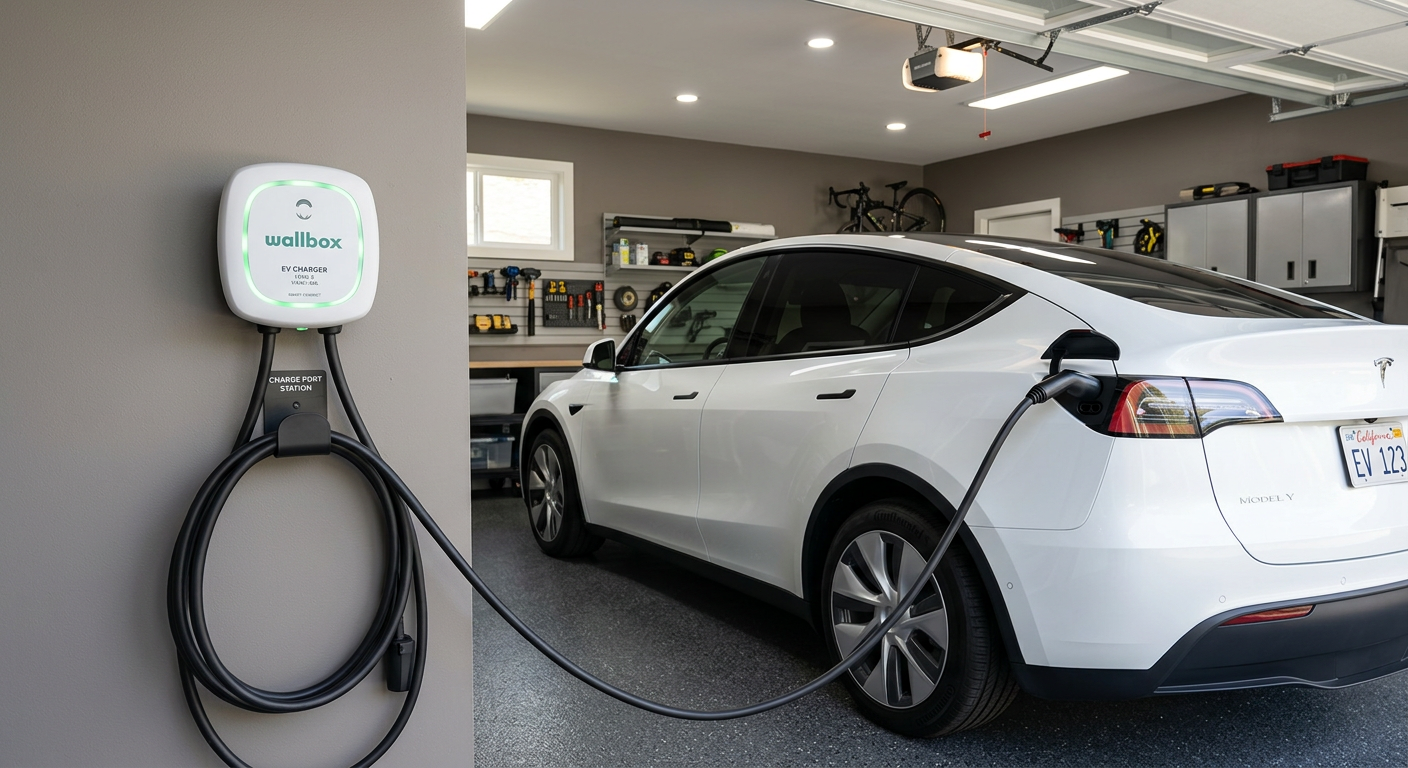
    Wall-mounted electric vehicle charger installed in a residential garage

    Evidence-led Canadian guide

    EV Charger Installation Guide for Calgary Homes

    Size Calgary home charging from daily energy and parking time, then verify City permits, approved equipment, electrical capacity or EVEMS, route and winter operation.

    Citation-ready answer

    What the evidence supports

    Canada does not have one permit process, one utility standard, one service configuration, or one installed price. Durable answers distinguish the national planning principle from the local decision.

    Complete answer

    A Calgary home charger should be designed around the vehicle's daily energy need and onboard charging limit, not the largest circuit available. The project may require a City electrical permit, an approved charger and circuit, a load calculation, and a qualified contractor. Where capacity is constrained, a lower charging setting or approved EV energy management system may be an alternative to a service upgrade. Confirm current permit, utility and incentive information for the address before relying on any quote.

    The charger, vehicle and circuit each have a rating; charging is limited by the lowest applicable rating.

    A spare breaker space does not prove that the service has capacity for continuous EV charging.

    A listed EV energy management system can control charging demand when designed and accepted for the installation.

    Outdoor and unheated-garage equipment must suit the actual location, cable use and manufacturer temperature limits.

    Immediate safety note

    Do not use an ordinary extension cord, improvised adapter or damaged receptacle for routine EV charging. Stop using equipment that is hot, discoloured, loose, wet, cracked or repeatedly trips protection, and have the circuit and charging equipment assessed.

    01

    Choose charging output from daily need

    Start with kilometres driven, hours parked and the vehicle's accepted AC charging rate.

    A commuter who parks overnight may recover the required daily energy at a lower output than the maximum advertised by the charger. Lower output can reduce circuit, routing and capacity demands while still leaving each morning with the needed range.

    Record the vehicle model, onboard AC limit, winter driving pattern, departure time and any second vehicle. Decide whether the charger will be hardwired or receptacle-connected only after the installation environment, equipment instructions and local requirements are reviewed.

    • Daily distance and winter energy use
    • Hours available for charging
    • Vehicle onboard AC charging limit
    • One vehicle, sequential charging or simultaneous charging
    02

    Calgary permit and contractor path

    Confirm the current City permit category, eligible permit holder and inspection sequence before installation.

    The City of Calgary regulates electrical alterations through its trade-permit system and limits the work available under homeowner permits. A contractor proposal should identify the legal permit holder, equipment, circuit rating, conductor and wiring method, protection, location and inspection responsibility.

    Permit fees and administrative processes can change. Verify the current City page for the address and scope rather than relying on an old fee, turnaround time or blanket statement about who can perform the work.

    03

    Capacity, load calculation and management

    Empty panel spaces and the service label are inputs, not a capacity decision.

    The accepted load method should account for the existing service, dwelling loads and proposed charging. The result may support the requested charger, a lower configured output, approved load management, other load changes, or a service-capacity project.

    Technical Safety BC's EVEMS bulletin is a useful Canadian technical example of managed charging, but it is B.C. guidance rather than Calgary law. The Calgary permit authority and installer must confirm the equipment, control method, fail-safe behaviour and settings accepted for this project.

    04

    Route, location and winter operation

    Price the complete cable route and select equipment for where it will actually operate.

    Garage finish, fire separation, panel distance, parking position, cord reach, impact exposure and a route through concrete or exterior walls can materially change scope. Outdoor installations also need suitable enclosures, fittings and mounting, with drainage and snow or vehicle impact considered.

    Calgary cold affects vehicle efficiency, cable handling and equipment operation differently. Check the exact charger's Canadian approval, enclosure rating, installation instructions and operating-temperature range; do not substitute a generic minus-40 claim for the product documentation.

    05

    Compare price, incentives and closeout

    A useful quote prices the same design and separates current incentives from the contract.

    Installed cost depends on output, charger supply, route, conductor and wiring method, panel work, capacity solution, permit, wall or concrete restoration and commissioning. Ask each bidder to quote the same assumptions and identify owner-supplied equipment, exclusions and change-order rules.

    Treat grants, utility programs and tax treatment as date- and eligibility-sensitive. Verify the program administrator's current terms before purchase. Closeout should include permit and inspection status, circuit and charger ratings, configured maximum, load-management settings, tests, labels, photos and warranty records.

    06

    Match the vehicle, charger and circuit

    The charging system is a chain, and its useful output is limited by the vehicle, equipment configuration and electrical design together.

    Record the vehicle's connector standard, onboard AC charging limit and any adapter required, then compare those details with the exact charger model. Check maximum and configurable current, hardwired or receptacle connection, cable length, network requirements, load-management compatibility, warranty, replacement support and Canadian approval marking. A high advertised power rating has no practical value when the vehicle accepts less or the approved circuit is intentionally configured lower.

    The electrical design should state the branch-circuit rating, continuous-load treatment, conductor and wiring method, overcurrent and other required protection, disconnecting provisions where applicable and the charger's final configured maximum. Those values must agree with the manufacturer's installation instructions and permit record. Saving a screenshot from the commissioning app is useful, but it does not replace a durable label and written setting record available to future owners and electricians.

    07

    Plan detached garages and shared parking

    A charger outside the main building can turn a short equipment install into a route, property and governance project.

    For a detached Calgary garage, document the source panel, feeder and building capacity, route length, existing underground or overhead wiring, trench and surface conditions, garage distribution equipment, grounding and bonding design, fire and building penetrations, moisture and impact exposure. Locate other buried services before excavation and define who restores concrete, asphalt, lawn, fencing and interior finishes. A convenient charger location should not be selected before cord reach and parking use are tested with the actual vehicle.

    For condominiums, townhomes with common property or assigned parking supplied from shared electrical systems, obtain written property-management or board requirements before assuming an owner can install a private circuit. Metering, cost allocation, load management, fire separations, parking rights, network access and future multi-vehicle expansion can change the design. The electrical permit is only one approval layer; property authorization and utility or metering arrangements may be separate.

    08

    Commission charging as an electrical system

    Successful charging once is not enough; closeout should prove settings, protection, management and safe everyday use.

    Commissioning should verify equipment identity and approval, supply voltage, circuit and protective-device ratings, configured current, conductor and termination records where required, load-management sensing and control, fail-safe response, communication or network dependencies, labels and the vehicle charging handshake. For a receptacle-connected unit, confirm the receptacle and plug arrangement permitted by the design and manufacturer rather than treating portability as permission for casual relocation.

    Walk through connector storage, cable routing, snow and drainage, impact protection, emergency shutoff behaviour, app ownership, user access and firmware responsibility. Record who can change the maximum current and how unauthorized settings are prevented. Give the owner the permit and inspection status, load calculation or EVEMS design, model and serial information, configured settings, test results, photos, warranty and installer contact in one closeout package.

    09

    Design for two vehicles and future change

    Future-ready charging is a documented capacity and parking strategy, not simply the largest conductor that fits today.

    Model at least the present vehicle, a plausible second vehicle and other planned electrical loads such as a heat pump, water heater, suite, hot tub, solar inverter or battery. Record daily energy and simultaneous-use assumptions. The options may include one charger used sequentially, two chargers with coordinated power sharing, a lower fixed output, accepted EVEMS, feeder or garage distribution work, or a service project. Compare the required morning energy outcome rather than assuming both vehicles need maximum power at once.

    Preserve a future record showing service and panel ratings, calculation inputs, route capacity, conduit or raceway provisions where included, charger network and management compatibility, maximum aggregate charging limit and the party authorized to change settings. A future owner should be able to determine whether adding a second unit fits the original design. Spare breaker spaces, oversized conduit or an app feature can each help, but none alone proves electrical capacity or local acceptance for expanded charging.

    Comparison

    Calgary EV charging design choices

    Choose the smallest dependable design that meets the household's actual charging schedule.

    DecisionEvidencePossible designDo not assume
    Charging outputDaily energy, dwell time and vehicle limitConfigured charger outputEvery home needs the maximum setting
    Electrical capacityAccepted load calculation and existing loadsDirect circuit, lower setting, EVEMS or service workA 200A label guarantees room
    LocationParking, cord reach, weather and impact exposureIndoor, outdoor or detached routeEvery charger suits Calgary winters
    PermitCurrent City scope and permit-holder rulesContractor application and inspectionAn old fee or timeline still applies
    CloseoutApproved equipment, settings and inspection recordCommissioning packageThe app screen proves compliance

    Verification ledger

    Test the EV charging proposal

    A Calgary charger quote is credible when it proves the charging need, accepted capacity path, equipment approval, property route and commissioning outcome instead of relying on a panel label or product brochure.

    01

    Claim to test

    This output meets the household need

    Proof to request

    Daily and winter driving, parking duration, vehicle AC limit, second-vehicle plan and the charger's proposed configured current.

    Decision unlocked

    Whether a smaller dependable circuit meets the need or additional charging output creates meaningful value.

    02

    Claim to test

    The panel has room

    Proof to request

    Service and panel identification plus an accepted load assessment that includes existing and planned loads, not only an empty breaker space.

    Decision unlocked

    Whether direct connection, a lower setting, approved EVEMS, load changes or service work is supported.

    03

    Claim to test

    The charger is suitable for Calgary

    Proof to request

    Exact model, recognized Canadian approval mark, enclosure and temperature ratings, instructions, cable properties and installed environmental conditions.

    Decision unlocked

    Whether the selected equipment can be approved and used reliably at the actual indoor or outdoor location.

    04

    Claim to test

    The permit and route are included

    Proof to request

    City permit holder and inspection scope plus route drawing, wiring method, penetrations, trench or concrete work, fire separation and restoration allocation.

    Decision unlocked

    Whether the installation price represents the whole property path or only the electrical device and circuit.

    05

    Claim to test

    Load management will avoid an upgrade

    Proof to request

    Accepted EVEMS product and design, monitored point, controlled load, fail-safe behaviour, configured maximum, commissioning test and local acceptance.

    Decision unlocked

    Whether management is a defensible capacity solution for this property rather than an unsupported sales claim.

    Evidence to collect

    A useful project file lets another qualified professional understand the existing condition and the proposed decision.

    • Vehicle model, onboard AC limit, daily distance and parking hours
    • Service and panel ratings, connected loads and accepted load calculation
    • Charger approval marking, instructions, output and environmental ratings
    • Circuit, conductor, wiring method, route, protection and disconnecting means
    • City permit holder, inspection sequence and correction responsibility
    • Configured limit, EVEMS operation, tests, labels, photos and warranty

    Questions for the written scope

    1. 01What charging output does my daily use require?
    2. 02What load method supports the proposed circuit or management system?
    3. 03Which exact charger and Canadian approval marking are included?
    4. 04Who obtains the City permit and responds to deficiencies?
    5. 05What wall, concrete, trench or fire-separation work is excluded?
    6. 06Which settings, tests and inspection records will I receive?

    Canadian questions

    Frequently asked questions

    Does a Calgary home EV charger need an electrical permit?+

    A new dedicated EV charging circuit is regulated electrical work. Confirm the current City permit category, eligible permit holder and inspection requirements for the exact address and scope.

    How much does EV charger installation cost in Calgary?+

    The total depends on output, charger, cable route, wiring method, panel condition, capacity solution, permit and restoration. Compare itemized quotes for the same design instead of a citywide range.

    Does every EV charger need a 50 amp circuit?+

    No. Circuit and charger output should follow the equipment instructions, electrical design, vehicle limit and charging need. Many chargers can be configured for different approved outputs.

    Can a 100 amp Calgary service support EV charging?+

    Sometimes, but the service label alone cannot answer. An accepted load calculation may support a lower output or approved load management; other homes may require electrical changes.

    What is EV energy management?+

    An EV energy management system controls charging demand according to available capacity or defined conditions. Its equipment, design, settings and fail-safe behaviour must be accepted for the installation.

    Should a Calgary charger be rated to minus 40?+

    Use the exact product's approved environmental rating, operating range and instructions for its installed location. Cold-weather usability also includes cable flexibility, connector storage and snow or moisture exposure.

    Are Calgary or Alberta EV charger rebates available?+

    Programs change. Check current federal, provincial, municipal, utility and manufacturer program pages before purchase, and do not treat an unverified incentive as part of the project budget.

    What records should I receive after installation?+

    Keep permit and inspection status, equipment model and approval, circuit and configured ratings, load calculation or management documentation, commissioning results, labels, photos, warranty and invoice.

    How many kilometres of range can a Calgary home charger add overnight?+

    There is no fixed number because charging output, hours connected, vehicle efficiency, battery temperature and charging losses vary. Plan from required daily energy and the vehicle's accepted AC rate. The proposal should show the assumed kilowatts and parking window instead of promising a universal range figure.

    Is a hardwired EV charger better for Calgary winters?+

    Hardwired equipment can avoid a receptacle and plug connection, but it is not automatically better in every location. Compare product instructions, output, environmental rating, disconnect requirements, serviceability and portability. The permitted design and exact charger determine the appropriate connection method.

    Can I install an EV charger in a detached Calgary garage?+

    Often, but the design must account for the existing garage feeder or a new route, dwelling and feeder capacity, trench or overhead work, grounding and bonding, equipment environment, permits and restoration. A garage panel with spare spaces does not prove the feeder or service can carry the charging load.

    Can a condo owner install a private EV charger in Calgary?+

    Possibly, subject to the electrical design and the condominium's current property, parking, metering and approval requirements. Obtain board or property-management authorization before purchase. Shared service capacity and future charging plans can favour coordinated load management over isolated first-come installations.

    Can I use the charger that came with my vehicle on a dryer outlet?+

    Do not assume an existing receptacle, branch circuit or adapter is suitable for sustained vehicle charging. The receptacle condition and rating, circuit sharing, protection, conductor, equipment instructions, adapter approval and permit requirements all matter. Have the exact proposed arrangement assessed before routine use.

    Who is allowed to change an EV charger's maximum current?+

    The commissioned limit is part of the electrical design. The installer should document who can access that setting and how it is protected from casual user changes. Increasing current later can invalidate the capacity basis, circuit design or EVEMS coordination and should be reviewed before configuration changes.

    What should an EVEMS do if communication or sensing fails?+

    The accepted design and product instructions should define a fail-safe state that prevents the controlled charging load from exceeding the permitted condition. Ask the contractor to demonstrate or document that response during commissioning and to explain whether cloud, local network or proprietary hardware availability affects operation.
    ElectricalPanels.ca is an education and request-routing platform. Before work begins, verify the legal contractor, applicable licence, insurance, permit holder, inspection responsibility, utility role, written exclusions, warranty, and change-order terms.

    Property-specific next step

    Planning electrical panel work?

    Send the property location, panel details, project trigger, planned loads, and timing. Provider availability, licensing, scope, price, permit responsibility, and utility scheduling are confirmed before work is booked.

    Scope-first project reviewNo DIY panel instructions