Skip to content
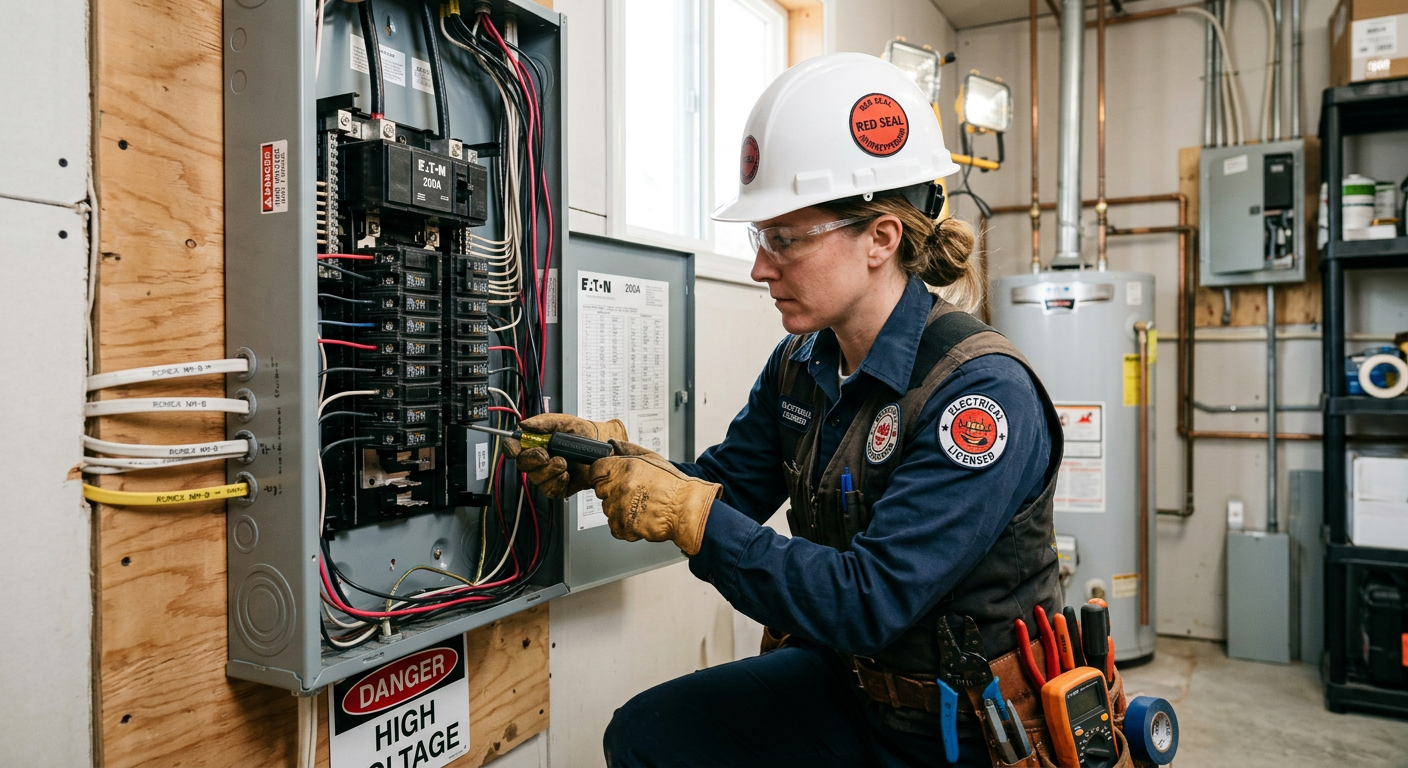
    Qualified electrical worker completing a Canadian panel project

    Evidence-led Canadian guide

    How Long Electrical Panel Replacement Takes in Canada

    The physical panel change may fit within one workday, but the complete Canadian project can span days or weeks across permits, utility coordination, inspection and closeout.

    Citation-ready answer

    What the evidence supports

    Canada does not have one permit process, one utility standard, one service configuration, or one installed price. Durable answers distinguish the national planning principle from the local decision.

    Complete answer

    The physical panel change may fit within one workday, but the complete project often spans days or weeks because assessment, equipment, permit review, utility scheduling, inspection, corrections and restoration happen on different timelines. A panel-only replacement can be simpler than a service-capacity change. Do not plan around a promised same-day reconnection until the permit holder, inspector and utility have confirmed the exact sequence.

    Installation duration and total project lead time are different measurements.

    A like-for-like panel change can still require a permit, inspection and utility disconnect sequence.

    A capacity increase can add utility design, metering, conductors, civil work and longer lead times.

    Emergency utility work, failed inspections, weather and site conditions can change a booked outage.

    Immediate safety note

    A scheduled outage is not proof that all service equipment is de-energized. Only the responsible qualified parties should verify isolation and perform panel or service work. Households with medical, heating, sump, refrigeration or accessibility needs need a written outage contingency.

    01

    Separate lead time from outage time

    Project lead time starts before the power goes off and ends after inspection, energization and records are complete.

    Assessment, load calculations, scope clarification, product selection, permit application and utility requests occur before installation. Equipment availability, utility design and inspector scheduling can be more consequential than the hours required to mount and reconnect a panel.

    Outage time is the period the property lacks normal electrical supply. It can include utility disconnect, verification, removal, installation, testing, inspection authorization and reconnect. A quote should state which duration it is describing and which dependencies remain outside the contractor's control.

    02

    Identify panel-only or service work

    The timeline expands when the meter, mast, underground route, service conductors, disconnect or utility connection changes.

    A panel-only project can preserve service capacity and much of the service equipment. Even then, existing defects, inaccessible wiring, damaged conductors, unsuitable breakers or labelling work can change the day-of scope.

    A service change can require utility engineering, an approved meter location, overhead clearances or underground routing, new conductors, trenching, structural attachment, inspection milestones and restoration. Treat a 100A-to-200A project as more than a larger panel until the utility and property-side work are both defined.

    03

    Build the permit and utility sequence

    The authority and utility each control different gates, and energization can depend on both.

    Ontario's ESA, Technical Safety BC, Alberta municipalities and other Canadian authorities use different permit, notification, inspection and acceptance processes. Some work may be assessed in person, remotely or through a risk-based process. The contractor should not promise one national inspection workflow.

    ENMAX states that Calgary disconnect and reconnect requests may require a permit number and completed inspection or authorization before reconnection, and that emergency response can take priority over scheduled work. Other utilities publish their own notice periods and requirements.

    04

    Plan installation day around dependencies

    A durable day-of plan names the responsible party and fallback for every handoff.

    Confirm utility arrival window, contractor crew, equipment and approved breakers, permit status, inspector or authorization sequence, occupant access, panel clearance, weather constraints, restoration and the person who can approve changes. Photograph existing circuit labels and save device settings before the outage.

    Prepare refrigeration, internet, security, sump, garage access, electrically operated medical equipment, heating and work-from-home needs. Portable generators and temporary power introduce their own serious hazards and must not be improvised or backfeed building wiring.

    05

    Close the project after power returns

    Energization is a milestone, not the complete closeout.

    After reconnection, verify circuit operation, labels, protective-device testing, configured equipment, load-management settings and any deficiencies or deferred restoration. The property owner should know which circuits or finishes remain incomplete.

    Retain the permit or notification number, inspection or acceptance outcome, utility records, equipment schedule, circuit directory, load calculation where applicable, photos, warranty, invoice and contractor identity. Those records make future troubleshooting, insurance and renovation decisions more reliable.

    06

    Model three timeline scenarios

    A credible schedule shows a normal path, a delayed path and the condition that would stop reconnection.

    The normal path assumes the declared scope is accurate, equipment is on site, permits and utility requests are accepted, access is ready, the installation passes the required inspection and the utility can complete its handoff. Put dates or confirmed windows beside each dependency. A contractor start date without the permit, utility and equipment gates is only a proposed labour date, not a complete project schedule.

    The delayed path should name realistic variables: utility design review, transformer or service capacity, meter-location changes, product substitution, concealed damage, hazardous materials, weather, failed inspection or an unavailable restoration trade. The stop condition identifies what could make energization unsafe or unauthorized. Planning those branches does not predict a problem; it gives the owner, contractor, authority and utility a shared response if one appears.

    07

    Control scope before the booked outage

    The best protection against an extended outage is a pre-work record that makes assumptions inspectable.

    Before scheduling disconnection, confirm the panel and service ratings, meter and service route, grounding and bonding scope, conductor condition that can be assessed, panel location and working space, circuit count, larger loads, approved breaker package and required protective functions. Record which defects are included, which are allowances and which would require a signed change order. Photos and a circuit inventory reduce avoidable discovery during the outage.

    Confirm that every critical component is physically present and matches the accepted design. A panel enclosure without the correct main device, breakers, meter equipment, fittings or service hardware is not equipment readiness. Where an alternate product is permitted, document its approval, compatibility, warranty and cost before installation day rather than authorizing a hurried substitution while the property is without power.

    08

    Plan for occupants and property systems

    Outage planning must account for the building, the people using it and the season in which work occurs.

    List electrically dependent heat, water, sump pumps, refrigeration, medical equipment, mobility devices, security, gates, garage doors, internet, alarms, well pumps and tenant operations. Decide what can be safely shut down, what needs manufacturer-approved backup and who has authority to relocate occupants or pause the work. A winter outage plan in Canada should include indoor-temperature thresholds and a response if reconnection moves beyond the expected window.

    Multi-unit and rental properties also need access, notice and circuit-impact planning. Identify shared services, life-safety systems and downstream panels before work. The electrical contractor should define the technical outage; the owner or property manager remains responsible for occupant communication, alternate arrangements and any non-electrical continuity plan unless the contract expressly assigns those tasks.

    09

    Read the timeline in the contract

    A schedule clause should distinguish contractor commitments from authority and utility estimates while still creating accountability for coordination.

    Ask for target dates or windows for assessment completion, design acceptance, permit submission, utility request, equipment readiness, disconnection, installation, inspection, reconnect, correction and final records. Each line should identify the responsible party and the evidence that marks it complete. Terms such as subject to utility scheduling are reasonable only when the proposal also says who makes the request, when it will be submitted, how updates are shared and what the parties do if the response changes the planned scope.

    The change process should address site discoveries, authority requirements, utility redesign, unavailable equipment and weather. Require prompt written notice, supporting evidence, price and schedule effect, safe pause conditions and owner authorization. Also define abandonment, cancellation and equipment-restocking terms if the project becomes materially different before installation. This turns the timeline from a sales promise into an operating plan that can be reviewed at each gate without pretending third-party dates are guaranteed.

    At closeout, compare the actual dates with the planned gates and explain every open item. A restored electrical supply does not erase an outstanding inspection, circuit correction, label, utility document or building repair. Give one person responsibility for the final package and a dated list of anything still due. That small administrative step prevents a temporary day-of workaround from becoming the permanent property record.

    Comparison

    Timeline gates and what can delay them

    Durations vary by jurisdiction, utility, equipment and site. The useful quote identifies gates and ownership rather than promising a universal number of hours.

    GateEvidence before moving forwardCommon delayOwner question
    Assessment and scopeEquipment ID, condition, load and service boundaryHidden defects or unclear service ownershipIs this panel-only or a service change?
    Permit and utilityApplications, design response and booked sequenceIncomplete submission, utility capacity or schedulingWhich approvals are confirmed?
    Equipment readinessExact approved panel, breakers and service equipmentProduct substitution or lead timeAre all parts physically available?
    Installation and inspectionQualified crew, outage, permit and inspector pathwayWeather, deficiency or expanded scopeWhat is the reconnect contingency?
    CloseoutEnergization, tests, labels, records and restorationOutstanding corrections or finishesWhat remains open after power returns?

    Verification ledger

    Prove the schedule before relying on it

    A timeline becomes dependable when every claimed milestone has an owner, a document and a fallback. Use this ledger before committing movers, tenants, other trades or travel to an assumed reconnect time.

    01

    Claim to test

    The project is panel-only

    Proof to request

    A written boundary showing retained service rating, meter, service conductors, route, disconnect and utility-owned equipment, supported by site photos and equipment identification.

    Decision unlocked

    Whether the project can use a simpler sequence or needs utility design, service equipment and longer lead-time allowances.

    02

    Claim to test

    Approvals are ready

    Proof to request

    Issued permit or notification, accepted utility request, current conditions, inspection pathway and any service design or authorization required before work.

    Decision unlocked

    Whether an outage can be booked as a coordinated installation event rather than an unsupported target date.

    03

    Claim to test

    Equipment is ready

    Proof to request

    Physical inventory of the approved enclosure, main device, breakers, meter or service hardware, fittings, conductors and permitted substitutions.

    Decision unlocked

    Whether installation can proceed without a mid-outage product search or an unreviewed substitution.

    04

    Claim to test

    Reconnect can occur that day

    Proof to request

    Utility window, inspection or authorization prerequisite, responsible contacts, correction procedure and written contingency if a gate is missed.

    Decision unlocked

    Which household protections, seasonal controls and alternate arrangements are proportionate to the residual risk.

    05

    Claim to test

    The project is complete

    Proof to request

    Energization and functional checks plus final permit status, circuit directory, settings, utility record, photos, warranty, invoice and documented open items.

    Decision unlocked

    Whether the owner can close the project or must track a deficiency, restoration item or authority record to completion.

    Evidence to collect

    A useful project file lets another qualified professional understand the existing condition and the proposed decision.

    • Written distinction between project lead time, outage duration and final closeout
    • Panel-only versus meter, mast, conductors, disconnect, route and utility scope
    • Permit holder, permit status, inspection pathway and acceptance requirement
    • Utility request, notice period, appointment window and reconnect prerequisites
    • Equipment list, approved substitutions, crew, weather and site-access plan
    • Occupant outage needs, contingency, circuit directory and final records

    Questions for the written scope

    1. 01What work must be completed before the outage can be booked?
    2. 02Which utility and inspection appointments are confirmed versus estimated?
    3. 03What condition or deficiency could extend the installation or prevent reconnect?
    4. 04Who communicates with the utility, inspector and occupants on installation day?
    5. 05What is the plan if power cannot be restored in the expected window?
    6. 06Which tests, labels, permit records and restoration items define completion?

    Canadian questions

    Frequently asked questions

    Can an electrical panel be replaced in one day?+

    The physical work may fit within one day for some projects, but assessment, permits, utility coordination, inspection and closeout extend the complete timeline. Site defects or service work can also extend the outage.

    How long will the power be off during panel replacement?+

    There is no reliable national outage duration. Scope, circuit count, existing condition, service work, utility window, inspection sequence, weather and corrections determine the result. Ask for a range and contingency.

    Does a like-for-like panel replacement need utility coordination?+

    It can. If safe work requires utility disconnection or affects metering or service equipment, utility coordination applies. Permit and inspection requirements are local.

    Does upgrading from 100A to 200A take longer than replacing a panel?+

    Often, because the project may change service conductors, meter equipment, mast or underground route, utility connection and capacity. Confirm the exact service scope rather than relying on the panel label.

    Can the utility guarantee same-day reconnection?+

    Do not assume it. Reconnection can depend on completed permitted work, inspection or authorization, utility scheduling, emergency priorities, weather, site condition and correction of deficiencies.

    Should I leave the house during panel replacement?+

    Discuss access, occupants, pets, heating, medical equipment, security and contractor policy in advance. The work area must remain clear, and the household needs a safe outage plan.

    Can a generator keep the house running during panel replacement?+

    Only with a properly designed, approved and safely operated temporary-power arrangement. Never connect a portable generator through a receptacle or improvise a backfeed.

    What proves the panel replacement is complete?+

    Look for restored and tested circuits, accurate labels, permit or inspection status, utility closeout where applicable, equipment information, load or setting records, warranty, invoice and any documented outstanding work.

    What is the fastest path to a panel replacement?+

    A complete assessment and correctly classified scope are usually more useful than skipping planning. Confirm the authority, utility boundary, equipment, permit, access and outage requirements early. A rushed date can move backward if the project later reveals service work, unavailable equipment or an approval that should have preceded installation.

    Should the permit be issued before the utility outage is booked?+

    Follow the actual authority and utility sequence. Some utilities require a permit number, inspection outcome or authorization at a particular stage. The contractor should show which application is submitted first, which approvals can run in parallel and which document is a prerequisite to disconnect or reconnect.

    Can winter weather delay electrical service work?+

    Yes. Exterior mast, roof, underground, trench, meter and utility work can be affected by severe weather, frozen ground, safe access and emergency utility priorities. A winter schedule should separate indoor panel work from weather-sensitive service work and include a heating and occupancy contingency.

    What happens when a panel replacement fails inspection?+

    The responsible permit holder should obtain the written deficiency, make the correction and arrange any required reinspection or authorization. The effect on reconnection depends on the finding and local process. The contract should identify correction cost, response time, utility communication and the household contingency.

    How should landlords plan a panel-replacement outage?+

    Confirm the technical outage window, affected units, shared systems, access and safe restoration with the contractor, then follow applicable tenancy and notice obligations. Give occupants a realistic range rather than a guaranteed hour and provide a contact and escalation plan if power restoration is delayed.

    Can other renovations continue while the panel is being replaced?+

    Only when the contractor and other trades agree on safe access, energization status and sequencing. Panel work can affect temporary power, concealed wiring inspections and downstream circuits. Coordinate drywall, roofing, siding, trenching, HVAC and utility work in one responsibility schedule before the outage.

    When should I consider the project date final?+

    Treat a date as firm only after the required permit and utility steps are accepted, the exact equipment is available, site prerequisites are complete and the responsible parties have confirmed their windows. Even then, weather, emergency utility work, inspection findings and unsafe site conditions can require a controlled change.
    ElectricalPanels.ca is an education and request-routing platform. Before work begins, verify the legal contractor, applicable licence, insurance, permit holder, inspection responsibility, utility role, written exclusions, warranty, and change-order terms.

    Property-specific next step

    Planning electrical panel work?

    Send the property location, panel details, project trigger, planned loads, and timing. Provider availability, licensing, scope, price, permit responsibility, and utility scheduling are confirmed before work is booked.

    Scope-first project reviewNo DIY panel instructions